Describe the directionality, nomenclature, and primary structure of peptides.
Describe the conformational consequences of the partial double-bond character of the peptide bond and identify the bonds in the peptide backbone that are free to rotate.
BIOMEDICAL IMPORTANCE
L-a-Amino acids provide the monomer units of the long polypeptide chains of proteins. In addition, these amino acids and their derivatives participate in cellular functions as diverse as nerve transmission, and the biosynthesis of porphyrins, purines, pyrimidines, and urea. The neuroendocrine system employs short polymers of amino acids called peptides as hormones, hormone-releasing factors, neuromodulators, and neurotransmitters. Humans and other higher animals cannot synthesize 10 of the L-a-amino acids present in proteins in amounts adequate to support infant growth or to maintain adult health. Consequently, the human diet must contain adequate quantities of these nutritionally essential amino acids. Each day the kidneys filter over 50 g of free amino acids from the arterial renal blood. However, only traces of free amino acids normally appear in the urine because amino acids are almost totally reabsorbed in the proximal tubule, conserving them for protein synthesis and other vital functions.
Certain microorganisms secrete free D-amino acids, or peptides that may contain both D- and L-a-amino acids. Several of these bacterial peptides are of therapeutic value, including the antibiotics bacitracin and gramicidin A, and the antitumor agent bleomycin. Certain other microbial peptides are, however, toxic. The cyanobacterial peptides microcystin and nodularin are lethal in large doses, while small quantities promote the formation of hepatic tumors. The ingestion of certain amino acids present in the seeds of legumes of the genus Lathyrus can result in lathyrism, a tragic irreversible disease in which individuals lose control of their limbs. Certain other plant seed amino acids have also been implicated in neurodegenerative disease in natives of Guam.
PROPERTIES OF AMINO ACIDS
The Genetic Code Specifies 20 L-a-Amino Acids
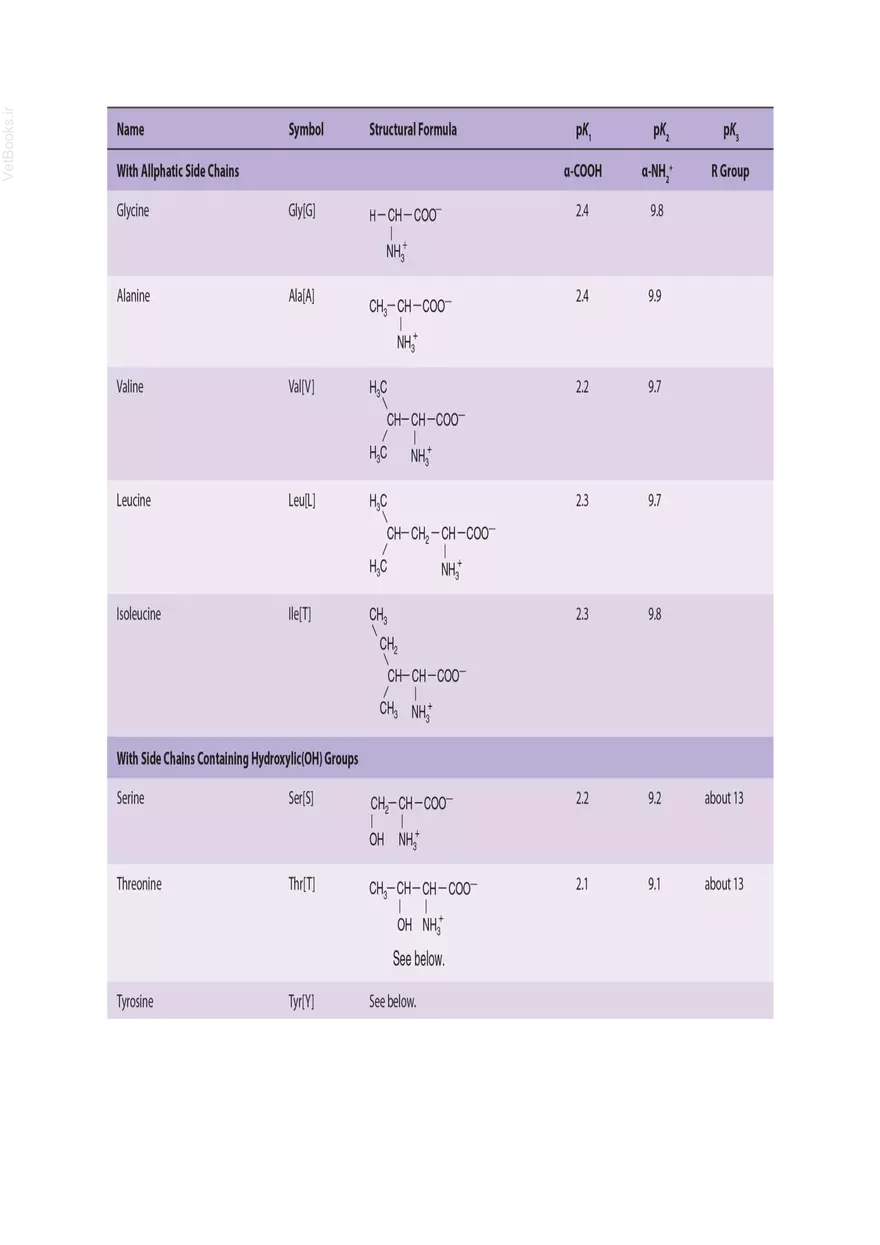
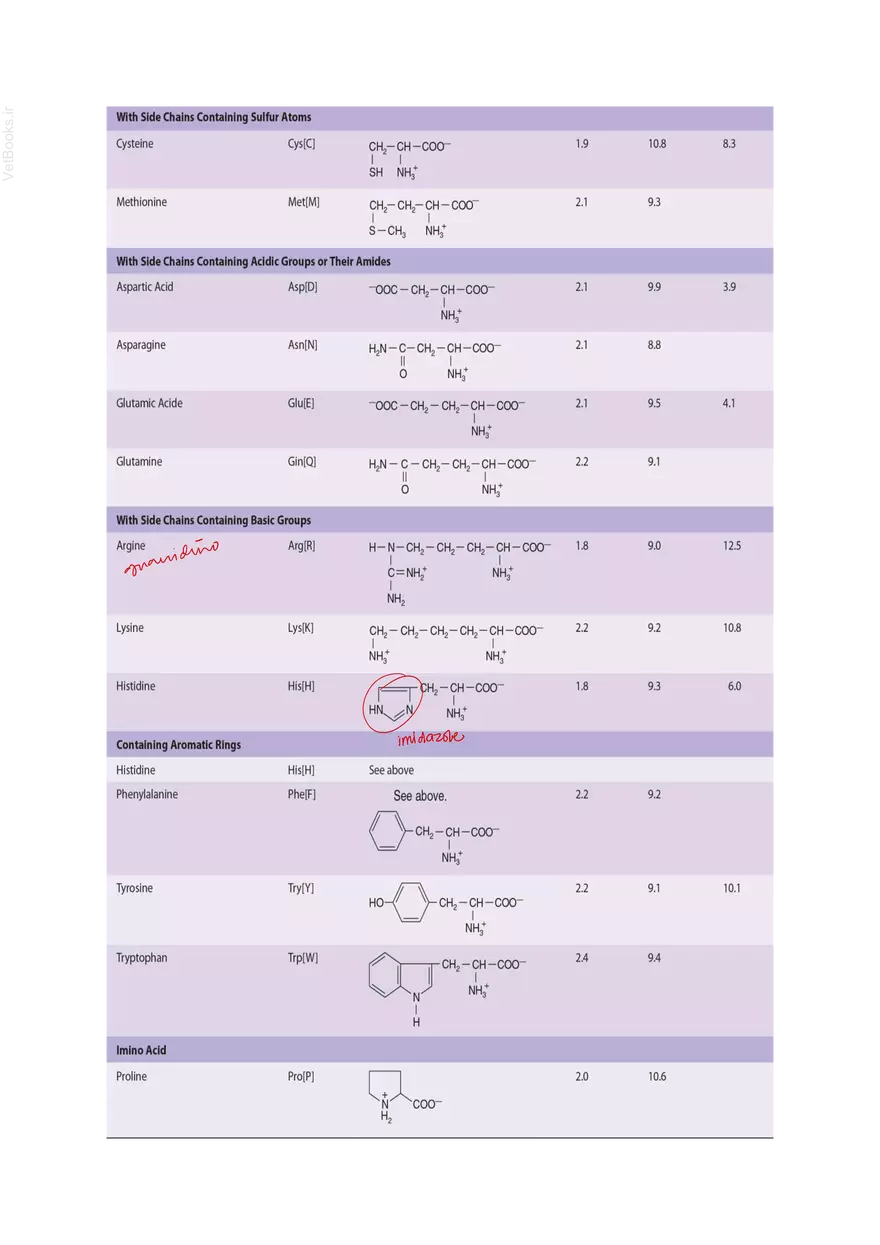
Although more than 300 amino acids occur in nature, proteins are synthesized almost exclusively from the set of 20 L-a-amino acids encoded by nucleotide triplets called codons (see Table 37-1). While the three-letter genetic code could potentially accommodate more than 20 amino acids, the genetic code is redundant since several amino acids are specified by multiple codons. Scientists frequently represent the sequences of peptides and proteins using one- and three-letter abbreviations for each amino acid (Table 3-1). The R groups of amino acids can be characterized as being either hydrophilic or hydrophobic (Table 3-2); properties that affect their location in a protein's mature folded conformation (see Chapter 5). Some proteins contain additional amino acids that arise by the posttranslational modification of an amino acid already present in a peptide. Examples include the conversion of peptidyl proline and peptidyl lysine to 4-hydroxyproline and 5-hydroxylysine; the conversion of peptidyl glutamate to y-carboxyglutamate; and the methylation, formylation, acetylation, prenylation, and phosphorylation of certain aminoacyl residues. These modifications significantly extend the biologic diversity of proteins by altering their solubility, stability, catalytic activity, and interaction with other proteins.
TABLE 3-1 L-a-Amino Acids Present in Proteins