Microbiology
Bacterial Quantification by Culture Lab
Procedure:
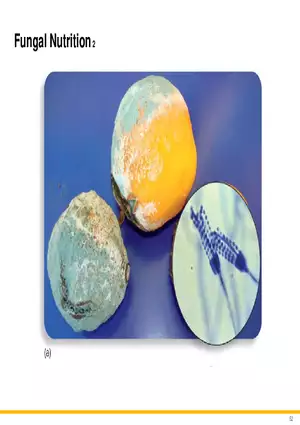
To perform this lab, you will need to calculate a soil sample with fungus. The purpose of
this lab is to test if the fungal compound has antibacterial properties. So, to get start lets
set up the experiment so we can test the antibiotic properties. You need to follow proper
PPE so grab a lab coat. The other equipment we will be using throughout the lab are
agar plates, pipettes, vortex, incubator, Bunsen burner and the glass spreader for the
samples on the agar plates. Throughout the experiment you will be incubating the tubes
at 37° C to determine the bacterial growth and if the compound makes a good antibiotic.
Observations:
Throughout the experiment I observed the growth of cell colonies during incubation. I
had to calculate the colonies on the agar plate from the samples used to determine the
number of viable bacteria cells. I had to reduce the cfu/mL by performing a serial
dilution. Each step would require too much writing, so I’ll try and sum up the main parts
in simple terms. I had to mix the different solutions on the vortex and transfer 0.1, 0.01
and 0.001 to calculate the cfu/mL and then test the effect of the fungal compound to
determine its effect on the bacterial growth. One example is I counted the colonies and
came up with 54 so I calculated 5.4 x 10² cfu/mL to come up with 540 viable cells in one
milliliter of the solution. I then incubated the stock solution with E. coli and the fungal
compound over 96 hours. I had to quantify the cfu/mL at different time points.
Hours
24
48
72
96
Cfu/mL
2,200
160,000
11,000,000
440,000,000
Conclusions:
The bacteria multiplied by binary fission. Each cell splits to create two daughter cells
and from there the population doubles with every generation. We determined that the
fungal compound does after antibacterial properties. This antibiotic is called
bacteriostatic agent. It will down the bacterial growth but does not kill it. I thought the lab
was interesting. A lot of it goes over my head but I’m sure that’s to be expected but it
was interesting to learn and help determine if the fungal compound could be used as an
antibiotic and how that process works. Saving lives through Labster 😊