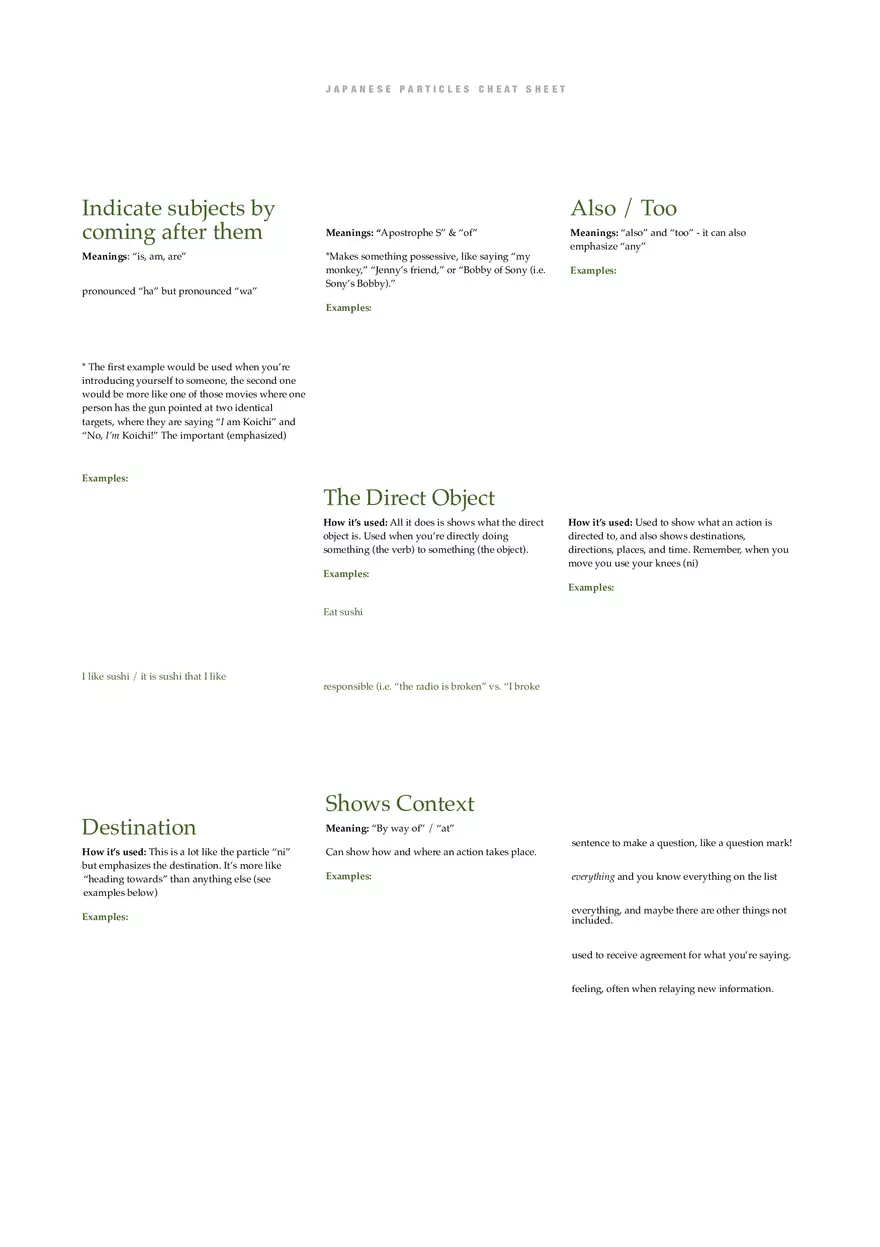
JAPANESE PARTICLES CHEAT SHEET
Indicate subjects by
coming after them
Meanings: Òis, am, areÓ
pronounced ÒhaÓ but pronounced ÒwaÓ
Also / Too
Meanings: ÒApostrophe SÓ & ÒofÓ
*Makes something possessive, like saying Òmy
monkey,Ó ÒJennyÕs friend,Ó or ÒBobby of Sony (i.e.
SonyÕs Bobby).Ó
Meanings: ÒalsoÓ and ÒtooÓ - it can also
emphasize ÒanyÓ
Examples:
Examples:
* The Þrst example would be used when youÕre
introducing yourself to someone, the second one
would be more like one of those movies where one
person has the gun pointed at two identical
targets, where they are saying ÒI am KoichiÓ and
ÒNo, IÕm Koichi!Ó The important (emphasized)
Examples:
The Direct Object
How itÕs used: All it does is shows what the direct
object is. Used when youÕre directly doing
something (the verb) to something (the object).
How itÕs used: Used to show what an action is
directed to, and also shows destinations,
directions, places, and time. Remember, when you
move you use your knees (ni)
Examples:
Examples:
Eat sushi
I like sushi / it is sushi that I like
Destination
How itÕs used: This is a lot like the particle ÒniÓ
but emphasizes the destination. ItÕs more like
Òheading towardsÓ than anything else (see
examples below)
Examples:
responsible (i.e. Òthe radio is brokenÓ vs. ÒI broke
Shows Context
Meaning: ÒBy way ofÓ / ÒatÓ
Can show how and where an action takes place.
Examples:
sentence to make a question, like a question mark!
everything and you know everything on the list
everything, and maybe there are other things not
included.
used to receive agreement for what youÕre saying.
feeling, often when relaying new information.