Study Guide
University:
Minnesota State University MoorheadCourse:
ECON-202 | Principles of Economics I: MicroAcademic year:
2020
Views:
81
Pages:
3
Author:
Braiden Lam
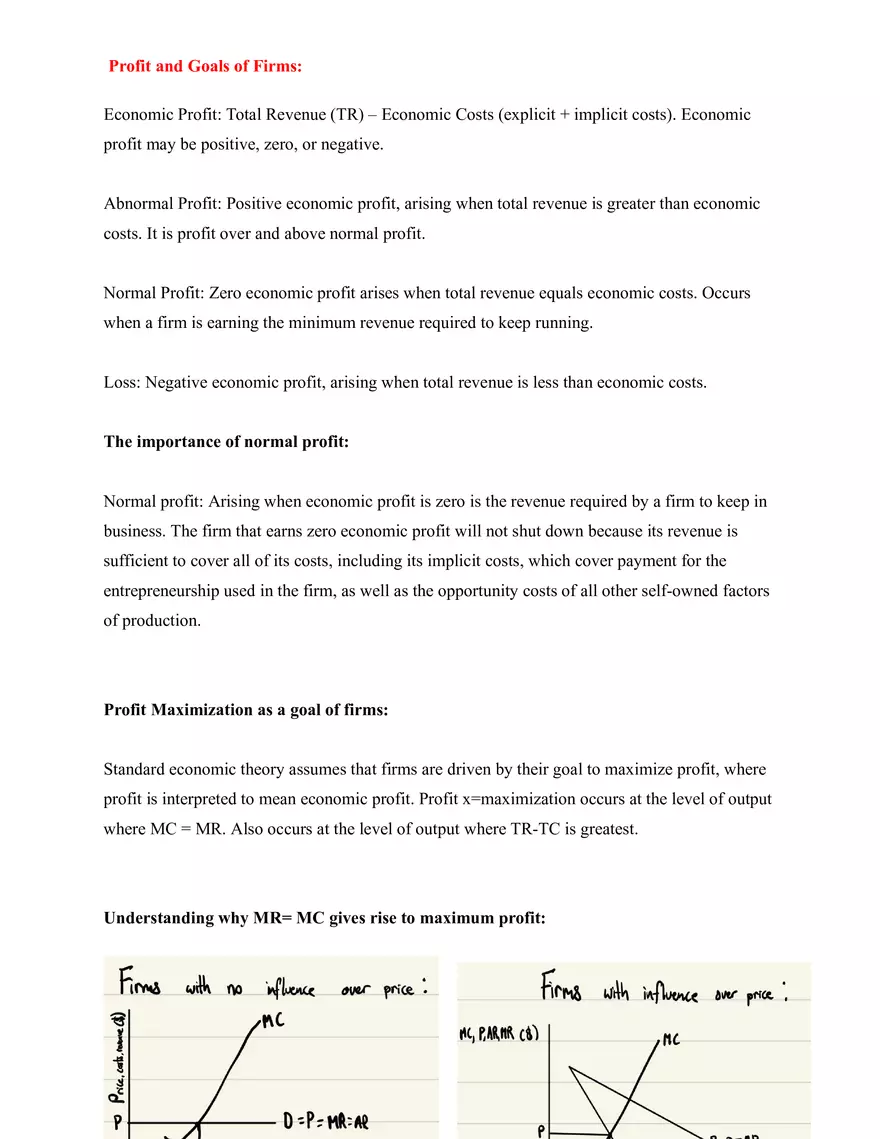
MC and the extra revenue of producing one more unit of the good is greater than the cost of producing that same unit; therefore, it is worthwhile for the firm to produce more. If Q>Q*, then MC>MR and the extra cost of producing one more unit of the good is greater than the extra revenue gained for producing the same unit, the form should produce less. At A*, where MR=MC, the firm can't change its output level to improve its position; therefore, profit is maximized. Alternative goals of firms: Growth maximization: Firms may be interested in maximizing growth (in the quantity of output produced) rather than profits (i.e., giving up some profit for more growth). Advantages of greater growth include greater economies of scale, lower average costs, greater diversification into other products, greater market power (ability to influence price), and lower risk of takeovers by other firms. Managerial Utility Maximization: Large firms run by managers who are not owners may try to maximize their potential utility (satisfaction) by giving themselves larger benefits, such as higher salaries, use of luxurious company cars, and expensive accounts, all of which may work to reduce profits. Satisficing: This is an alternative to maximizing behavior. Firms have many different goals, some of which may conflict, and they may not want to maximize anything (profit, revenue, growth, managerial utility) that could require a significant sacrifice of something else. They may prefer a strategy that compromises among different objectives and achieves a satisfactory outcome with respect to all the important goals. Revenue maximization: Firms may be interested in maximizing revenues instead of profits for several reasons, such as the impression of success with large sales and the relative ease with which revenues can be measured (as compared with profits). TR is maximum when MR = 0. This leads to a higher Q and a lower P than in the case of profit maximization. Corporate social responsibility involves avoiding activities that may lead to negative production externalities (such as pollution or environmental degradation) or other undesirable activities (such as using child labor or hazardous working conditions), all of which may create a negative image with consumers. Such firm behavior is encouraged by consumers who prefer to buy goods and services from socially responsible firms.
Report
Tell us what’s wrong with it:
Thanks, got it!
We will moderate it soon!
Report
Tell us what’s wrong with it:
Our EduBirdie Experts Are Here for You 24/7! Just fill out a form and let us know how we can assist you.

Enter your email below and get instant access to your document