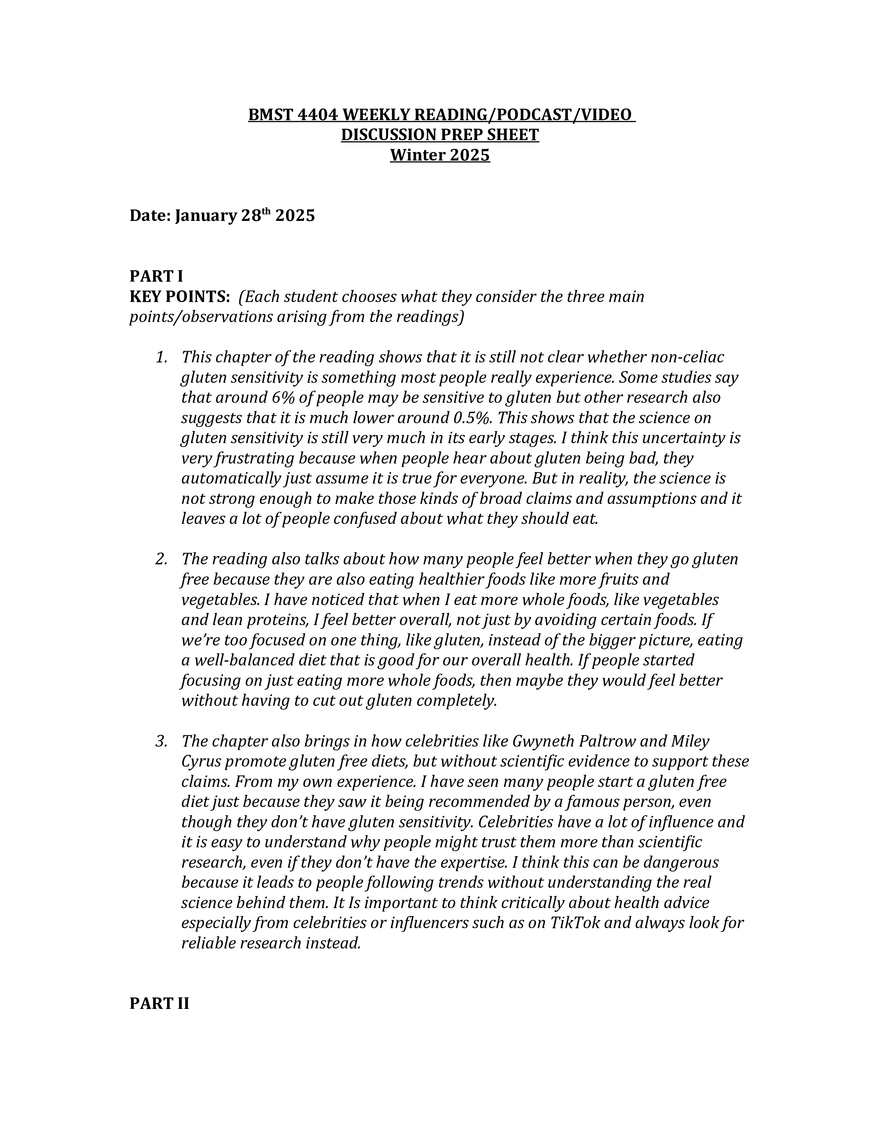
BMST 4404 WEEKLY READING/PODCAST/VIDEO
DISCUSSION PREP SHEET
Winter 2025
Date: January 28th 2025
PART I
KEY POINTS: (Each student chooses what they consider the three main
points/observations arising from the readings)
1. This chapter of the reading shows that it is still not clear whether non-celiac
gluten sensitivity is something most people really experience. Some studies say
that around 6% of people may be sensitive to gluten but other research also
suggests that it is much lower around 0.5%. This shows that the science on
gluten sensitivity is still very much in its early stages. I think this uncertainty is
very frustrating because when people hear about gluten being bad, they
automatically just assume it is true for everyone. But in reality, the science is
not strong enough to make those kinds of broad claims and assumptions and it
leaves a lot of people confused about what they should eat.
2. The reading also talks about how many people feel better when they go gluten
free because they are also eating healthier foods like more fruits and
vegetables. I have noticed that when I eat more whole foods, like vegetables
and lean proteins, I feel better overall, not just by avoiding certain foods. If
we’re too focused on one thing, like gluten, instead of the bigger picture, eating
a well-balanced diet that is good for our overall health. If people started
focusing on just eating more whole foods, then maybe they would feel better
without having to cut out gluten completely.
3. The chapter also brings in how celebrities like Gwyneth Paltrow and Miley
Cyrus promote gluten free diets, but without scientific evidence to support these
claims. From my own experience. I have seen many people start a gluten free
diet just because they saw it being recommended by a famous person, even
though they don’t have gluten sensitivity. Celebrities have a lot of influence and
it is easy to understand why people might trust them more than scientific
research, even if they don’t have the expertise. I think this can be dangerous
because it leads to people following trends without understanding the real
science behind them. It Is important to think critically about health advice
especially from celebrities or influencers such as on TikTok and always look for
reliable research instead.
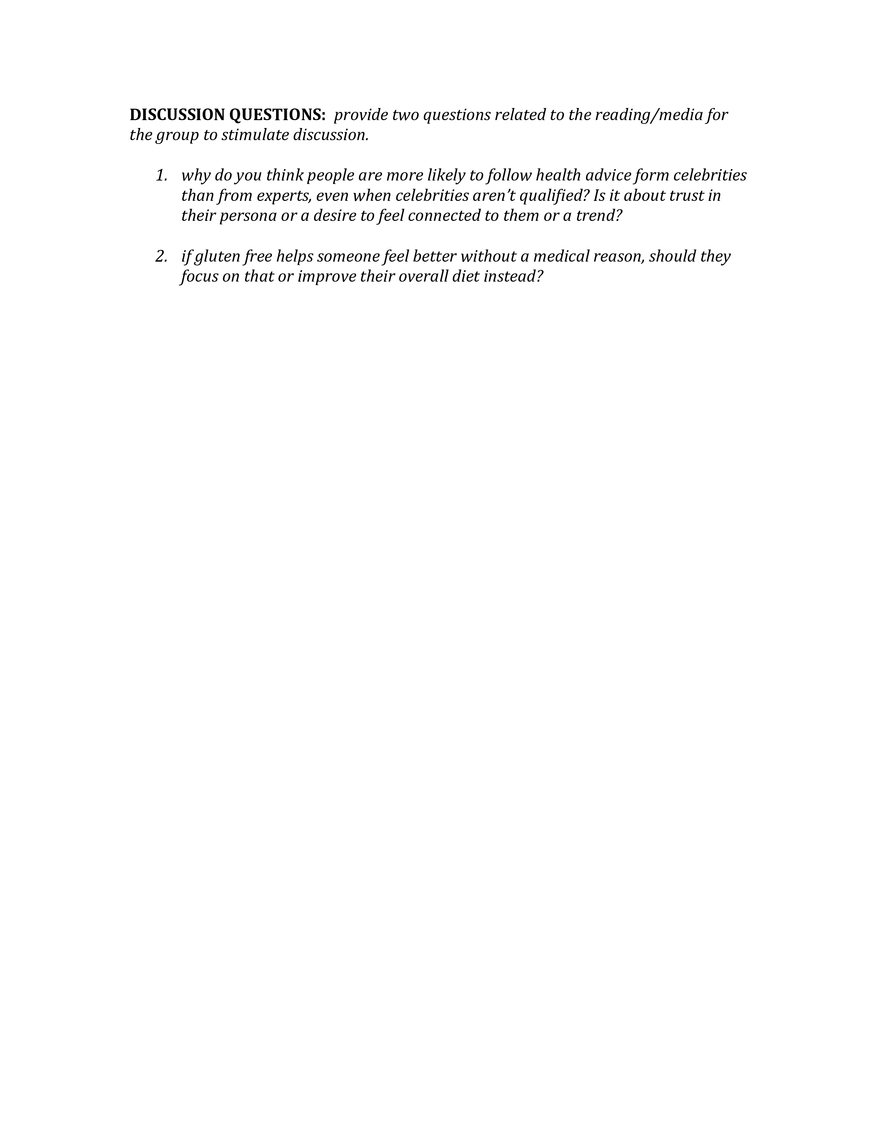
PART II DISCUSSION QUESTIONS: provide two questions related to the reading/media for
the group to stimulate discussion.
1. why do you think people are more likely to follow health advice form celebrities
than from experts, even when celebrities aren’t qualified? Is it about trust in
their persona or a desire to feel connected to them or a trend?
2. if gluten free helps someone feel better without a medical reason, should they
focus on that or improve their overall diet instead?