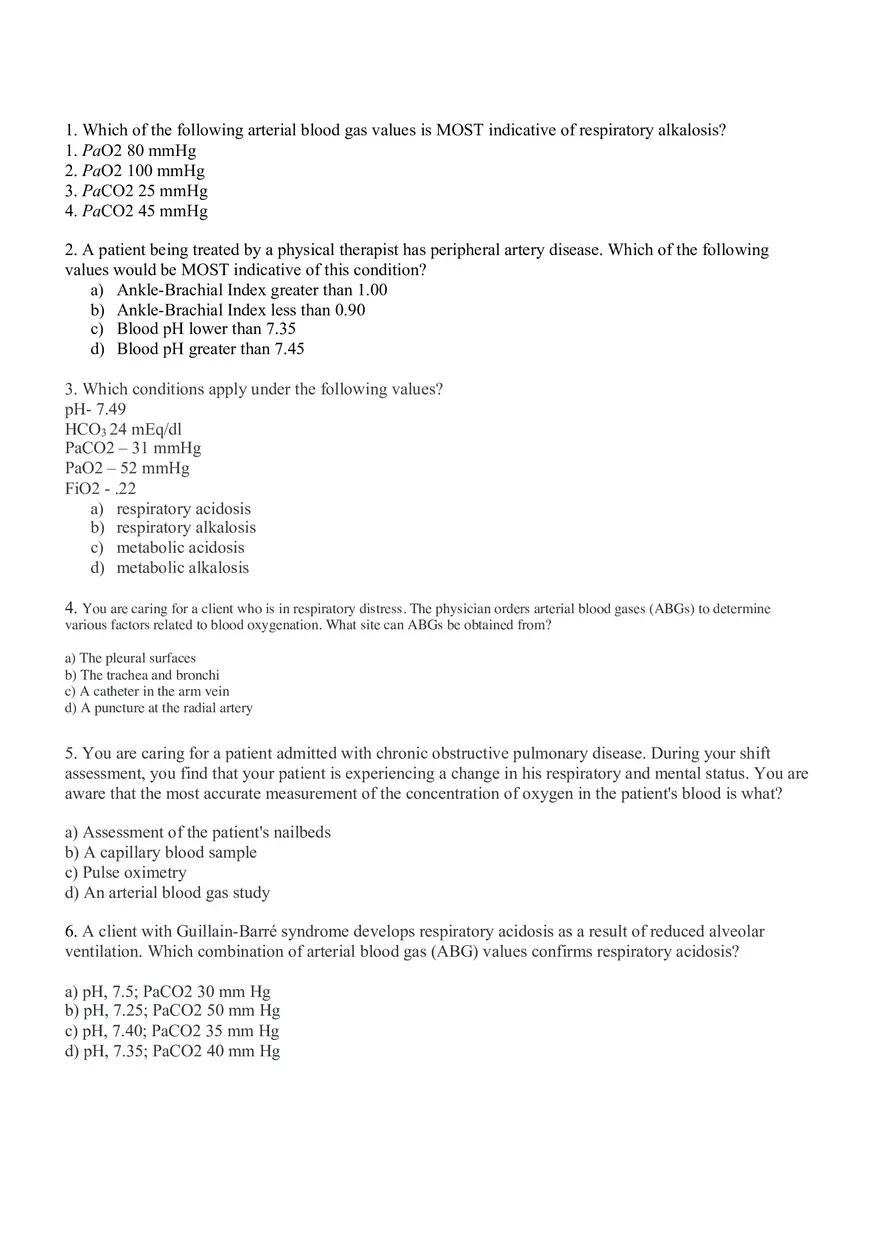

1. Which of the following arterial blood gas values is MOST indicative of respiratory alkalosis?
1. PaO2 80 mmHg
2. PaO2 100 mmHg
3. PaCO2 25 mmHg
4. PaCO2 45 mmHg
2. A patient being treated by a physical therapist has peripheral artery disease. Which of the following
values would be MOST indicative of this condition?
a) Ankle-Brachial Index greater than 1.00
b) Ankle-Brachial Index less than 0.90
c) Blood pH lower than 7.35
d) Blood pH greater than 7.45
3. Which conditions apply under the following values?
pH- 7.49
HCO3 24 mEq/dl
PaCO2 – 31 mmHg
PaO2 – 52 mmHg
FiO2 - .22
a) respiratory acidosis
b) respiratory alkalosis
c) metabolic acidosis
d) metabolic alkalosis
4. You are caring for a client who is in respiratory distress. The physician orders arterial blood gases (ABGs) to determine
various factors related to blood oxygenation. What site can ABGs be obtained from?
a) The pleural surfaces
b) The trachea and bronchi
c) A catheter in the arm vein
d) A puncture at the radial artery
5. You are caring for a patient admitted with chronic obstructive pulmonary disease. During your shift
assessment, you find that your patient is experiencing a change in his respiratory and mental status. You are
aware that the most accurate measurement of the concentration of oxygen in the patient's blood is what?
a) Assessment of the patient's nailbeds
b) A capillary blood sample
c) Pulse oximetry
d) An arterial blood gas study
6. A client with Guillain-Barré syndrome develops respiratory acidosis as a result of reduced alveolar
ventilation. Which combination of arterial blood gas (ABG) values confirms respiratory acidosis?
a) pH, 7.5; PaCO2 30 mm Hg
b) pH, 7.25; PaCO2 50 mm Hg
c) pH, 7.40; PaCO2 35 mm Hg
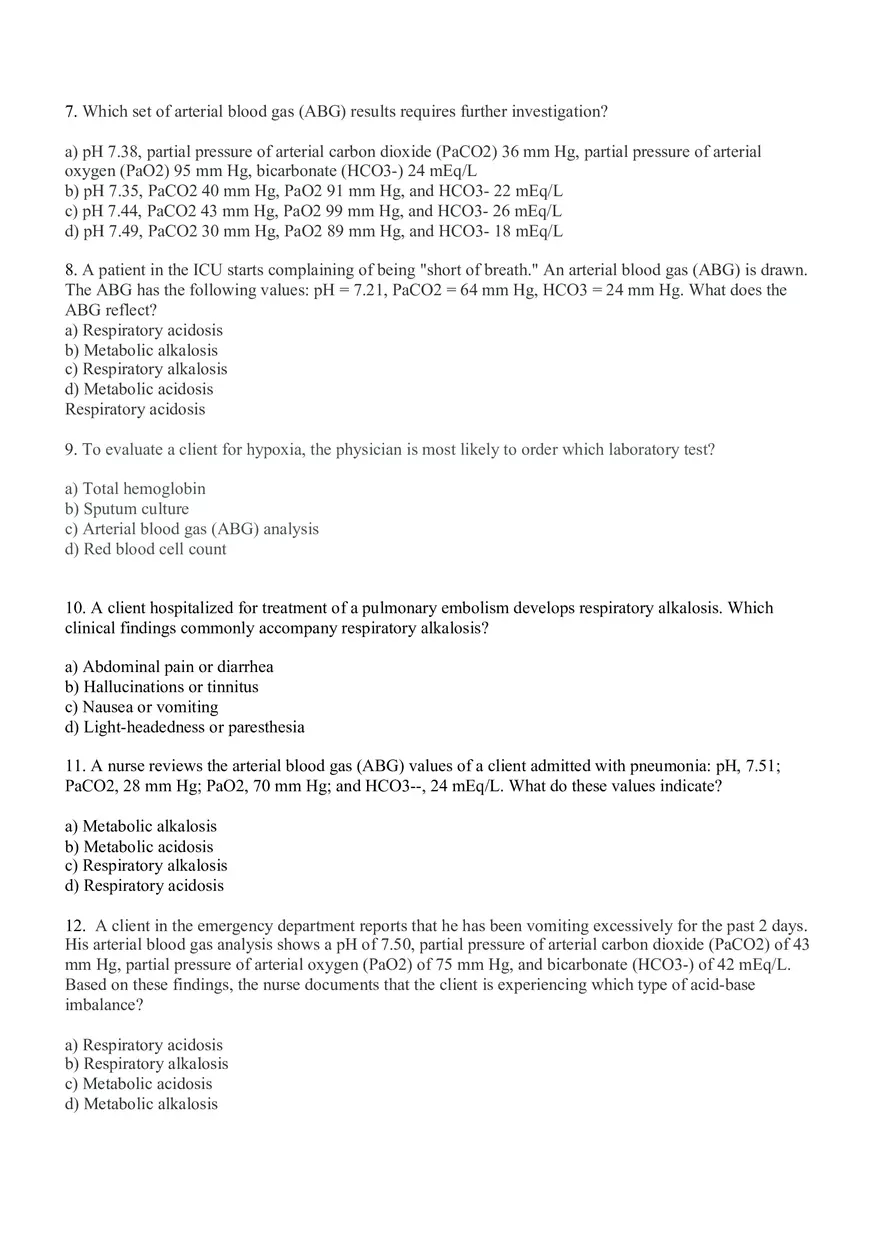
d) pH, 7.35; PaCO2 40 mm Hg 7. Which set of arterial blood gas (ABG) results requires further investigation?
a) pH 7.38, partial pressure of arterial carbon dioxide (PaCO2) 36 mm Hg, partial pressure of arterial
oxygen (PaO2) 95 mm Hg, bicarbonate (HCO3-) 24 mEq/L
b) pH 7.35, PaCO2 40 mm Hg, PaO2 91 mm Hg, and HCO3- 22 mEq/L
c) pH 7.44, PaCO2 43 mm Hg, PaO2 99 mm Hg, and HCO3- 26 mEq/L
d) pH 7.49, PaCO2 30 mm Hg, PaO2 89 mm Hg, and HCO3- 18 mEq/L
8. A patient in the ICU starts complaining of being "short of breath." An arterial blood gas (ABG) is drawn.
The ABG has the following values: pH = 7.21, PaCO2 = 64 mm Hg, HCO3 = 24 mm Hg. What does the
ABG reflect?
a) Respiratory acidosis
b) Metabolic alkalosis
c) Respiratory alkalosis
d) Metabolic acidosis
Respiratory acidosis
9. To evaluate a client for hypoxia, the physician is most likely to order which laboratory test?
a) Total hemoglobin
b) Sputum culture
c) Arterial blood gas (ABG) analysis
d) Red blood cell count
10. A client hospitalized for treatment of a pulmonary embolism develops respiratory alkalosis. Which
clinical findings commonly accompany respiratory alkalosis?
a) Abdominal pain or diarrhea
b) Hallucinations or tinnitus
c) Nausea or vomiting
d) Light-headedness or paresthesia
11. A nurse reviews the arterial blood gas (ABG) values of a client admitted with pneumonia: pH, 7.51;
PaCO2, 28 mm Hg; PaO2, 70 mm Hg; and HCO3--, 24 mEq/L. What do these values indicate?
a) Metabolic alkalosis
b) Metabolic acidosis
c) Respiratory alkalosis
d) Respiratory acidosis
12. A client in the emergency department reports that he has been vomiting excessively for the past 2 days.
His arterial blood gas analysis shows a pH of 7.50, partial pressure of arterial carbon dioxide (PaCO2) of 43
mm Hg, partial pressure of arterial oxygen (PaO2) of 75 mm Hg, and bicarbonate (HCO3-) of 42 mEq/L.
Based on these findings, the nurse documents that the client is experiencing which type of acid-base
imbalance?
a) Respiratory acidosis
b) Respiratory alkalosis
c) Metabolic acidosis
d) Metabolic alkalosis 13. When evaluating arterial blood gases (ABGs), which value is consistent with metabolic alkalosis?
a) HCO 21 mEq/L
b) pH 7.48
c) PaCO 36
d) O2 saturation 95%
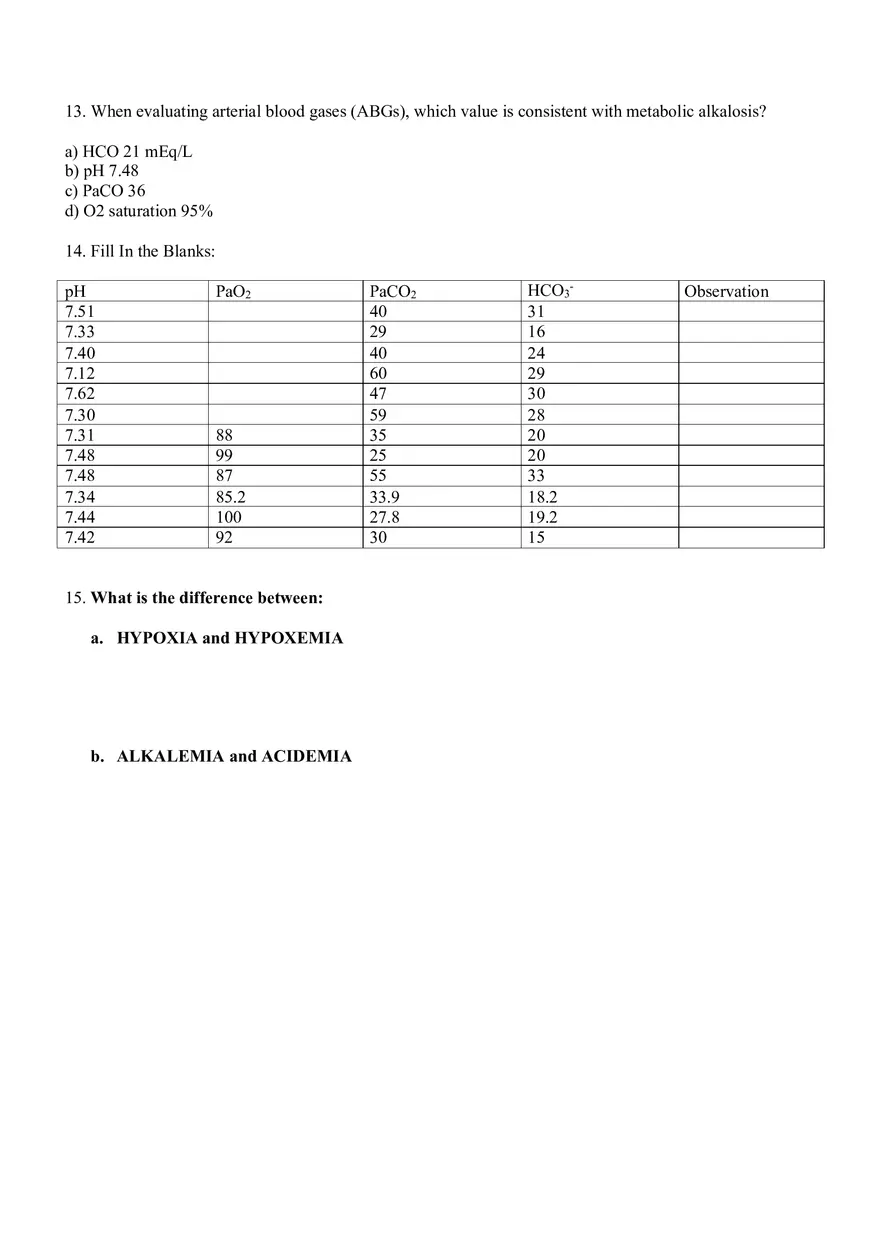
14. Fill In the Blanks:
pH
7.51
7.33
7.40
7.12
7.62
7.30
7.31
7.48
7.48
7.34
7.44
7.42
PaO2
88
99
87
85.2
100
92
15. What is the difference between:
a. HYPOXIA and HYPOXEMIA
b. ALKALEMIA and ACIDEMIA
PaCO2
40
29
40
60
47
59
35
25
55
33.9
27.8
30
HCO331
16
24
29
30
28
20
20
33
18.2
19.2
15
Observation