
Answer Key
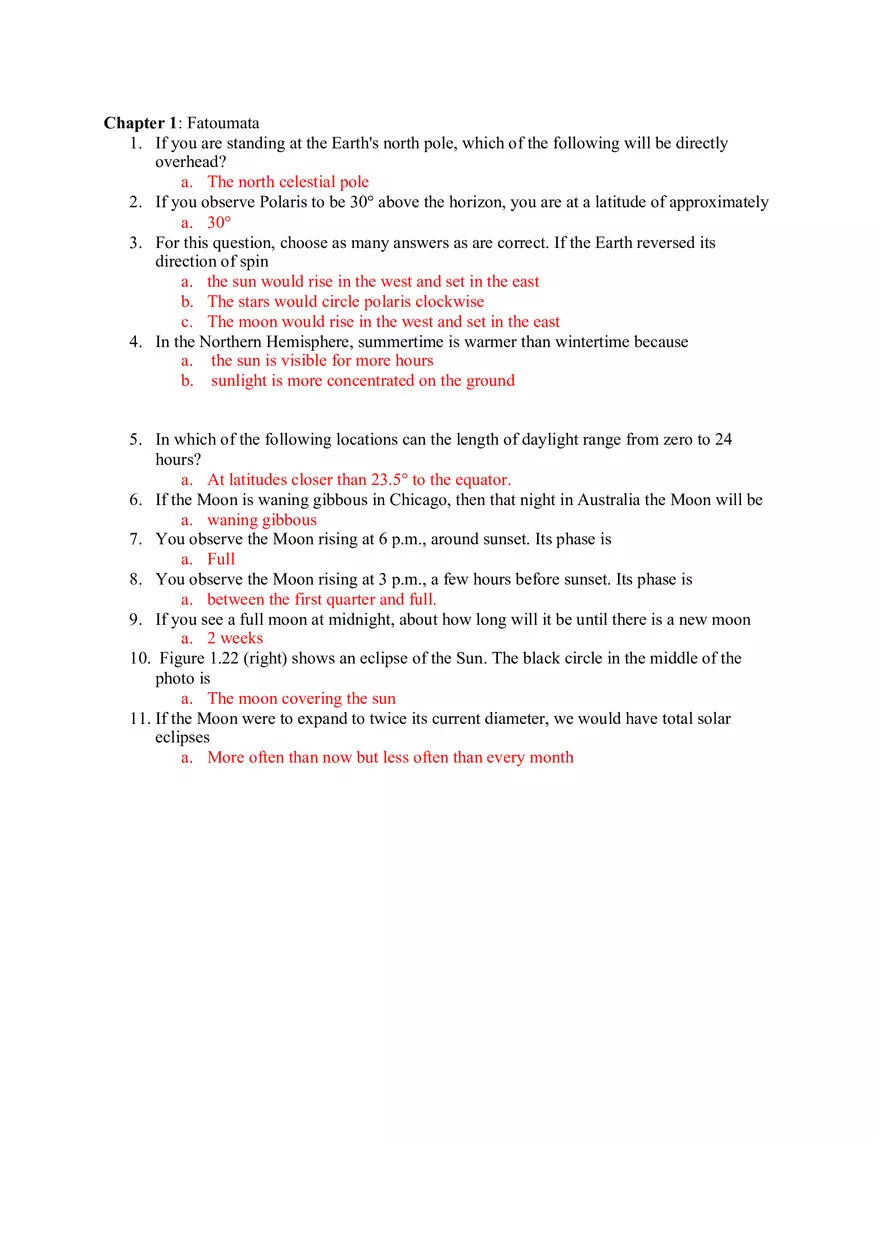
Fatoumata
-
University:
Amherst College -
Course:
ASTR 110 | Observing the Sky Academic year:
2021
-
Views:
224
Pages:
1
Author:
Accinkiquicpqw
Related Documents
- Moon Phases and Seasons
- Seven Brightest Objects in the Sky Study Guide
- Astronomy Chapter 6 Questions
- Astronomy Answer Note #3
- Astronomy Answer Note #1
- Astronomy Answer Note #2
- Light Year Activity
- Astronomy Sky Motions
- Astronomy Lab Distance to a Quasar
- Jets from Black Holes in Quasars Chapter 2
- Does Venus Rotate Clockwise or Counterclockwise
- Introduction to Turbulence
- Exploring the Cosmic Puzzles with Gravitational Lensing and Machine Learning
- The Transient Mid-infrared Sky Revealing the Enshrouded Births
- How Much Should You Trust Stellar Models
- Sunspots and Solar Rotation
- Jets from Black Holes in Quasars Chapter 1
Fatoumata
Report
Tell us what’s wrong with it:
Thanks, got it!
We will moderate it soon!
Report
Tell us what’s wrong with it:

Free up your schedule!
Our EduBirdie Experts Are Here for You 24/7! Just fill out a form and let us know how we can assist you.

Take 5 seconds to unlock
Enter your email below and get instant access to your document