Unit 3: Energy Changes and Rates of Reaction (SCH4U)
Hess’s Law
Practice Problems
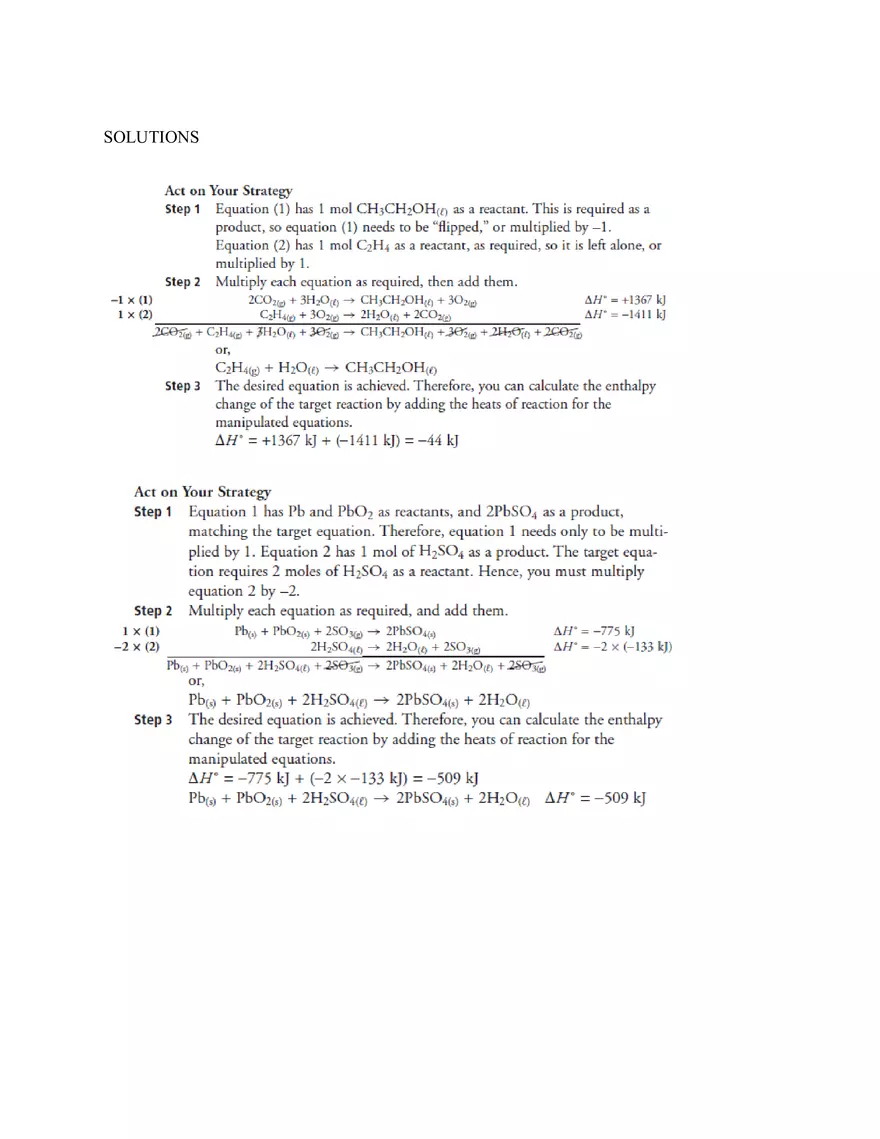
1. Ethene, C2H4(g), reacts with water to form ethanol, CH3CH2OH(l)
C2H4(g)+ H2O(l) → CH3CH2OH(l)
Determine the enthalpy change of this reaction, given the following thermochemical
equations.
(1) CH3CH2OH(l) + 3O2 (g) → 2CO2(g) + 3 H2O(l)
ΔH° = −1367 kJ
(2) C2H4(g) + 3O2 (g) → 2H2O(l) + 2CO2(g)
ΔH° = −1411 kJ
2. A typical automobile engine uses a lead acid battery. During discharge, the following
chemical reaction takes place.
Pb (s) + PbO2 (s) + 2H2SO4 (l) → 2PbSO4 (s) + 2H2O(l)
Determine the enthalpy change of this reaction, given the following equations.
(1) Pb(s) + PbO2(s) + 2SO3 (g) → 2PbSO4(s)
ΔH° = −775 kJ
(2) H2O(l) + SO3(g) →H2SO4(l)
ΔH° = −133 kJ
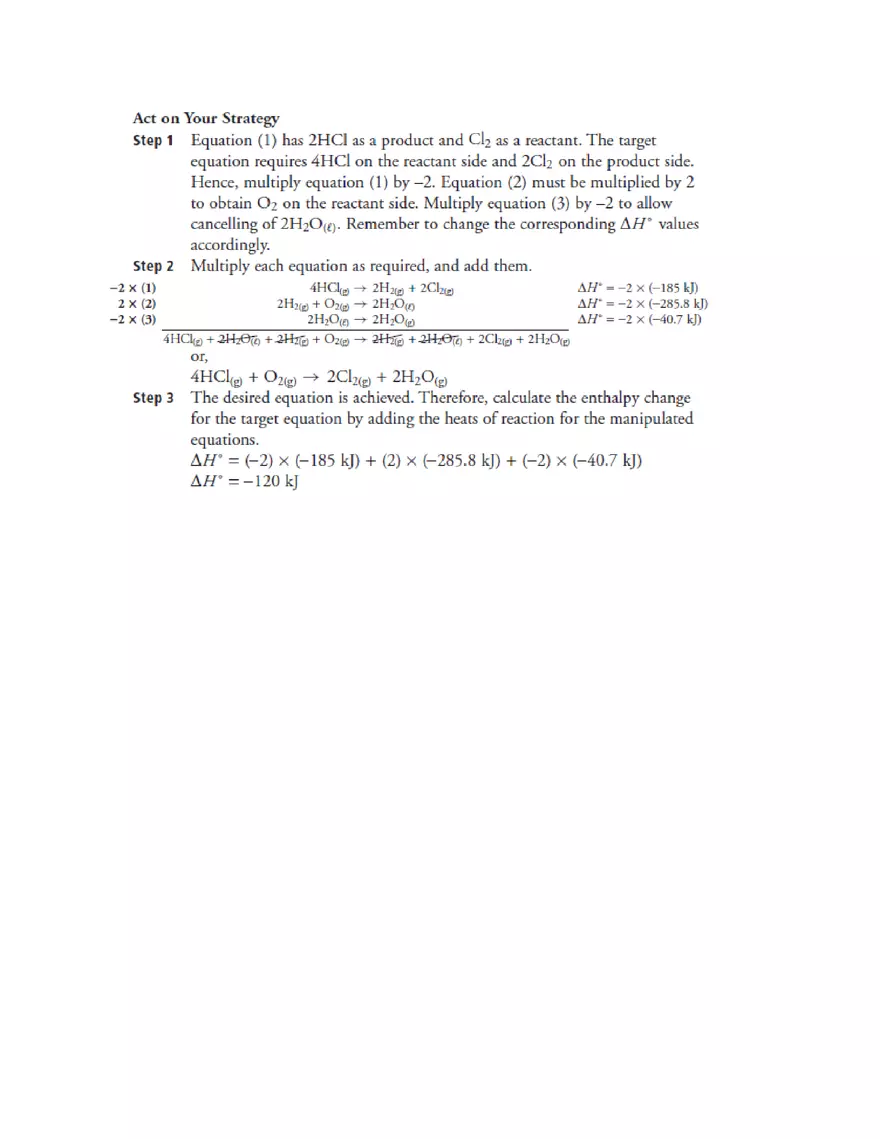
3. Mixing household cleansers can result in the production of hydrogen chloride gas, HCl (g).
Not only is this gas dangerous in its own right, it also reacts with oxygen to form chlorine
gas and water vapour.
4HCl g) + O2(g) → 2Cl2(g) + 2H2O(g)
Determine the enthalpy change of this reaction, given the following equations.
(1) 4HCl(g) → 2H2(g) + 2Cl2(g) ΔH° = −185 kJ
(2) H2(g) + ½ O2 (g) → H2O(l) ΔH° = −285.8 kJ
(3) 2H2O(l) → 2H2O(g)
ΔH° = −40.7 kJ SOLUTIONS