Unit 5: Agriculture and Rural Land-Use
Patterns and Processes
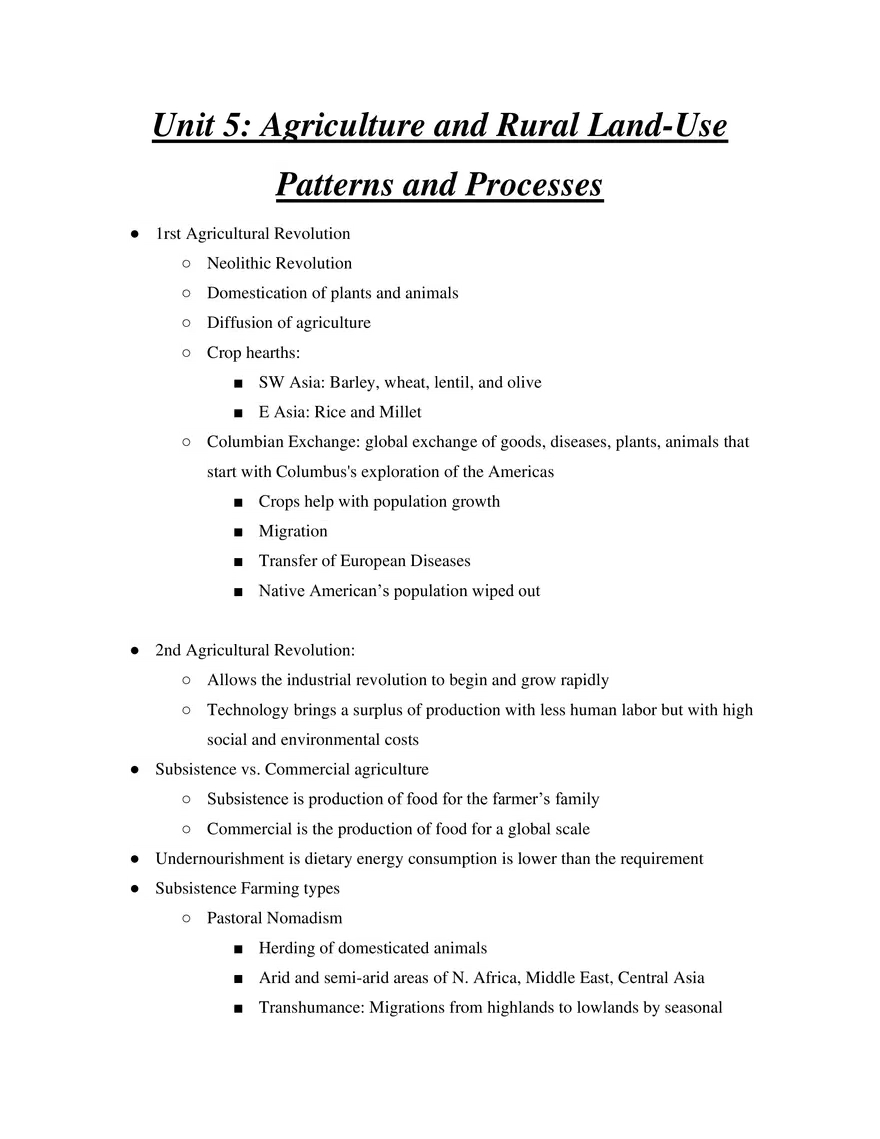
● 1rst Agricultural Revolution
○ Neolithic Revolution
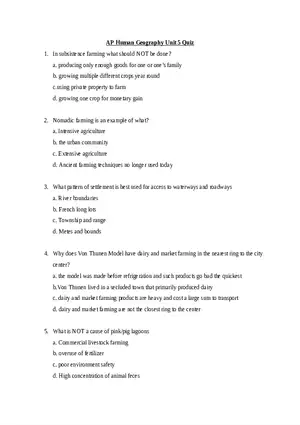
○ Domestication of plants and animals
○ Diffusion of agriculture
○ Crop hearths:
■ SW Asia: Barley, wheat, lentil, and olive
■ E Asia: Rice and Millet
○ Columbian Exchange: global exchange of goods, diseases, plants, animals that
start with Columbus's exploration of the Americas
■ Crops help with population growth
■ Migration
■ Transfer of European Diseases
■ Native American’s population wiped out
● 2nd Agricultural Revolution:
○ Allows the industrial revolution to begin and grow rapidly
○ Technology brings a surplus of production with less human labor but with high
social and environmental costs
● Subsistence vs. Commercial agriculture
○ Subsistence is production of food for the farmer’s family
○ Commercial is the production of food for a global scale
● Undernourishment is dietary energy consumption is lower than the requirement
● Subsistence Farming types
○ Pastoral Nomadism
■ Herding of domesticated animals
■ Arid and semi-arid areas of N. Africa, Middle East, Central Asia
■ Transhumance: Migrations from highlands to lowlands by seasonal ● Shifting Cultivation
○ Clear land for planting by cutting and burning the vegetation
○ Grow crops for a few years until soil nutrients are gone, leave it for many years to
let the soil recover
○ Tropical rainforests, Amazon and Central and West Africa
● Intensive Subsistence Agriculture
○ Labor intensive production of rice
○ Major food source is Asia
○ Double cropping is used in warm areas of South China and Taiwan
○ Feeds most of the ¾ of the world’s ppl. who live in developing countries
● Commercial Agriculture
○ Agribusiness
■ Industrialization of agriculture
● Chemical fertilizer, pesticides, herbicides
● Large food production industry
○ Mixed Crop and Livestock Farming
■ Mixture of crops and livestock
■ Most of crops are fed to animals
■ Most of money income comes from animal products
■ Share the workload more evenly through the year
○ Dairy Farming
■ Most important type in the first ring outside the large cities bc of
transportation
■ Milkshed: ring surrounding a city from which milk can be provided
○ Commercial Gardening and Fruits
■ Truck farming/ bartering
■ Some are sold fresh but most are sold by can or freeze for large scale
○ Grain Farming
■ Crops are grown for humans
■ Sell their crops to manufacturer’s of food
■ Use of Machine is a lot ■ Based on consumer preferences
■ All of the world, but dominantly in U.S. and Russia
○ Mediterannean Agriculture
■ Borders a sea & on west coasts of continents
● Sea winds give moisture and moderate the winter temps.
■ Have a small but of income from animal products
■ Horticulture: Growing of fruits, vegetables, and flower form the
commercial base
■ Medeterannean sea is where olive and grapes are two most important cash
crops
○ Live-Stock Agriculture
■ Ranching: Commercial grazing of livestock
■ Developed countries where sol is not fertile and not much vegetation is
present
■ A part of meat-processing industry in today’s world
■ Overgrazing damages the world’s grasslands
■ Destructions of the rainforests are urged for cattle ranches
■ Basically damages the environment
● Problems
○ Subsistence Farmers must feed an increasing amount of people
○ Must grow food for export instead of direct consumption because of international
trade
○ Commercial Farmers have low income because they can produce a surplus than
what is demanded by consumer
○ Von Thunen Model
■ Explaining the importance of the distances to market with the choice of
crops on commercial farming on a scale to national and global markets
■ 1rst ring: Perishable Foods (milk, etc.)
■ 2nd Ring: Difficult to transport (wood, etc.)
■ 3rd Ring: Various crops and pasture lands
■ 4th Ring: Spacious lands for animal grazing ○ Strategies to distribute food for everyone:
■ Increasing Exports from countries that have a surplus
● Moving from western to eastern hemisphere
■ Making the land area used for agriculture larger
■ Expanding fishing
● aquafarming/aquaculture: cultivation of seafood under controlled
conditions
■ Increase the productivity of land used for agriculture
● Higher-yield seeds
● Increase use of fertilizers
3rd Agricultural Revolution
● Green Revolutions
○ Development of high-yielding varieties of cereal grains, irrigation expansion
●
Gene revolution
○ Hormones and antibiotics are provided to animals
○ Genetically modified livestock more for developed countries, but basically the
U.S.
○ Goal of reducing hunger
■ New varieties of wheat and corn, increased production of rice
○ Starvation of many prevented but surplus of food means higher birth rates
○ New human diseases from animal diseases
○ Lower standard of living
■ Malnourished farmers
○ Environmental Degradation
● Sustainable Agriculture
○ Practices that keep and enhance environmental quality
○ Sensitive land management
○ Limited Use of Chemicals
○ Better combination of crops and livestocks
Unit 5 Agriculture and Rural Land-Use Patterns and Processes