Anatonomy and physiology
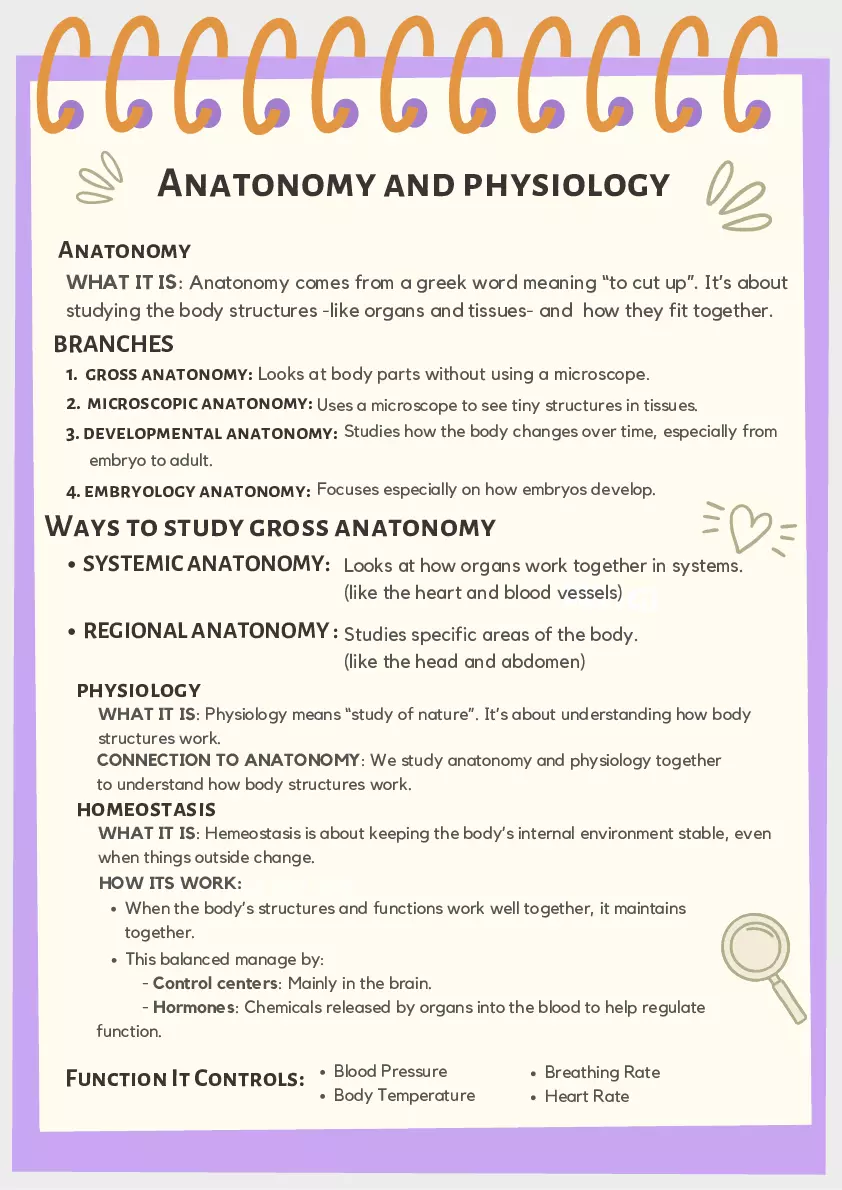
Anatonomy
WHAT IT IS: Anatonomy comes from a greek word meaning “to cut up”. It’s about
studying the body structures -like organs and tissues- and how they fit together.
BRANCHES
1. gross anatonomy: Looks at body parts without using a microscope.
2. microscopic anatonomy: Uses a microscope to see tiny structures in tissues.
3. developmental anatonomy: Studies how the body changes over time, especially from
embryo to adult.
4. embryology anatonomy: Focuses especially on how embryos develop.
Ways to study gross anatonomy
SYSTEMIC ANATONOMY: Looks at how organs work together in systems.
swigi
(like the heart and blood vessels)
REGIONAL ANATONOMY : Studies specific areas of the body.
(like the head and abdomen)
physiology
WHAT IT IS: Physiology means “study of nature”. It’s about understanding how body
structures work.
CONNECTION TO ANATONOMY: We study anatonomy and physiology together
to understand how body structures work.
homeostasis
WHAT IT IS: Hemeostasis is about keeping the body’s internal environment stable, even
when things outside change.
HOW
ITS WORK:
Do more
of what you love
When the body’s structures and functions work well together, it maintains
together.
This balanced manage by:
- Control centers: Mainly in the brain.
- Hormones: Chemicals released by organs into the blood to help regulate
function.
Function It Controls:
Blood Pressure
Body Temperature
Breathing Rate
Heart Rate