High risk strategies
● Seeks for high risk-susceptible individuals
○ Then offer individual protection
○ has advantage on intervention appropriate for individuals
○ Cost effective
● Disadvantages also lies
○ socially inappropriate
○ Limited potential for population
○ Limited potential for individuals
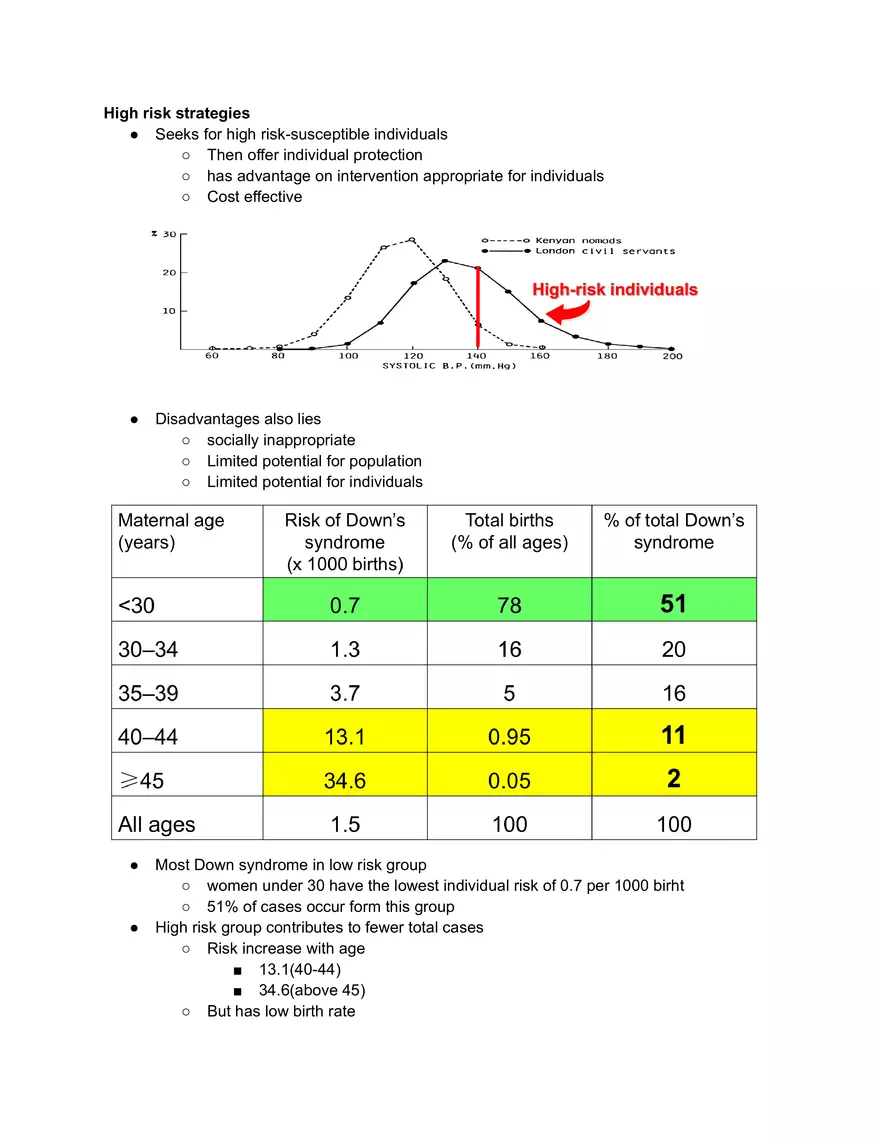
● Most Down syndrome in low risk group
○ women under 30 have the lowest individual risk of 0.7 per 1000 birht
○ 51% of cases occur form this group
● High risk group contributes to fewer total cases
○ Risk increase with age
■ 13.1(40-44)
■ 34.6(above 45)
○ But has low birth rate ■ 40-44
● 0.95%
■ Above 45
● 0.05% of births down syndrome cases
○ Only contributes to 13% of total
■ however in individual level it is shown to have this group has the highest
risk
● Screening only high risk mothers may leave out majority of cases
● Flaw
○ It may be just because the sample is larger
■ More baby is form the sample of under 30 mothers
■ Individual risk is low
● but majority of births are from this group also
● Therefore having larger % of down syndrome
ex) 10,000 women under 30 give birth with 0.7 individual risk( mathematically, will have 7 cases
100 women over 45 give birth with individual risk of 34.6=3-4 cases
Even with older women having 50 times the risk, younger women give out more total cases
because they are mothers of more babies.
If I'm a mother of under 30 (individual) I do not need to be much worried about having down
syndrome offspring. However, in an individual over 45, I should be.
From the view of the public health service, I should not be looking at risk strategies to focus
care, because even with low individual risk, mother under 30 still covers the majority of the birth
mothers.