Experimental studies:RCT
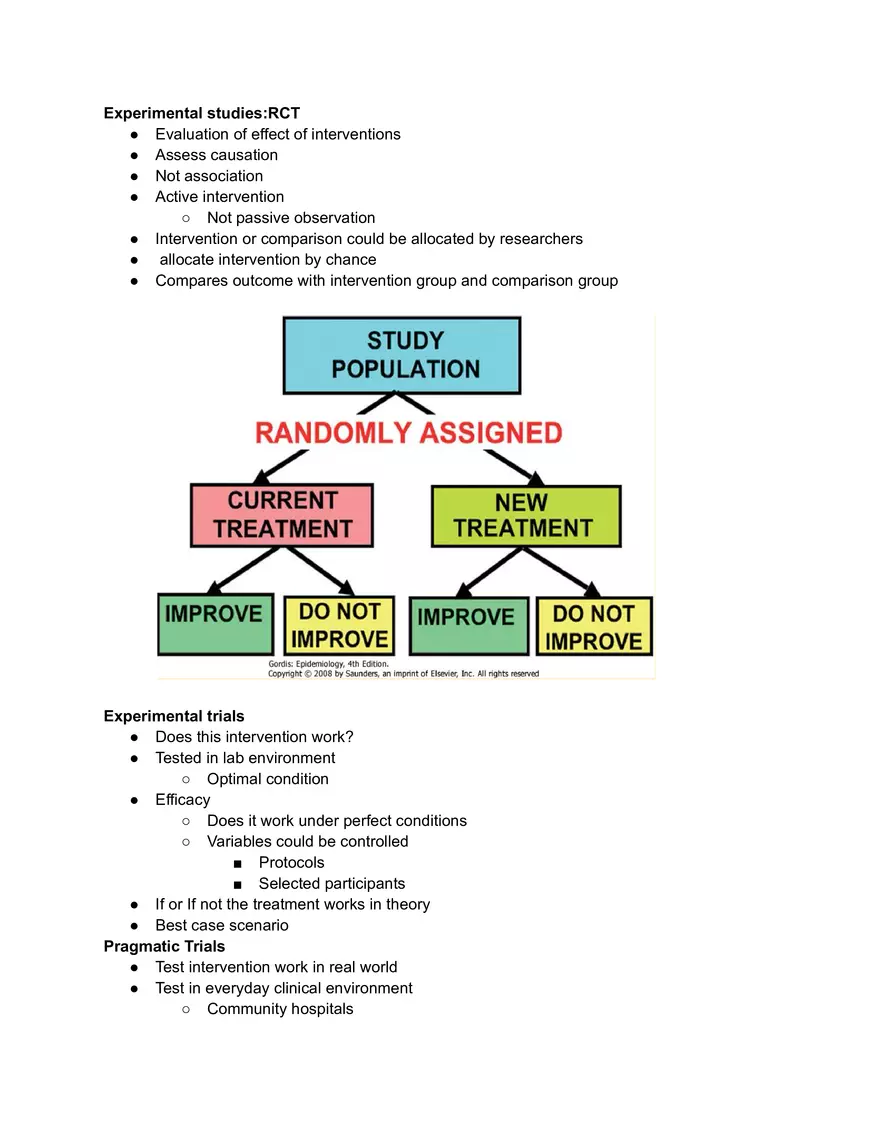
● Evaluation of effect of interventions
● Assess causation
● Not association
● Active intervention
○ Not passive observation
● Intervention or comparison could be allocated by researchers
● allocate intervention by chance
● Compares outcome with intervention group and comparison group
Experimental trials
● Does this intervention work?
● Tested in lab environment
○ Optimal condition
● Efficacy
○ Does it work under perfect conditions
○ Variables could be controlled
■ Protocols
■ Selected participants
● If or If not the treatment works in theory
● Best case scenario
Pragmatic Trials
● Test intervention work in real world
● Test in everyday clinical environment
○ Community hospitals ○ Clinics
○ Will have more patient groups
● Efficacy
○ Does this work for real humans?
○ Will have fewer control variables
● Result could be generalized
● Data could be applied to routine practice
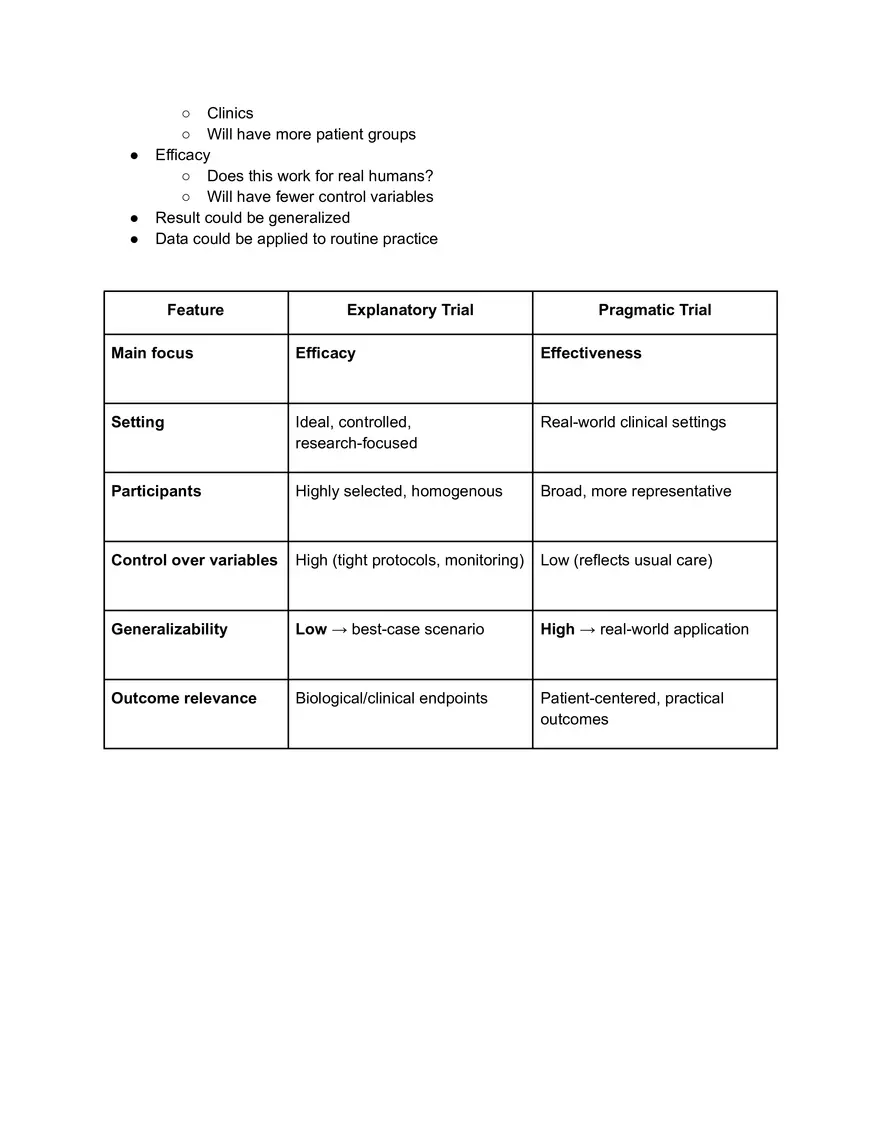
Feature
Explanatory Trial
Pragmatic Trial
Main focus
Efficacy
Effectiveness
Setting
Ideal, controlled,
research-focused
Real-world clinical settings
Participants
Highly selected, homogenous
Broad, more representative
Control over variables
High (tight protocols, monitoring)
Low (reflects usual care)
Generalizability
Low → best-case scenario
High → real-world application
Outcome relevance
Biological/clinical endpoints
Patient-centered, practical
outcomes