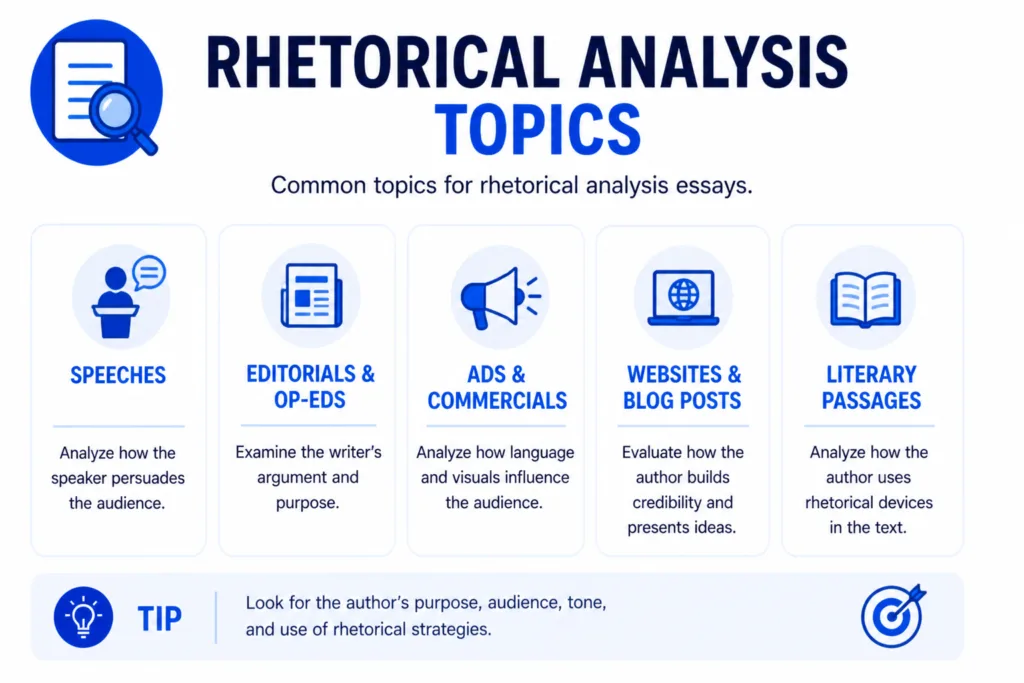
What are Rhetorical Analysis Essay Topics?
Rhetorical analysis essay topics give you a clear text to analyze. The goal is to explain how words, images, or speeches persuade a target audience.
In this guide, I’m sharing a student-friendly list so you can pick a suitable topic and start writing your next essay.
Why are They Important to Know?
To understand the concept of topics, you must know what a rhetorical essay is. It is not the same as a summary. This type of essay is focused on the rhetorical situation (speaker, audience, purpose, context) and the strategies the author uses. That could include:
- emotional appeal logic;
- credibility;
- visual storytelling;
- figurative language.
Here are two quick examples of topics that usually work well:
- Analyze how Martin Luther King Jr. uses emotional depth and clear rhetorical techniques to move listeners toward action.
- Do a visual rhetorical analysis essay on public health posters or government ads and explain how abstract images and persuasive devices shape emotional responses.
Before we start, just a quick reminder: if you need any help with writing, such things as essay writing services by EduBirdie can help improve your rhetorical essay writing without making the process confusing.
Characteristics of an Effective Rhetorical Analysis Essay
When students ask me what makes a topic actually work, I give a simple answer: good topics for a rhetorical analysis essay make persuasion easy to see.
Below are the key characteristics I always look for before I start an essay.
- Clear rhetorical situation:
A strong topic has a visible speaker, message, and context. For example, a resignation speech, a TED talk, or a company’s mission statement. These all show who is speaking and why.
The intended audience should be easy to identify. Political debates, whether in campaigns or as social commentary, work well because the audience shapes how rhetoric adapts.
- Strong persuasive strategies:
Look for texts that use emotions, appeal, logic, or credibility. These common strategies give you enough material to analyze, not just describe.
- Rich use of rhetorical techniques:
Good topics include rhetorical techniques such as figurative language, tone, repetition, or visual elements.

The message should focus on a single main claim. This helps you form a strong thesis statement and build focused body paragraphs in your essay.
- Enough depth for analysis:
Topics connected to historical events, racial injustice, or AI ethics often have layers of meaning. That depth supports critical thinking and leads to good results.
In a nutshell, an effective rhetorical analysis essay must let you explain how and why persuasion works.
Rhetoric Topics to Avoid
Not every topic is a good fit for analysis. When I review weak papers, the problem is often the topic, not the writing.
To build a strong essay, avoid the following mistakes regarding the rhetorical analysis essay topic ideas:
Very broad topics leave you with nothing specific to analyze. “William Shakespeare’s plays” instead of a single final scene from a single play makes it hard to focus on something specific.
- Texts without a clear rhetorical purpose:
Some materials don’t try to persuade anyone. Pure literary analysis, basic mission statements with no audience pressure, or short announcements rarely lead to a strong essay.
- Purely informative materials:
Textbooks, scholarly articles, or simple reports explain facts. But they don’t push emotional appeal or audience response. They work for academic essays, but not for an effective rhetorical one.
A quick test can help to be sure of your topic:
- Ask yourself if you can explain how the author persuades, not just what they say.
- If the answer is no, pick a different idea from a reliable topics list.
Recommendation: explore focused inspiration, such as IB Extended Essay Topic Ideas.
Need help with your essay?
EduBirdie’s experts are ready to assist whenever you need a hand.
Place an order
How to Choose the Right Rhetorical Analysis Topic?
The topic you choose controls how strong your entire paper will be. Solid analysis starts with texts that clearly persuade, influence, or guide an audience.
When I help students select topics, I focus on clarity, depth, and visible rhetorical strategies rather than popularity. Strong topics make rhetorical analysis easier to write.
Use the table below to quickly evaluate whether a topic works for a rhetorical essay assignment:
| Quality |
What makes it work |
| Clear speaker |
The author or speaker is easy to identify. |
| Defined target audience |
The message is clearly aimed at a specific group. |
| Persuasive goal |
The text tries to influence opinions or actions. |
| Visible rhetorical devices |
Emotional appeal, credibility, or logic appear clearly. |
| Context |
Social, political, or cultural background matters. |
| Depth |
Enough material for a strong work. |
Topics that meet these points usually yield a strong rhetorical analysis with a clear thesis statement. Moreover, it automatically helps you to build focused body paragraphs.
Top-Rated Rhetorical Analysis Essay Topics 2026
Applying the table above, I’ve created a short list that highlights the best rhetorical analysis essay topics examples. All of them consistently work well for academic writing. Each topic offers clear rhetoric, strong persuasive intent, and enough depth for an analysis.
- Rhetorical strategies used in popular TED Talk speeches.
- Emotional appeal in modern ad campaigns.
- Visual rhetoric in political cartoons.
- Persuasive devices in a public resignation speech.
- Rhetorical techniques in speeches about climate change.
- How narrative voice shapes persuasion in campaign speeches.
- Rhetoric used in social media posts during political debates.
- Persuasive strategies in nonprofit fundraising messages.
- How rhetorical devices shape meaning in activist speeches.
- Comparing rhetorical strategies across two public speeches
Additionally, if you like comparing ideas, pairing rhetoric with structure can help. In that case, compare and contrast essay topics can also be adapted into a strong rhetorical analysis.
Rhetorical Analysis Topics List: Ideas for Different Categories
Below, I’ve organized rhetorical analysis essay topics for 2026 by the most common categories students use. Each group includes clear, practical ideas that work for a rhetorical analysis essay assignment. These topics give you an opportunity to focus on the correct aspects of the essay.
Rhetorical Essay on Speeches
Unique speech ideas are one of the strongest choices. Here, the rhetorical situation, audience, and purpose are easy to identify. They work especially well for students new to rhetorical analysis.
- Rhetorical strategies used in Martin Luther King Jr.’s speeches on racial injustice.
- Emotional appeal in a presidential inaugural speech.
- Persuasive devices in a public resignation speech.
- How narrative voice shapes meaning in a final speech.
- Rhetorical techniques in campaign speeches during elections.
- The role of repetition and tone in motivational speeches.
- Rhetoric used in graduation speeches to inspire action.
- Persuasive strategies in TED Talk presentations.
- Appeals to credibility in activist speeches.
- How rhetorical richness influences audience reaction.
- Emotional depth in speeches responding to historical events.
Rhetorical Analysis Ideas of Essays and Articles
Essays and articles allow close analysis of language, structure, and argument. These topics work well for academic writing and structured body paragraphs.
- Rhetorical strategies in opinion essays about social issues.
- Emotional responses triggered by persuasive news articles.
- How authors establish credibility in scholarly articles.
- Rhetorical techniques used in argumentative essays.
- Central idea development in persuasive academic essays.
- How figurative language shapes meaning in opinion writing.
- Audience-focused rhetoric in editorial articles.
- Literary devices shape persuasion in long-form essays.
- Rhetorical analysis of essays on AI ethics.
- How persuasive strategies guide reader interpretation.
Are you interested in personal or values-based arguments? Themes from family essay topics can be adapted into rhetorical analysis paper topics.
Social and Cultural Issues Analysis
Social and cultural texts usually have clear persuasive intent and emotional appeal. These topics support critical thinking and deeper rhetorical analysis.
- Rhetoric used in discussions of racial injustice.
- Persuasive strategies in public debates about AI ethics.
- Social commentary in speeches about gender equality.
- Emotional appeal in texts addressing mental health awareness.
- Rhetorical techniques in climate change activism.
- How rhetoric adapts in online social movements.
- Central themes in cultural identity discussions.
- Persuasive devices used in public health messaging.
- Rhetorical analysis of mission statements by organizations.
- How words influence opinions on controversial issues.
- Audience targeting in social justice campaigns.
- Persuasive devices in online discussions about generational identity.
Analysis Topics on Advertisements & Media
Advertisements and media texts persuade a lot. It makes rhetorical strategies easy to spot.
If you are looking for visual analysis examples, advertisements and media texts provide some of the clearest cases of how images, color, and layout persuade an audience.
- Emotional appeal used in modern ad campaigns.
- Visual storytelling in television commercials.
- Rhetorical devices in government ads.
- Abstract images and persuasion in print advertising.
- Visual rhetoric in political cartoons.
- How persuasive strategies shape brand identity.
- Rhetorical analysis of public health posters.
- Emotional responses created by nonprofit advertisements.
- Persuasive techniques in social media marketing.
- Rhetorical strategies in video-based media messages.
- How do visual rhetorical analysis essays explain persuasion?
- Target audience influence in digital advertising.
Movies Analysis
Movies work well for rhetorical analysis because they combine words, visuals, and sound to persuade viewers.
- Emotional appeal in political documentaries.
- Persuasive strategies in war films.
- Narrative voice and persuasion in biographical movies.
- Rhetorical techniques used in courtroom dramas.
- Visual storytelling in dystopian films.
- How figurative language appears through symbols on screen.
- Rhetorical richness in historical movies.
- Emotional responses created by music and dialogue.
- Central themes in films about racial injustice.
- Persuasive devices in animated films.
- Rhetorical strategies used in social issue movies.
- Central ideas are shaped through cinematography choices.
Visual Rhetorical Analysis Essay Topics
Visual texts rely on images more than words. They make them strong topics for a visual analysis essay.
- Rhetorical devices in political cartoons.
- Abstract images used in public awareness posters.
- Visual rhetoric in government ads.
- Persuasive strategies in public health posters.
- Emotional appeal created through color and layout.
- Visual storytelling in social media campaigns.
- Rhetorical techniques in magazine covers.
- Target audience influence in visual advertising.
- Emotional depth in nonprofit visual campaigns.
- How visual elements shape the central idea.
- Persuasive use of silence and pauses in film dialogue.
- Rhetorical impact of camera angles on viewer judgment.
Topics on Education
Education-related texts are common in academic writing and easy for college students to connect with. These topics often focus on persuasion, authority, and audience.
- Rhetorical strategies used in school mission statements.
- Emotional appeal in speeches about education reform.
- Persuasive devices in graduation speeches.
- Rhetorical analysis of university promotional materials.
- Central themes in essays about student success.
- How words influence motivation in educational talks.
- Narrative voice in speeches addressed to students.
- Rhetorical techniques in debates on standardized testing.
- Social commentary in education policy speeches.
- Persuasive strategies in academic essays about learning.
- Language choices used to promote equity and inclusion in school policy documents.
- Persuasive wording in campaigns that encourage lifelong learning.
Literature Topics
Literary texts offer rich language and clear rhetorical techniques. These ideas suit students who enjoy literary analysis but still want a strong rhetorical focus.
- Rhetorical strategies in William Shakespeare’s monologues.
- Emotional appeal in speeches from classic literature.
- How literary devices shape persuasion in novels.
- Central themes and rhetoric in feminist poetry.
- Narrative voice and credibility in short stories.
- Persuasive techniques in literary speeches.
- Rhetorical analysis of “Phenomenal Woman.
- Figurative language used to influence readers.
- Rhetorical richness in dramatic dialogues.
- How rhetoric adapts across different literary periods.
Rhetorical Analysis Essay Topics on History
Historical texts often have a strong persuasive goal and a clear audience. These are reliable topics for a strong essay.
- Rhetorical strategies in speeches during major historical events.
- Emotional appeal in civil rights era speeches.
- Persuasive devices in wartime propaganda.
- Rhetorical techniques in famous resignation speeches.
- How rhetoric shaped public opinion in revolutions.
- Narrative voice in historical speeches.
- Central ideas in political speeches from the past.
- Rhetorical analysis of speeches by Martin Luther King Jr.
- Persuasive strategies in historical debates.
- How language influenced change in history.
Rhetorical Strategies Used in the Business World
Business texts are built to persuade investors, employees, and customers. Thus, they can be effectively analyzed in rhetorical essays.
- Rhetorical strategies used in corporate mission statements.
- Emotional appeal in CEO’s public addresses.
- Persuasive devices in startup pitch presentations.
- Rhetorical techniques in corporate apology statements.
- How brand storytelling shapes customer trust.
- Narrative voice in leadership speeches.
- Persuasive strategies in business advertising campaigns.
- Rhetorical analysis of internal company communications.
- Emotional responses created by corporate social responsibility messages.
- Central ideas in speeches about workplace values.
Analyze Philosophy
Philosophical texts rely on argument, logic, and audience awareness. These rhetorical analysis essay topics examples work well for more reflective academic essays.
- Persuasive strategies in classic philosophical arguments.
- Rhetorical techniques used to defend moral positions.
- Narrative voice and authority in philosophical writing.
- Emotional appeal in ethical debates.
- How rhetorical devices shape abstract ideas.
- Persuasion through logic in philosophy essays.
- Central themes in texts discussing truth and justice.
- Rhetorical analysis of speeches on human rights.
- How language influences philosophical thinking.
- Rhetoric and persuasion in modern philosophy talks.
Easy Rhetorical Analysis Essay Topics
These topics are best for beginners or short analysis essay assignments. The rhetorical techniques are clear and easy to identify.
- Emotional appeal in television commercials.
- Persuasive strategies in social media ads.
- Rhetorical devices in school speeches.
- Visual rhetoric in simple posters.
- Narrative voice in motivational talks.
- Rhetorical techniques in public service announcements.
- Emotional responses in charity advertisements.
- Persuasion in speeches about everyday topics.
- Rhetorical analysis of short opinion articles.
- How words influence audience reactions.
Advanced Topics
These topics suit longer papers. Students who want deeper analysis and stronger critical thinking should rely on them.
- Rhetorical strategies in political debates.
- Persuasive devices used in ideological speeches.
- Rhetorical richness in complex social commentary.
- Emotional appeal versus logic in policy arguments.
- How rhetoric adapts across different audiences.
- Rhetorical analysis of speeches on racial injustice.
- Persuasive strategies in discussions of AI ethics.
- Narrative voice in high-stakes political speeches.
- Rhetorical techniques used to shape public opinion.
- Central themes in transformative historical speeches.
Tips for Turning any Topic into a Strong Thesis
From my experience, the fastest way to strengthen a topic is to add a clear claim. Do not focus on what rhetorical techniques appear. Focus on how they work and why they matter for the audience. That shift instantly turns a basic idea into a strong, focused rhetorical analysis thesis.
Rhetorical Analysis Essay Ideas for Different Academic Levels
Remember that not every topic works the same way for every level. A strong choice depends on your experience with academic writing. Also, it is important how deep your analysis needs to be.
Thus, here is the list of topics for a rhetorical analysis essay at different academic levels!
High School Topics
These topics focus on clear rhetoric and easy-to-spot persuasive techniques. They are ideal for learning how to write a rhetorical analysis without getting overwhelmed.
- Emotional appeal in school assembly speeches.
- Persuasive strategies in graduation speeches.
- Rhetorical techniques used in public service announcements.
- Visual rhetoric in educational posters.
- Narrative voice in motivational talks for teenagers.
- Rhetorical analysis of short opinion articles.
- Persuasive devices in advertisements aimed at students.
- Rhetorical strategies in speeches about teamwork.
- Central themes explored in youth-focused speeches.
- Rhetorical analysis of simple political speeches.
- How words influence behavior in school rules.
Topics for College Students
College-level topics allow deeper analysis and more background research. These work well for longer rhetorical analysis essay assignments.
- Rhetorical strategies used in political debates.
- Persuasion techniques in social justice speeches.
- Rhetorical analysis of TED Talks on modern issues.
- Emotional appeal in essays about public policy.
- Rhetorical techniques in campaign speeches.
- Narrative voice in activist writing.
- Persuasive strategies in media commentary.
- Rhetoric topics related to climate change debates.
- How rhetoric shapes opinions in academic essays.
- Rhetorical analysis of mission statements.
- Themes explored in speeches addressing inequality.
- Persuasive devices used in opinion editorials.
Advanced and Honors Topics
These topics suit students comfortable with rhetorical analysis and critical thinking. They require close reading and strong argument development.
- Rhetorical analysis of speeches on racial injustice.
- Persuasive strategies in discussions of AI ethics.
- Rhetorical techniques shaping public opinion.
- Narrative voice in high-stakes political rhetoric.
- Rhetoric topics in philosophical debates.
- Emotional appeal versus logic in ethical arguments.
- Rhetorical analysis of influential historical speeches.
- Persuasive strategies in ideological discourse.
- Rhetorical richness in complex social commentary.
- Themes explored in advanced political writing.
- Rhetorical analysis of landmark policy speeches.
Common Mistakes: DON’T Write Rhetorical Analysis Like That
Many weak papers fail not because of poor writing, but because of the topic choice and focus. I see the same issues every year, especially in good topics for a rhetorical analysis essay that look interesting but don’t lead to real analysis.
- Analyzing content instead of rhetoric: Students often explain what the text says rather than how it persuades. Rhetorical analysis should focus on strategies, not facts or plot.
- Retelling instead of analyzing: Summarizing speeches or articles fills space but adds little value. A strong rhetorical analysis explains why specific techniques influence the audience.
- Ignoring the audience: Every rhetorical text targets someone. Skipping the intended audience makes the analysis feel incomplete and weakens the thesis.
Avoiding these mistakes keeps your essay focused. Moreover, it will help to align with the purpose of rhetorical analysis.
Choose a Topic That Lets you Analyze, Not Summarize
The best rhetorical analysis essay topics 2026 give you something to analyze, not just retell. A strong topic makes persuasion visible and helps you explain how words, images, or speeches influence an audience. That focus turns an analysis essay into real critical thinking instead of a summary.
When you choose essay topics for such analysis, look for a clear purpose, audience, and rhetorical choices. These elements help you write a rhetorical essay with a strong thesis. The right topics make the entire writing process easier and lead to better results.
Use this guide as a starting point to find rhetorical analysis essay ideas that match your level and goals. When you focus on analysis rather than description, every essay becomes stronger!
I hope you find the perfect topic in this list and ace your next essay!
And in case you need any help, EduBirdie is always ready to improve your writing!
FAQ
What are some good topics for a rhetorical analysis essay?
Good rhetorical analysis essay topics focus on persuasion rather than just information. Strong choices include: political speeches; opinion essays; ad campaigns; TED Talks; social media messages. These texts offer clear strategies, a defined audience, and sufficient depth. With them, you can write a strong rhetorical analysis essay instead of a simple summary.
What are 5 examples of rhetorical questions?
Rhetorical questions guide thinking rather than seeking direct answers.Here are five common examples used in analysis essays: Do we really want to live in a society like this? Who benefits from this decision? Is freedom possible without equality? How much longer should we stay silent? What does this say about our values?
What is a question statement called?
A declarative statement. In academic writing, students do this to create a thesis or argument. For example, learning how to turn a question into a thesis statement helps turn a research idea into a clear claim.
Can I analyze advertisements or videos?
Yes, and they often work very well. Advertisements and videos rely heavily on visual storytelling, emotional appeal, and persuasive techniques. These texts are popular rhetorical analysis paper topics for college students. It is connected to the fact that the rhetoric is clear and easy to analyze.
Are political speeches good for rhetorical analysis?
Absolutely. Political speeches are some of the best rhetorical essay topics. They have a clear purpose, a strong target audience, and obvious persuasive strategies. When you write an analysis of a political speech, you can clearly show how rhetoric shapes opinions. It guarantees an effective rhetorical analysis essay.