PART THREE: The Problem With Megacities
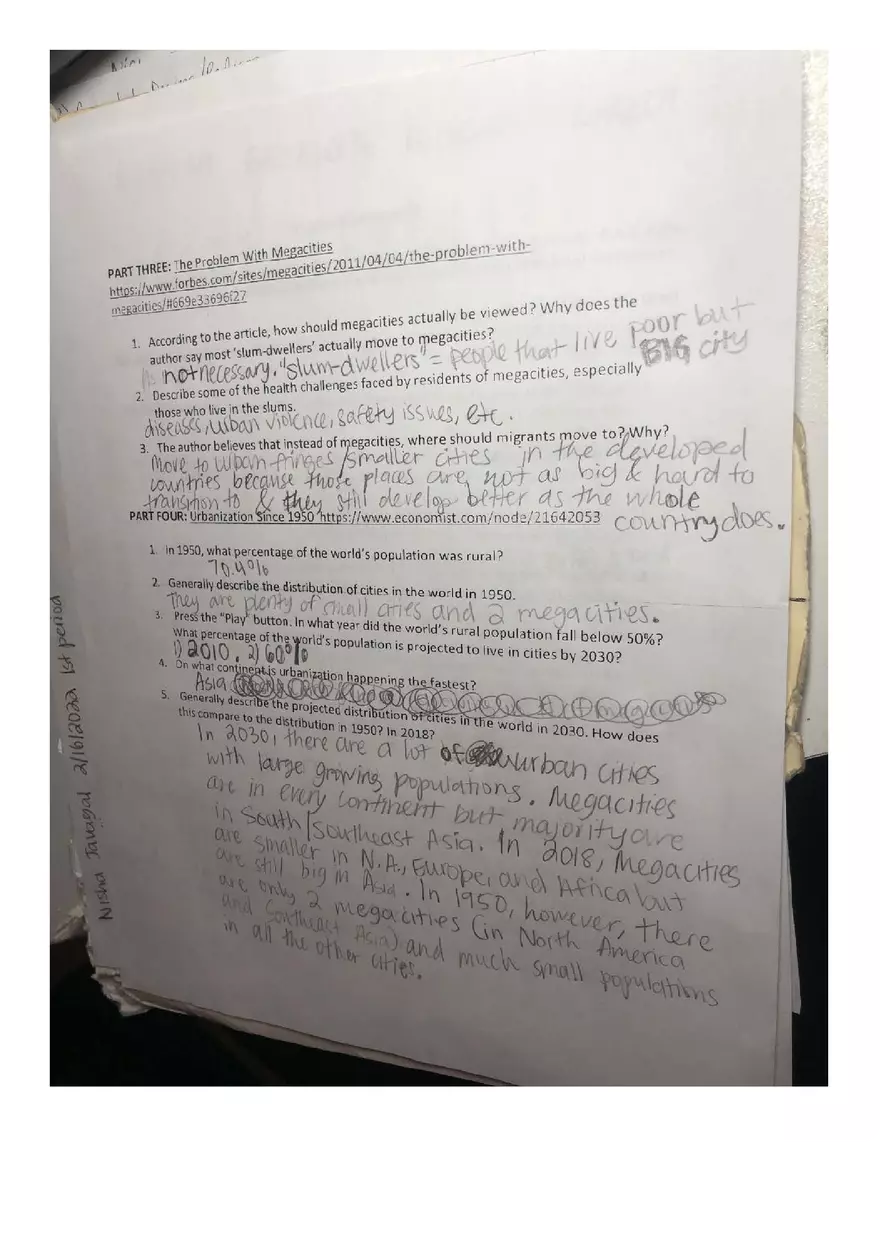
1. According to the article, how should megacities actually be viewed? Why does the author say most 'stum-dwellers' actually move to megacities?
poor but eresidents nie gacities, especially ary. "slum-dwellers" = people that live to not necessary. "Shu city
those who live in the slums. diseases Miban liban violence, safety issues, etc.
3. The author believes that instead of megacities, where should migrants move to? Why? where should the developed
countries because those places are not as big & hard to transition to & they still develop better as the whole country does.
PART FOUR: Urbanization Since 1950 https://www.economist.com/node/21642053
3 in 1950, what percentage of the world's population was rural?
70.4%
2. Generally describe the distribution of cities in the world in 1950.
They are plenty of wall aries and a megacities. Presi the "Play" button. In what year did the world's rural population fall below 50%?
what percentage of the world's population is projected to live in cities by 2030?
On what contineklis urbanization happening the fastes? Asia
Generaly describe the projectes distribution of atles lit the world in 2030. How does this compare to the distribution in 1950? in 2018? In 2030, there are a lot of urban cities
with large growing popwations. Megacities an in every continent but majority are in South Southeast Asia. In 2018, Megacities ave smaller in N.A, Europe and Africa but are still biyal ave only 2 mega cities (in North America Al Aow. In 1950, however, there in an the other offries. theat Awal and much small populations
Nisha Javagal 2/16/2022 kat penod