Key Takeways
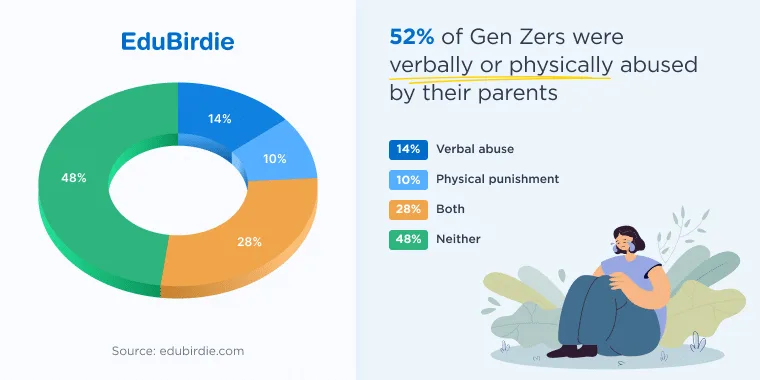
- Some 52% of Gen Zers were verbally or physically abused by their parents, with 25% blaming them for their mental or physical health problems.
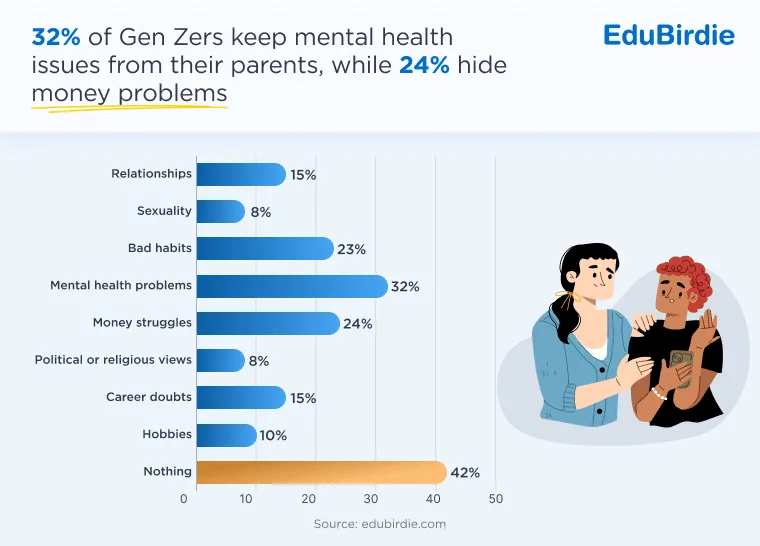
- To keep the peace and avoid causing disappointment, 32% hide their mental health struggles, 15% keep relationships secret, and 8% shield their sexuality.
- Some 67% of Gen Zers plan to raise their children differently from how their parents raised them.
- However, despite their disagreements, 87% are thankful towards their parents, and 32% see them as a role model.
There’s no better generation than Gen Z when it comes to sticking to their values, setting boundaries, and prioritizing their mental health.
But parents complicate things. You don’t get to pick em, you have to share a home, and they know exactly which buttons to press. They insist on talking politics, share Facebook conspiracies as fact, and answer “back in my day” to everything.
Exploring the relationship between Gen Z and parents, EduBirdie surveyed 2,000 Gen Zers with one or both living parents on their upbringing, feelings towards family, and how those experiences have shaped their plans for parenthood.
Growing Up Gen Z: The People WHO Raised Them

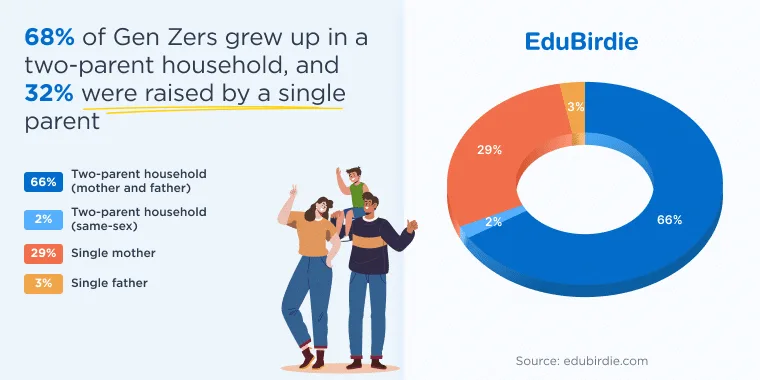
For such a progressive generation, Gen Z’s upbringing was pretty traditional – 68% were raised by two parents under one roof.
Where that wasn’t the case, it was usually moms doing both jobs, with 29% of Gen Z raised by a single mother.

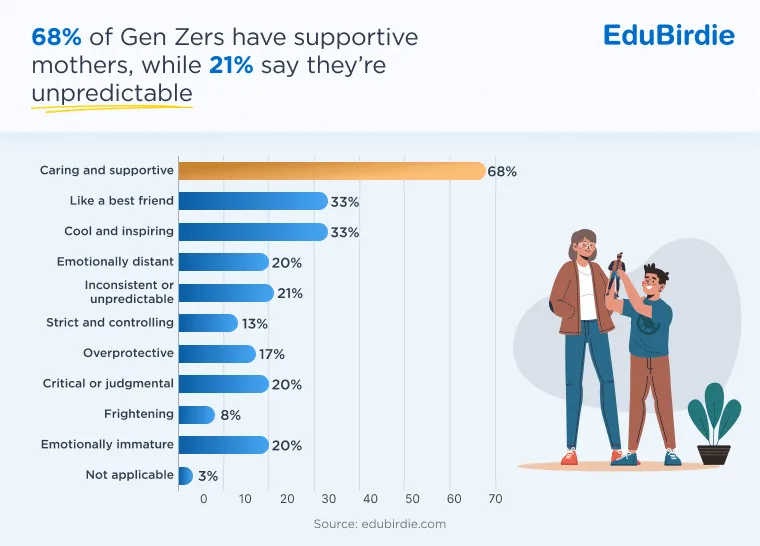
Some 68% of Gen Zers say their moms are caring and supportive.
But often that love can be smothering, with 20% branding them critical and 17% overprotective. You never know which version you’re going to get, with 21% admitting their mother can be inconsistent and unpredictable.

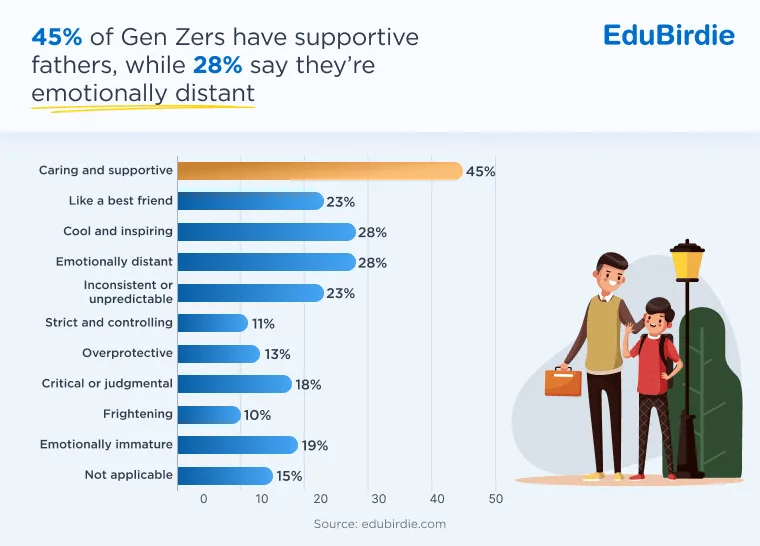
With Dad, the relationship isn’t quite the same. While 45% praise their fathers for being caring and supportive, 28% describe them as emotionally distant. He’s in the house, but not always in the room.
Behind Closed Doors: Was Home Always a Haven?

Some 14% of Gen Zers were verbally attacked growing up, 10% physically punished, and 28% both. Their parents might have called it tough love, but Gen Z has another name for it: abuse.

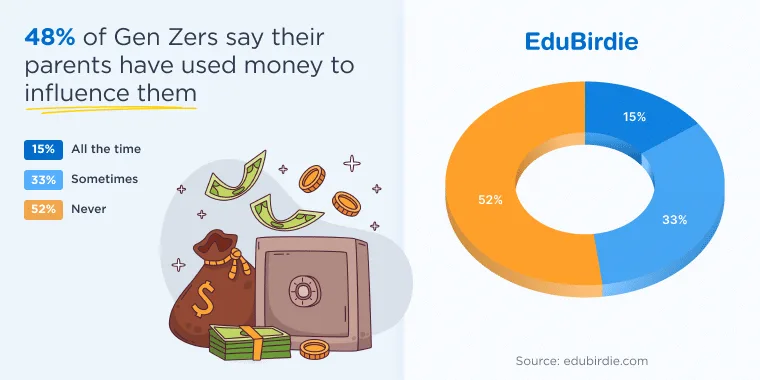
Parenting Gen Z is easy – just dangle a few dollars in front of their faces. Some 48% of young people admit their parents have used money to influence them. They might not like every order, but it pays to listen.

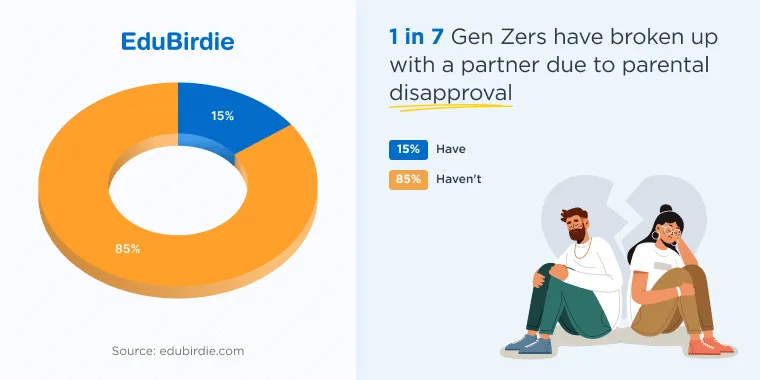
But as they got older, that control didn’t stop at “tidy your room” or “do your homework.” It began to influence their private lives, with 15% admitting they’ve broken up with a partner to keep their parents sweet, whether due to financial dependence or just to avoid their disapproval.

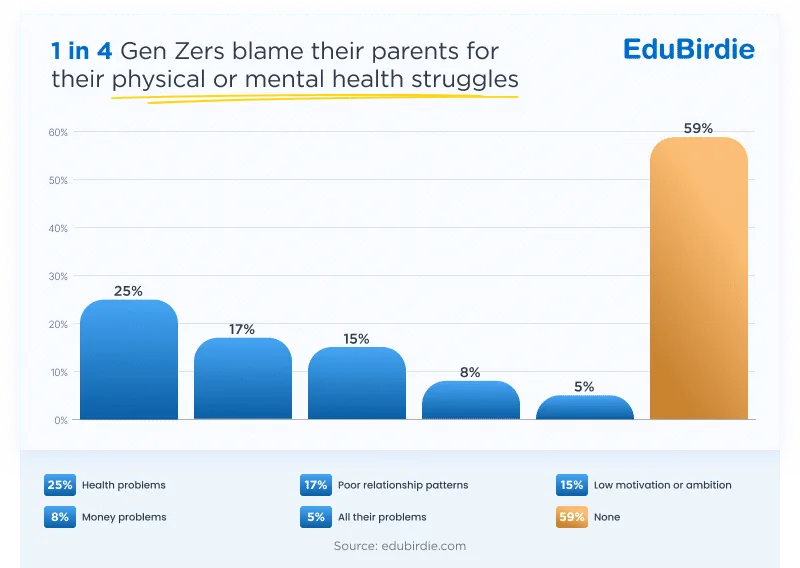
Parents of Gen Z kids clearly didn’t get everything right, and those bad memories were often canon events – 25% blame their parents for their physical or mental health problems, 17% say they’re the reason they struggle in relationships, and 15% claim they inherited their low motivation.
It’s Complicated: Gen Zers’ Relationship With Their Parents

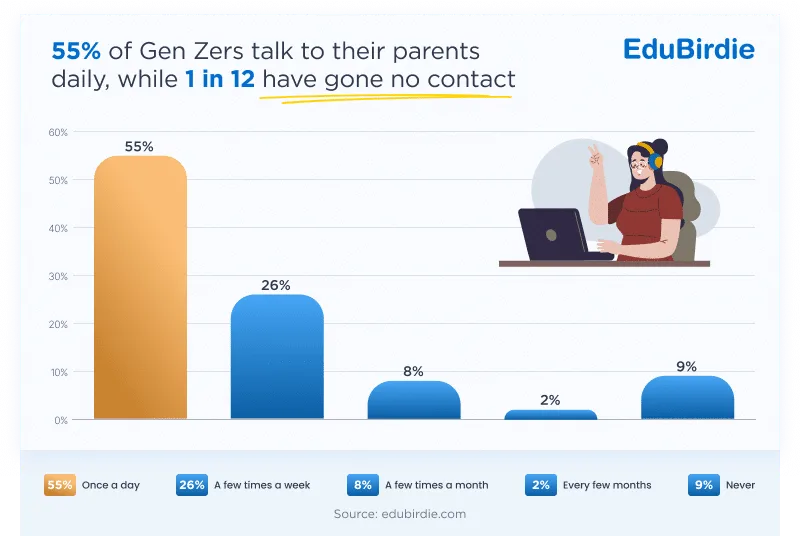
The oldest Gen Zers have grown up and moved out, but they still pick up the phone – 55% talk to their parents daily, and 26% at least a few times a week.
However, whether through falling out or growing apart, 9% admit they’ve stopped contacting their parents altogether.

There’s more to being a parent than putting food on the table and keeping a roof over their heads. Kids want a hug after scraping their knees and a shoulder to cry on after their first heartbreak.
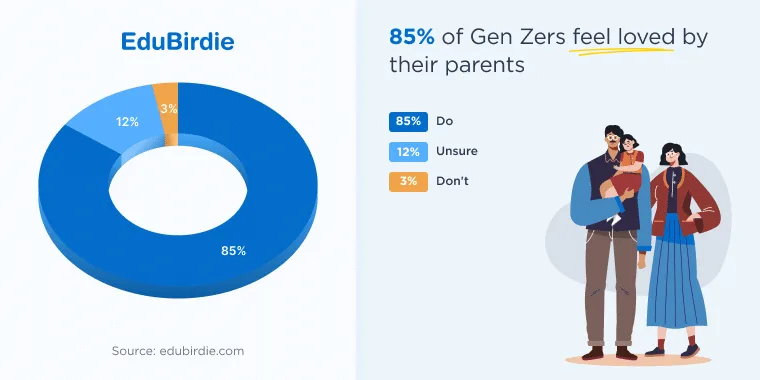
For the most part, Gen Z received that affection, with 85% feeling loved by their parents. However, 12% aren’t so convinced.

Many parents have it all planned out… They want their children to become doctors and business owners, have three kids, and buy a big house next door. But for many Gen Zers, American Dream may look different.
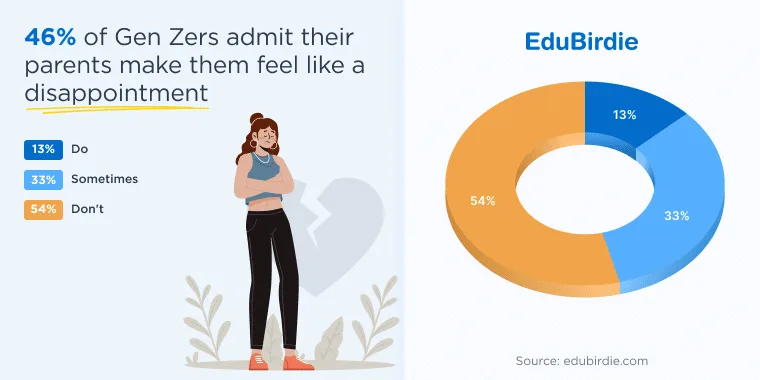
That gap in expectations is already creating tension – with 46% admitting they feel like a disappointment for the life choices they’ve made, and 13% regularly facing their parents’ disapproval.

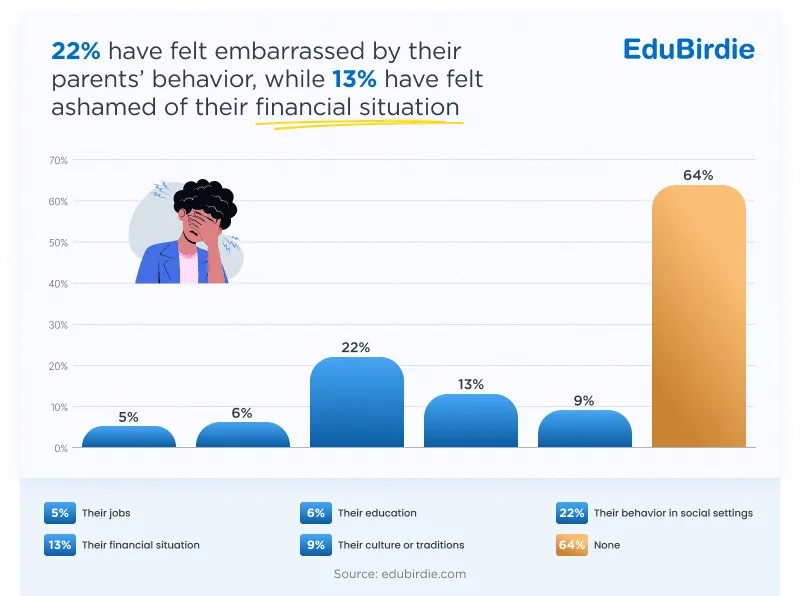
That disappointment goes both ways. Some 22% admit they’ve felt embarrassed by their parents’ behavior in social settings, 13% cringe at their financial situation, and 9% give the side eye to their cultural norms and traditions.
Cry Now, Pay Later: The Burdens Gen Z Carry and Hide

Some 32% of Gen Zers hide their mental health struggles from their parents, while 24% have kept money struggles secret. Likewise, many young people cringe at the idea of disclosing bad habits such as smoking and drinking (23%), relationships (15%), and even their sexuality (8%) to the people who raised them.
Despite all the daily phone calls and family group chats, there’s plenty that goes unsaid…

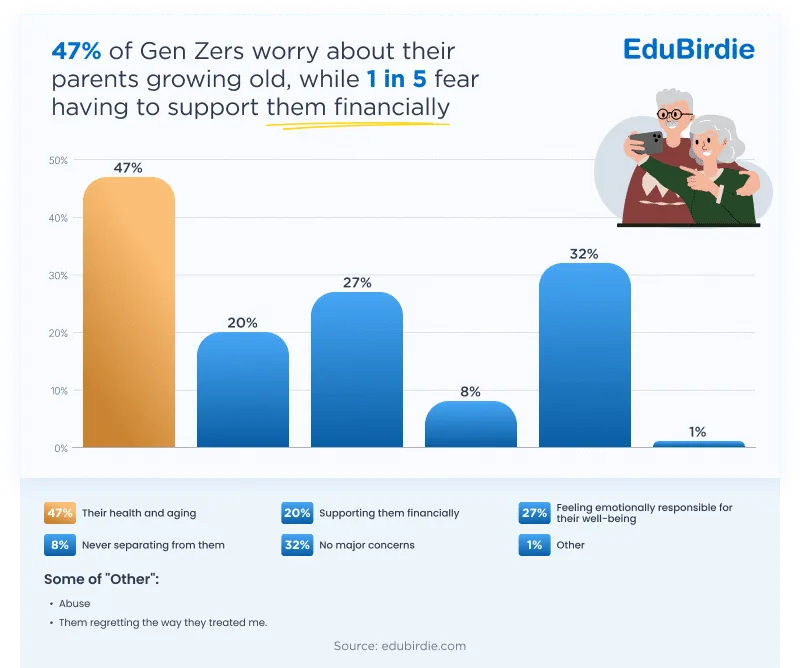
Forget student loans and climate change. What 47% of Gen Zers are really stressing over is their parents’ aging, with 20% worrying how they will support them financially in old age.
Gen Z Parenting Style: The Young Generation’s Childraising Plans

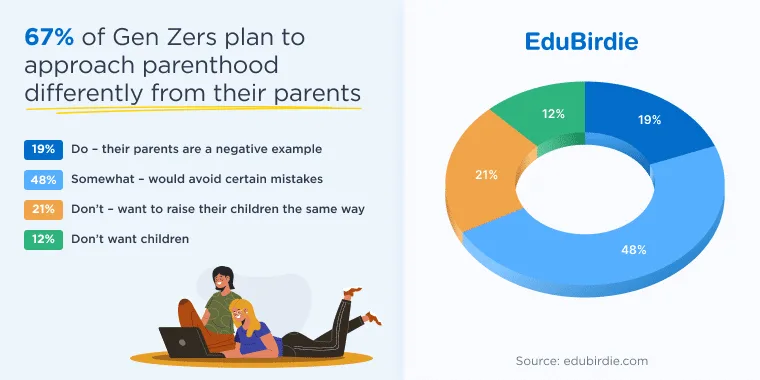
Using their flawed childhoods as a parenting manual, 67% plan to take a different approach – 19% of Gen Z parents plan to do the opposite to break the cycle, and 48% will make some changes to avoid making the same mistakes.
However, 12% plan to take a radical approach to parenting: staying childless entirely.

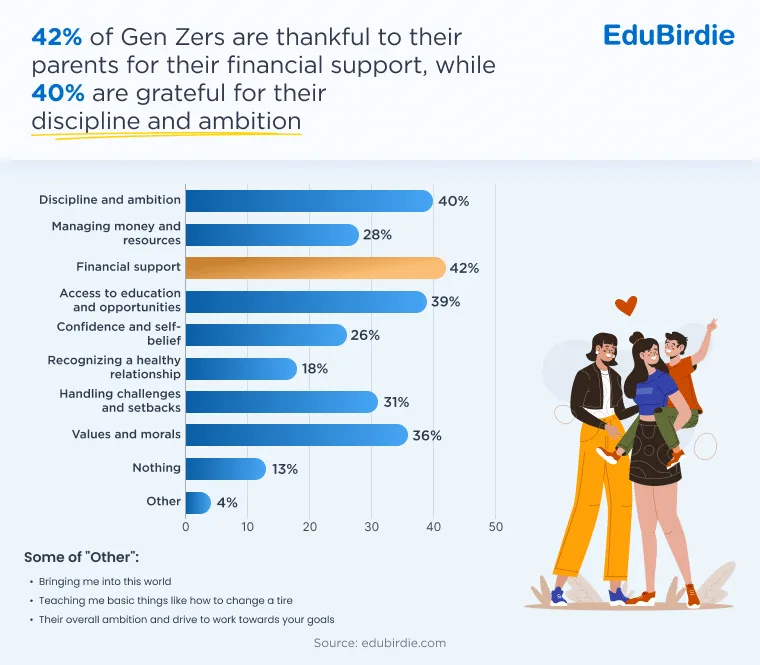
However, despite the occasional spanking and look of disapproval, for most of Gen Z, Mom and Dad didn’t do too badly. Some 42% say they’re thankful for the financial support their parents provided them, and 39% appreciate the education and opportunities they received.
Likewise, they also thank them for making them the people they are today – 40% credit their parents with instilling discipline and ambition in them, 36% with the values they live by, and 31% for the resilience to handle life’s challenges.

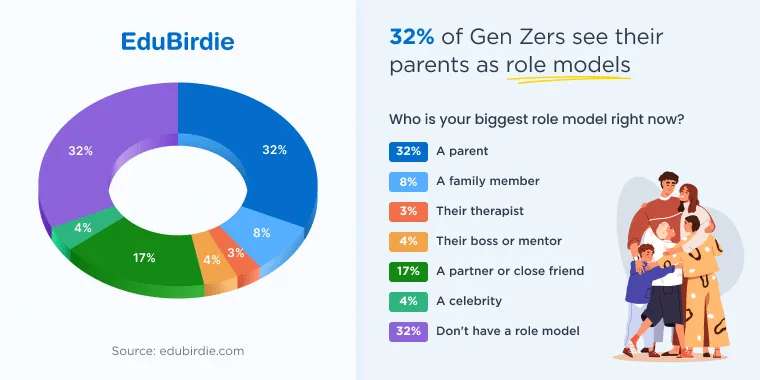
In fact, 32% of Gen Zers see one of their parents as a role model, more so than their bosses and mentors (4%) or favorite celebrities (4%).
Childhood may not have been all birthday parties and bedtime stories, but for the most part, our parents did their best. After all, between the arguments, guilt trips, and unsolicited life advice, they managed to raise a generation that slays.
Methodology: The study surveyed 2,000 Gen Z respondents aged 21–29 across the United States. Participants were recruited via online panels using Random Device Engagement (RDE) to ensure a diverse and representative sample. To maintain relevance to the study objectives, respondents with deceased parents were excluded from the analysis. The study did not target specific ethnicities or social backgrounds.