AUDIENCE, COUNTER-ARGUMENTS, & REBUTTALS
● What is an audience?
○ In persuasion, your audience is the person or group you are trying to persuade.
■ The more specifically you can define your audience, the more specifically
you can tailor your arguments.
○ A younger audience is more likely to be persuaded by emotional arguments. An
older audience is more likely to be persuaded by logical and ethical arguments.
● Counter-Argument
○ As a prefix, “Counter” means “Against.”
■ A counter-argument is a reason someone might disagree with your
position. It’s a reason that goes AGAINST your side, something the
opposition will say to convince the audience that you are wrong.
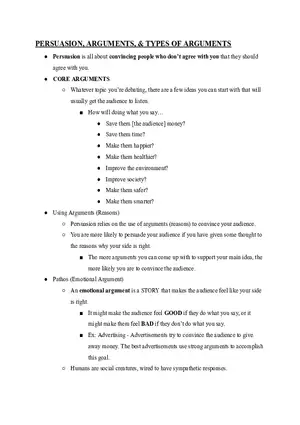
○ Anti-Core Arguments: If people listen to the other side of you, how will they
■ LOSE money?
■ LOSE time?
■ How will it HURT society?
■ HURT the environment?
■ Make people SAD?
■ Make people UNHEALTHY?
■ Make people DUMBER?
■ Make people UNSAFE?
● Rebuttal
○ A rebuttal is a counter-counter-argument - a reason why the counter-argument is
wrong.
○ Your RESPONSE to the opponent’s counter-argument.
■ Usually, the pattern is:
● “Those who oppose my idea might say [counter-argument].
However, what they don’t understand is that this is incorrect
because [rebuttal]. ● Counter-Arg & Rebuttal - Why it matters
○ Stating a counter-argument shows you have thought about the other side’s
position, which makes you seem thoughtful and reasonable.
■ If you can rebut the opposition, the audience is more likely to be on your
side.
■ Having a well-planned rebuttal shows the other side hasn’t considered
everything, but you have.