A position paper presents a clear stance on a debatable issue. Introduce the problem, state your position, support it with credible evidence, and address major counterarguments fairly. Conclude by explaining the implications of your argument or recommending a practical course of action.
Writing a position paper may sound daunting, but it’s a great opportunity to express your views on an important issue. Whether you’re passionate about a topic or want to take a stand on something you believe in, a position paper allows you to persuade others with facts and logic. In this guide, we’ll show you how to write a position paper in a simple and stress-free way, so you can focus on what really matters – sharing your perspective and making an impact. The first step? Choosing a topic that excites you, whether it’s a current controversy or a personal reflection. Once you have your topic, you’ll be ready to take a strong position and support it with solid arguments.
Now that you know the basics, let’s explore what it really is and why it’s such an important tool for presenting your ideas.
What is a Position Paper?
A position paper definition refers to an academic writing piece that presents a clear, arguable opinion on a specific issue or problem. Its purpose is to convince the reader that your viewpoint is valid and supported by evidence. Unlike a simple opinion piece, a position essay requires a strong stance backed by facts, research, and logical reasoning. If this assignment seems too difficult, you might find using the buy literature review paper.
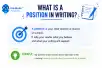
Key features of a position paper:
- Clear Argument: The core of any position paper is a well-defined argument where you assert your stance on the topic.
- Evidence-Based: A position essay is not just about stating an opinion but backing it with credible sources and facts.
- Structure: It typically follows a formal structure with an introduction, body (with supporting arguments and counterarguments), and a conclusion.
The main purpose of a position paper is to persuade your audience that your point of view is the most logical and reasonable. Whether you’re writing about a political issue, a social debate topic, or a scientific problem, the goal is to inform and convince of the relevance and importance of your position. For example, a paper on climate change might argue that governments should take immediate action to reduce carbon emissions to combat global warming.
The Types of Strong Position Papers
Position papers can be categorized based on the approach or method used to present and support an argument. These categories highlight the primary focus and intent of each type:
- Expository position paper explains or interprets complex ideas or arguments from other sources. It helps readers understand complicated concepts or theories by summarizing and analyzing existing information.
Example: Explain and interpret Darwin’s theory of evolution and its implications in modern biology.
- Comparative paper compares multiple viewpoints or positions, highlights the strengths and weaknesses of each, and advocates for one as better or more justified.
Compare renewable energy sources vs fossil fuels to determine the more sustainable and practical solution for future energy needs.
- Evaluative position essay evaluates the validity, strength or effectiveness of an argument or position. It identifies weaknesses and strengths to form an opinion about the stance being evaluated.
Evaluate a new education policy by reviewing its measurable outcomes, shortcomings, and overall impact on students.
- Constructive type proposes new ideas or solutions to existing problems. It emphasizes original thinking and suggests actionable strategies or policy recommendations and supports them with logic and evidence.
Propose new urban planning policies to reduce traffic congestion and improve public transportation.
Understanding these four approaches can help you effectively structure your position paper according to your assignment or project’s specific goals and requirements.
Position Paper Outline
The most important thing is to focus on your position paper outline. Regardless of what topic you choose, start with the structure. Here is how to start a position paper:
1. Introduction.
- Introduce your topic clearly.
- Provide some general background on your chosen topic and explain why your paper’s subject is important.
- Assert your thesis that reflects your view of the issue.
Your introduction must have a dual purpose: to define both the topic and your approach to it and to interest the reader in what you have to say. The way you approach your topic must be reflected in your thesis statement. The most efficient way to introduce a topic is to explain the context. Explain your topic clearly, giving context without confusing the reader about your viewpoint. If your topic is complex, discuss all the technical details and lead your target audience into your thesis statement. Moreover, when writing a position paper, you can add another sentence to your thesis if it requires an additional explanation.
2. Body Paragraphs.
Your Main Argument.
- Provide your main point. Present an educated and informed opinion.
- Talk about support and proof by showing your reference (statistics).
- Provide your second point with the same points.
- Provide your third fact, ensuring it’s still convincing even if it’s weaker.
Of course, you should provide more than three main points, but include at least three supporting facts.
Counterarguments.
- Summarize the counterclaims to identify your position and explain it.
- Provide supporting evidence and sources for counterclaims.
- Make sure to refute the counterclaims.
- Provide supporting evidence for every argument that you make.
Since you would like to provide your position, it is necessary to think about counterarguments by questioning why someone disagrees with your opinion. Think about how to respond to them and explain to your audience why they should accept your argument. You should tell why the counterargument is mistaken. The purpose here is to make your readers see that your argument is stronger than the counterarguments that you have. Make sure that you present each argument fairly and remain objective. It will make your position essay valid.
3. Conclusion.
You should remember that your final section is mostly summing up your thesis in different words. Once done, you must provide the key facts that confirm your arguments.
Position Paper Example
Subject: Artificial Intelligence
Course: Ethics in Technology
Topic: Why AI-Based Tools in Education Need Regulation
When AI-powered educational tools first became widespread, debates emerged among educators and students regarding their fairness and accuracy. Many initially relied solely on anecdotal experiences or subjective perceptions, neglecting rigorous, data-driven evaluations. However, extensive research now clearly shows that AI algorithms can contain biases affecting admissions decisions, grading systems, and personalized learning recommendations. For example, studies analyzing AI-driven admissions software reveal that certain algorithms unintentionally favor specific demographics over others due to historical biases embedded in their training data.
What makes regulation necessary is AI’s extensive impact on educational opportunities and student outcomes. Proper oversight and clear guidelines can ensure these technologies enhance educational fairness rather than perpetuate inequality. Therefore, establishing regulatory standards for AI tools in education is crucial, a position supported by strong empirical evidence and data analysis.
As demonstrated by this position paper example, clearly introducing your topic, providing relevant evidence, and addressing opposing viewpoints strengthens your argument significantly. Always begin with a well-defined main point and use this sample as a guide when structuring your own position paper.
Writing a Position Paper: Step-by-Step Guide
Writing a successful position essay involves clear, structured steps. If you’re wondering how to write a position paper, here’s a detailed, step-by-step guide to help you create an effective and persuasive work:
Step 1: Choose Your Topic
Select a topic that interests and motivates you. Ensure the topic is arguable, relevant, and specific enough to clearly present your position.
Step 2: Conduct Research
Gather initial information about your chosen topic from credible sources. This research will help you understand the different viewpoints and refine your stance clearly.
Step 3: Create an Outline
Develop an outline to structure your ideas logically. Your outline should include an introduction, body paragraphs (arguments and counterarguments), and a conclusion.
Step 4: Write the Introduction
- Briefly introduce your topic.
- Provide essential background information to clarify your subject.
- Clearly state why the topic is important and relevant.
- Finish by clearly stating your position (thesis statement).
Step 5: Develop the Body Paragraphs
- Clearly summarize opposing viewpoints and arguments.
- Anticipate counterarguments to your thesis and address them directly.
- Present a clear, well-informed opinion supported by credible sources.
- Provide strong arguments, at least three pieces of evidence, credible statistics, relevant studies, and data to support your stance effectively.
- Explain clearly why your position is superior and justified.
Step 6: Write the Conclusion
- Restate your thesis clearly in different words.
- Summarize the main points you’ve discussed in your paper.
- Provide a compelling closing statement highlighting the importance of your stance and the insights you gained.
Step 7: Proofread and Edit
- Carefully review your paper for grammar, spelling, and punctuation errors.
- Check the logical flow of your arguments and clarity of your statements.
- Make necessary revisions to ensure your paper is polished and persuasive.
Following these clear and structured steps will help ensure your position paper is compelling, logical, and impactful.
Position Paper Topics
When choosing your position paper topic, you should always take a side on a specific subject. Start by selecting an arguable topic that inspires you. If something is not inspiring you, your topic will not sound motivating and confident. Ask yourself the following questions that will help you to provide a strong argument:
- What does the issue represent for you?
- Does it involve controversy?
- What are the main counterarguments?
- Is it a moral issue?
- Are you personally biased toward one of the existing positions?
- Can the issue be narrowed down effectively?
Here are 15 competitive position paper topics to get you started:
- Global warming is a political hoax.
- Gambling should be prohibited by law.
- TikTok negatively impacts mental health among teenagers.
- Black Lives Matter is not only a social movement.
- Video games can significantly improve cognitive skills in teenagers.
- It is still important for students to read books in print instead of eBooks only.
- AI-based admissions systems in universities are biased.
- Alcohol is a part of the culture in several communities and nations.
- Cryptocurrency should replace traditional money.
- Influencers have too much power over young people’s opinions.
- Self-driving cars are safer than manually driven vehicles.
- Cats are better pets than dogs.
- Online education provides equal or superior quality compared to traditional education.
- Esports should be recognized as an official Olympic sport.
- Vaccination is the link to numerous infant diseases and immune mutations.
As you can see, each statement clearly expresses an opinion. To strengthen your position paper, provide your audience with strong evidence and statistical data, addressing both your arguments and potential counterarguments. For instance, you may include viewpoints from people who disagree with your stance and then provide evidence to refute those claims effectively.
Of course, these topics serve as position paper examples to spark your own ideas. If you’re uncertain about choosing a suitable topic, consider issues relevant to current events. Generally, avoid controversial themes like religion or deeply moral issues unless you’re confident in providing robust counterarguments and thoroughly researching these topics.
Useful Position Paper Tips
As you might know, some position papers are better than others. Starting from stellar grammar and choosing a position topic to collect good evidence with clear counterarguments, it is all in the mix. Here are some tips that will help you write a better position paper:
- Choose a timely, relevant topic that makes you feel inspired.
- It should be a subject that you know well.
- Remember to provide both opinions. It is better to provide a position paper outline in two columns.
- Start with the preliminary research and find similar papers.
- Collect evidence and write it down.
- Identify your intended audience.
- Keep your tone confident.
- Clearly state your position.
- List and refute every counterargument.
- Include supporting data and use quotes.
- Pay attention to your reference and format.
- Keep things simple to be accessible.
- Each paragraph that you use should talk about a single idea.
- Always proofread your paper and read it aloud. Remember to check your writing style for quotations (e.g., following APA 7 rules).
- Double-check your grading rubric.
Following these rules and tips will help you develop a strong and effective position paper format.
When Your Position Paper is Challenging
When you are dealing with a position paper, it is easy to get confused and feel stressed, especially if you are dealing with a controversial topic that you have been provided. Even if you can choose something that you would like, it is difficult when you have little time to complete your essay and find relevant sources. Do not give up because our EduBirdie experts can help you with any type of paper by writing a perfect text from scratch, which eliminates plagiarism risks! Do not wait and worry when you can place an order and receive an immediate reply 24/7.
FAQ
How long should a position paper be?
The position paper usually follows a classic pattern where you have an introduction, three to five body paragraphs, and a conclusion. While there is no specific word count, your text should be at least 3-4 pages long, not counting your title page and the Bibliography. Typically, it should be at least three pages (around 1000 words) to clearly state your position and include all relevant references.
What is the difference between a position paper and an argumentative essay?
The main difference lies in their scope and purpose. A position paper presents a clear position on a specific issue and supports it with evidence from credible sources. In contrast, an argumentative essay looks at both sides of the issue and aims to persuade the reader using a reasoned argument, often incorporating personal opinions, experiences, and facts.
What is one thing to avoid when writing a position paper?
Avoid passive voice and uncertain words like “maybe,” “perhaps,” or “possibly” because they weaken your argument. Also, skip phrases like “in my opinion”—your reader already knows it’s your viewpoint.