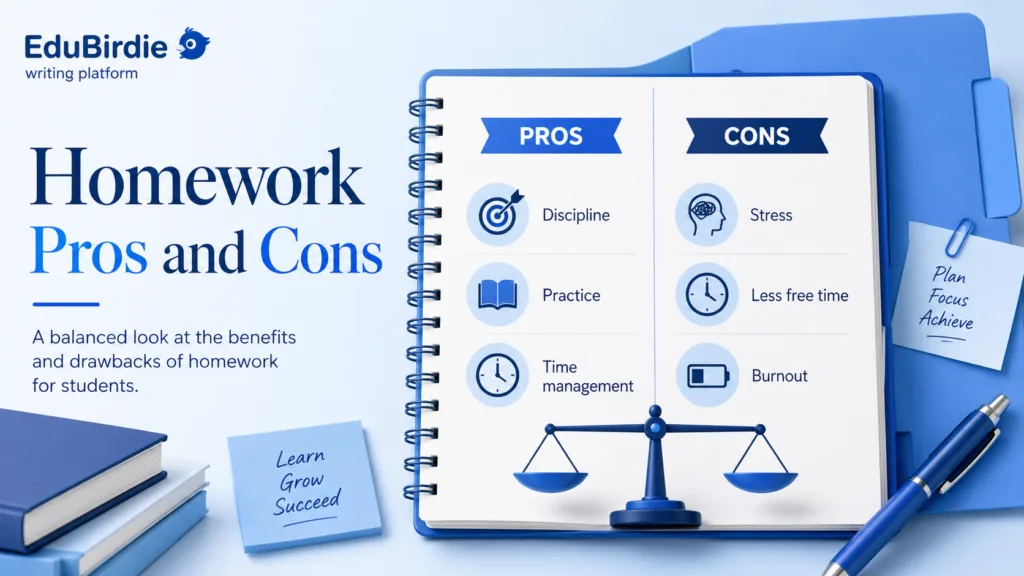
Homework can reinforce classroom learning, build responsibility, and help students practice key skills. However, too much homework may cause stress, reduce sleep, and limit time for family, hobbies, or rest. The most effective homework is purposeful, age-appropriate, and manageable rather than simply excessive.

Does homework lead to good marks or to a mental breakdown?
Only one thing in the world can add frustration to any student’s day. This word is ‘homework’. It sounds like endless hours of ‘useless’ repeating of the stuff you’ve gone through in class.
However, what if we say that homework has advantages? Done well, it strengthens what you learned in class and builds habits you’ll use for life. Still, piled on, it can drain energy, crowd out family time, and raise stress.
So, is doing some tasks after school more beneficial than harmful? Or vice versa? This is exactly what we are going to talk about in today’s guide.
In this guide, we look at the pros and cons of homework for students and how smart practice, not endless homework assignments, can support the learning process and academic performance without harming balance.
Are you ready to find out why you are doing your homework (or why you should stop)? Let’s see together!
10 Key Pros of Homework
If you analyze the purpose of homework, you can actually agree that it brings real value when assigned in the right way. Below are ten clear benefits that show how the learning process improves when homework is balanced and purposeful.
1. Reinforces classroom learning. When students review material at home, they strengthen what was taught in class. Repetition helps information stick and supports academic performance.
2. Develops independent learning skills. Completing homework assignments trains learners to research, take notes, and organize thoughts. These key skills prepare them for academic challenges in higher education and professional life.
In the long run, independent learning builds habits that improve students’ handling of difficult material without constant guidance.
3. Encourages independent study habits. Taking charge of assignments shows students that their progress depends on personal effort. This sense of accountability teaches responsibility, a lesson that extends beyond school.
4. Involve parents in education. Homework creates a link between school and home. Parents get the chance to see what their child is studying and can offer support when needed.
This connection builds a supportive learning environment where both teachers and families help shape a child’s education.
5. Builds time management skills. Students must balance school, extracurricular activities, and personal life. Regular assignments encourage them to prioritize tasks and plan ahead.
6. Prepares students for exams and tests. Studying for tests becomes easier when students have already practiced regularly through homework assignments.
In many cases, research shows that regular practice through traditional homework can help improve academic performance and exam scores.
7. Improve student achievement. Homework is not just full-time work — it allows students to practice until they master the subject. Whether writing essays, solving problems, or reviewing science facts, consistent practice ensures that students typically retain material for longer.
8. Improves memory retention. Revisiting material helps information move from short-term to long-term memory.
For example, elementary students who review spelling lists at home are likelier to remember them during class tests. Consistent practice not only strengthens recall but also enhances overall cognitive performance over time.
9. Helps teachers track progress. When teachers review completed work, they see where students struggle and where they succeed. This constructive feedback allows them to adjust lessons, making the education system more responsive to each learner’s needs.
10. Promotes self-discipline and critical thinking.Homework trains learners to sit down, focus, and finish tasks without distractions. Over time, this builds self-discipline, vital for personal growth and success in future academic and professional settings.
Pro tip: Struggling to keep up with assignments? Many students choose to hire someone to do my homework through EduBirdie. This option can ease stress while still helping you stay on track with academic responsibilities.
10 Main Cons of Homework
Of course, if homework always worked the way it should, students would love it. But let’s be real, assignments are not all golden tickets to success. Below are the biggest drawbacks that show why homework sparks debate.
1. Causes mental health problems. A pile of assignments on top of school, sports, and chores? That’s a recipe for burnout. Instead of boosting academic performance, too much homework can leave students drained and anxious.
Educational research shows that stress linked to homework assignments harms mental health more than it helps grades.
2. Cuts extracurricular activities. Homework may teach discipline, but it also eats into evenings that could be used for fun, rest, or extracurricular activities.
3. Creates inequality among students. Let’s face it: not all students have the same resources at home. While some get quiet spaces, fast Wi-Fi, or parents who can help, others struggle alone. This gap makes completing assignments harder for many and turns assignments into unfair homework competition.
4. Pushes students toward shortcuts. When deadlines pile up, copying answers from friends or the internet is tempting. This means less real understanding and weaker academic success over time.
5. Reduces family connections. Evenings should be a time to relax with family, share a meal, or talk about the day. But long assignments can push family time to the side. This can strain family relationships and make learning feel more like punishment than growth.
6. Lowers motivation to learn. Homework is supposed to encourage students. Yet, when it feels endless, many lose interest in reading, writing, or math. Instead of inspiring curiosity, excessive homework can make school seem boring and repetitive. As a result, students’ motivation to do homework decreases, and they may start avoiding assignments altogether.
7. Hurts physical health. Late nights, hours bent over books, and constant screen time add up. Fatigue, eye strain, and headaches are common among students facing heavy homework loads. And once again, poor sleep only makes learning harder the next day.
8. Limits creativity and exploration. Assignments often focus on drills and right-or-wrong answers. That leaves little space for project-based assignments or trying different learning styles. Without time to explore, kids lose chances to build creativity and critical thinking.
9. Focuses on quantity, not quality. Sometimes assignments feel like busywork. A stack of repetitive problems might keep kids busy, but it doesn’t always build valuable skills. Instead, it teaches students that completing assignments matters more than real understanding.
10. Widens the gap between students. Home assignments can be useful for confident learners, but those who struggle fall further behind. For kids with learning disabilities, unadjusted tasks can feel impossible.
Alternatives to Traditional Homework
We’ve examined the pros and cons of homework, and it’s clear that while some assignments help, too much homework can create stress, cause sleep loss, and even harm mental health.
The good news? Schools are not stuck with the same old routine. There are creative, research-backed methods that give students the educational value of practice without the heavy stress of endless worksheets.
In fact, Stanford research shows pitfalls of traditional tasks, especially when they pile up. Studies highlight that excessive homework doesn’t always improve grades and hurts student well-being. Instead, focusing on different learning styles and new approaches can make a big difference.
1. Project-based learning.
Instead of nightly drills, schools can assign projects that let students explore subjects in depth. For example:
- Building a science model.
- Creating a history timeline.
- Designing a real-world math budget.
These tasks build independent study habits, spark curiosity, and give learners a sense of ownership. Plus, projects connect classroom knowledge to future challenges outside school.
2. Group discussions and collaboration.
Not all learning has to happen alone at a desk. Group work lets students share ideas, debate, and enhance critical thinking.
Collaboration also prepares them for the teamwork expected in college and careers. Even younger grades like elementary school benefit when kids learn from one another.
3. Online interactive assignments.
Digital tools make practice more engaging. Students can use apps, quizzes, or games that adapt to different learning styles. These platforms give instant feedback, which is more motivating than waiting days for a grade.
4. Real-life applications.
Homework should feel useful. Practical tasks, like writing a shopping list, measuring ingredients for a recipe, or tracking sports statistics, show how lessons apply outside the classroom. This type of practice strengthens essential skills and helps students learn in relevant ways.
5. Flipped classroom approach.
In a flipped model, students adapt to ‘independent learning homework’. They watch short lessons or read material at home. Then, class time is used for problem-solving, discussions, or labs. This method reinforces learning while giving teachers more room to guide and support. It’s especially effective for college students and older learners who benefit from a deeper understanding.
Homework Helps Both Elementary and High School Students
So, what are the pros and cons of homework? The truth is in the balance. Homework can reinforce classroom learning, build study habits, and prepare students for academic and professional life. But too much homework brings stress, cuts into sleep, and can harm mental health.
The key is meaningful, manageable assignments. When done correctly, homework sparks curiosity, strengthens time management, and teaches responsibility. When piled on, it overwhelms and demotivates.
Recommendations:
- Keep it focused – short, purposeful tasks.
- Use alternatives – projects, group work, or real-life applications.
- Protect well-being – avoid excessive homework and sleep deprivation.
- Encourage balance – allow time for family, hobbies, and rest.
Smarter homework helps students grow, learn independently, and prepare for future challenges!
If the load gets too heavy, EduBirdie can offer support with cheap essay writers to help manage assignments while keeping stress in check. Homework works best when it guides, not grinds, students toward success.
Good luck with your next homework!
FAQ
What are three benefits of homework?
Homework reinforces classroom learning, helps students develop consistent study habits, and teaches responsibility. These benefits highlight the positive side of the ongoing discussion about the pros and cons of homework for students.
What are the pros of having no homework?
Having no homework helps reduce stress, gives students more time for family and hobbies, and encourages creativity. Moreover, homework improves academic achievement.