Key takeaways:
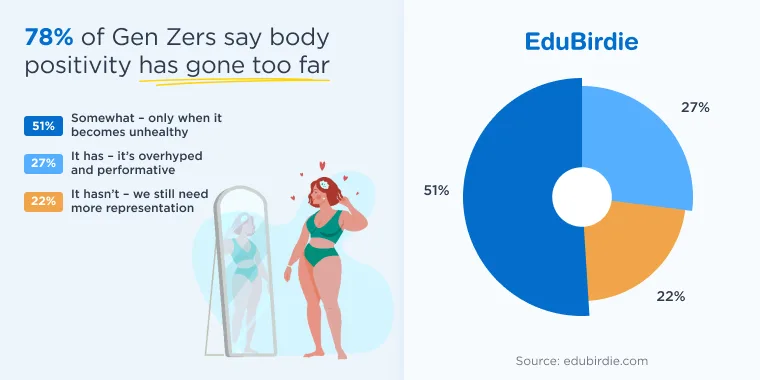
- While Gen Z champions body acceptance, 78% feel body positivity has gone too far, with 27% branding it overhyped and performative.
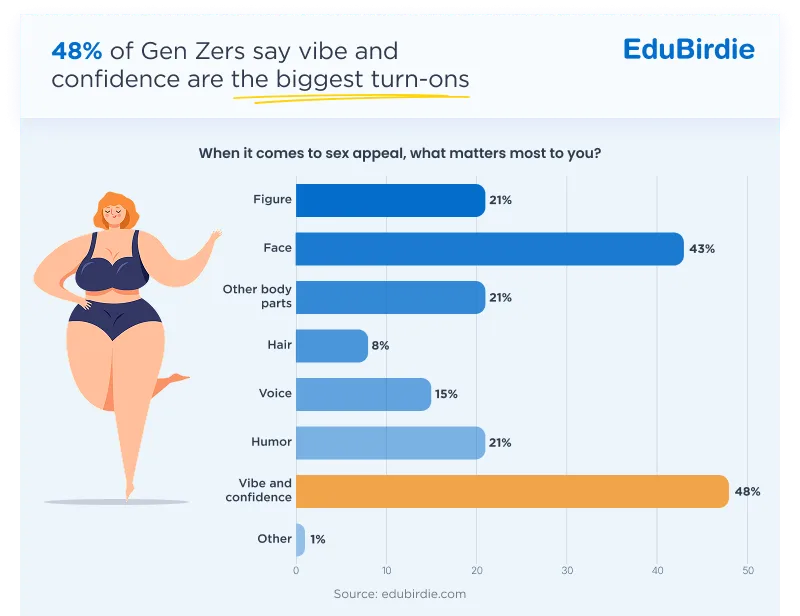
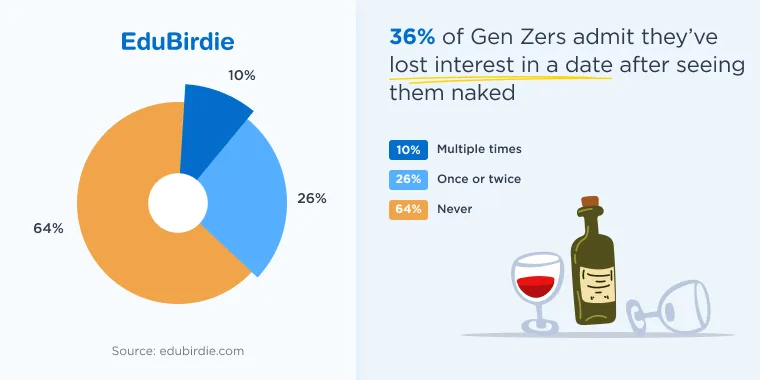
- Despite 36% admitting they’ve lost interest in a date after seeing them naked, 48% say a good vibe and confidence matters more than appearance.
- Body insecurities cause 44% to avoid wearing certain outfits, 33% struggle with intimacy, and only 30% feel completely comfortable in their own skin.
- Seeking their ideal body, 15% would sacrifice their relationship, 12% their careers, and 11% their health.
Gen Z has put self-love in the spotlight, encouraging everyone to ditch the filters, embrace their stretch marks, and celebrate their curves.
EduBirdie surveyed 2,000 Gen Zers on their attitudes towards body image, whether physical appearance matters, and if self-confidence comes naturally to the young generation.
The results show that while others’ appearance isn’t the be all and end all, we find it hard to judge our own image fairly. Our confidence takes knocks, insecurities flare up, and self-doubt creeps in – regardless of age.
Toxic Positivity: Is Gen Z Turning Its Back on the Body Positivity Trend?

Even the most accepting generation has its limits. With body neutrality – respecting what your body does rather than celebrating how it looks – the new cool, 78% say the level of body positivity has gone too far, with 27% convinced it has become overhyped and performative.
Curves or Confidence: Does Appearance Really Matter to Gen Z in Dating?

Gen Z has a type, and it’s not tall, dark, and handsome.
Looks still count for something, with 43% admitting they judge a potential match by their face, 21% by their figure, and 21% by particular body parts. But the ultimate turn-on? With 48% insisting a good vibe and plenty of confidence contribute most to attraction, self-assurance is the new sexy.

We all wrestle with body image at times, and weight is a common concern. Yet, the numbers on the scale aren’t the dealbreaker we convince ourselves they are.
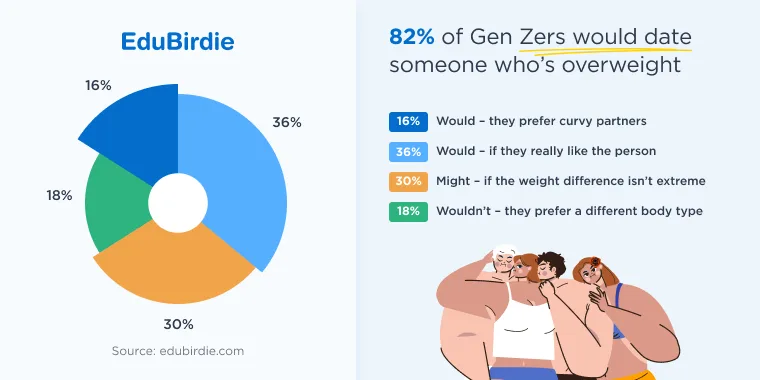
Some 82% of Gen Zers would date someone who’s overweight, with 16% specifically preferring a curvy partner, and 36% insisting a good connection matters more than a slim waist and chiseled abs.

Gen Z may be all about self-love, but physical appearance still influences attraction – especially behind closed doors and under the sheets, with 36% admitting they’ve lost interest in a date after seeing them naked.

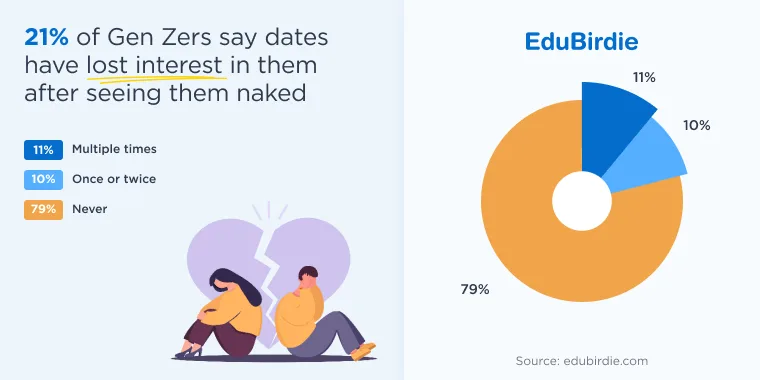
And the feelings are mutual: 21% of Gen Zers say a date has lost interest in them after seeing them naked, too. While confidence and chemistry play a role in attraction, bodies clearly carry weight for young daters.
And even though attraction is subjective and everyone has different tastes, those rejections still chip away at our confidence.
Baring the Truth: What Gen Zers Would Sacrifice for Body Satisfaction

Each knock leaves a mark, making it harder for Gen Z to live up to their mantra of acceptance.
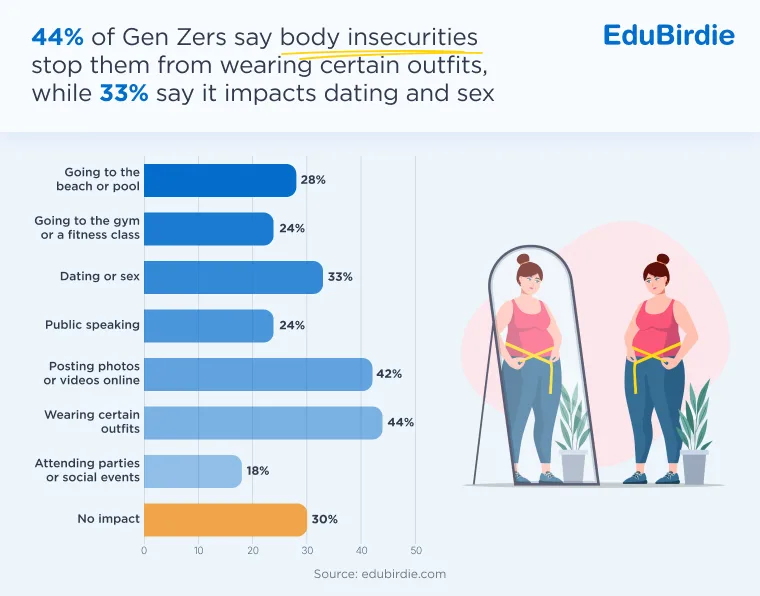
Only 30% feel fully comfortable in their own skin, with 44% admitting body insecurities dictate their outfit choices, 33% struggle with intimacy, and 28% feel uneasy going to the pool or beach.

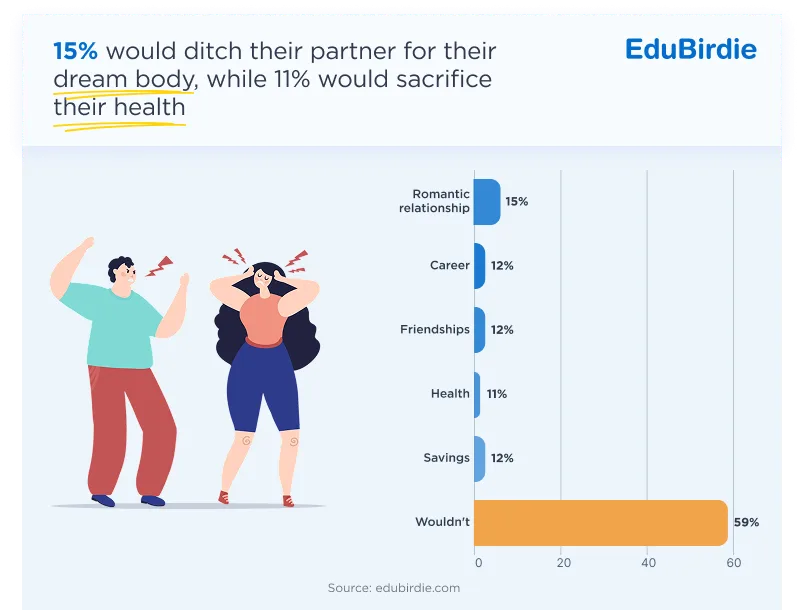
While Gen Z stands by the belief that we should be thankful for everything our bodies do for us, it can be difficult to see ourselves in such a positive light. Many dream of better, and some are willing to pay a steep price for their ideal body: 15% are up for ending their relationship, 12% are willing to risk their career, and 11% are open to sacrificing their health.
Gen Z may champion self-love and acceptance in a world obsessed with looks, but body image still matters and the same insecurities linger. Worrying about how you look is human, and nobody can maintain a positive body image all the time. But we’re all perfectly imperfect, just the same.