Key takeaways:
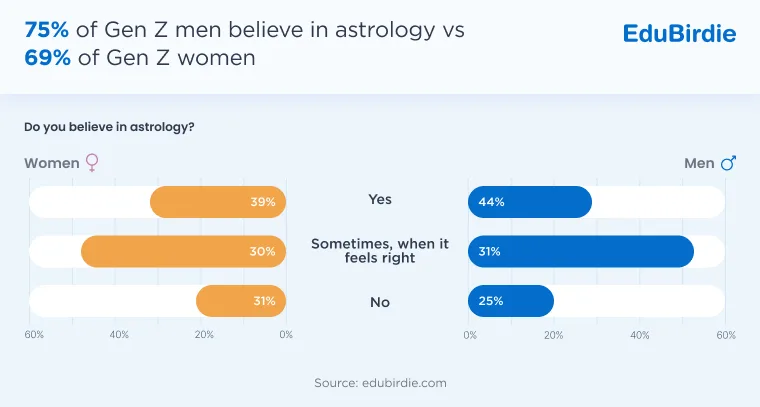
- 75% of Gen Z men believe planetary movements can influence their lives, compared to 69% of Gen Z women.
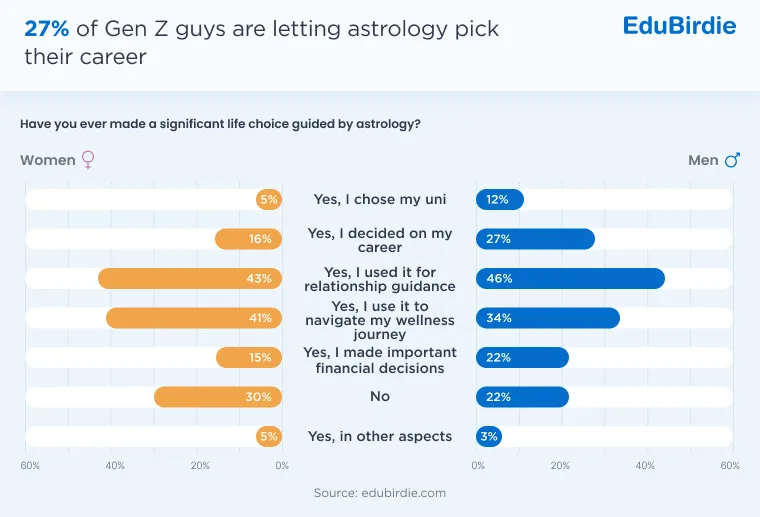
- 27% of Gen Z men let astrology guide their career choices, while 22% use it when making major financial decisions, compared to 15% of Gen Z women.
- Likewise, 78% of Gen Z women and 71% of Gen Z men check their dates’ zodiac signs, with 23% and 31% unwilling to date someone deemed incompatible by astrology.
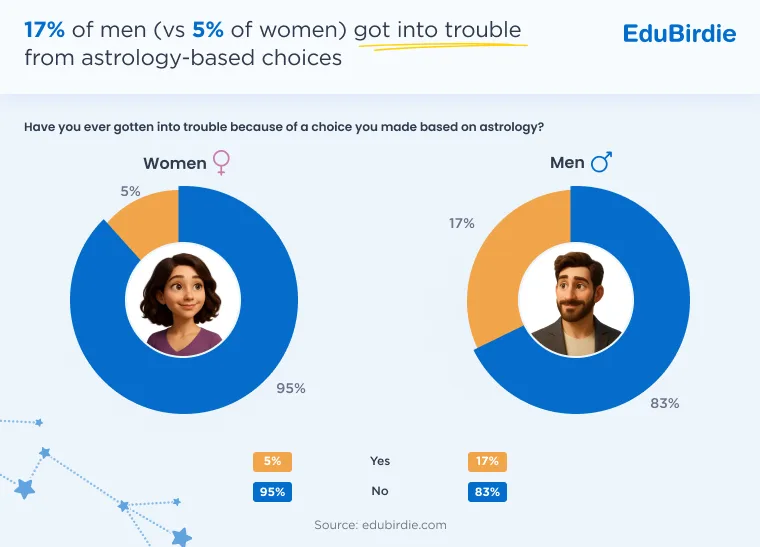
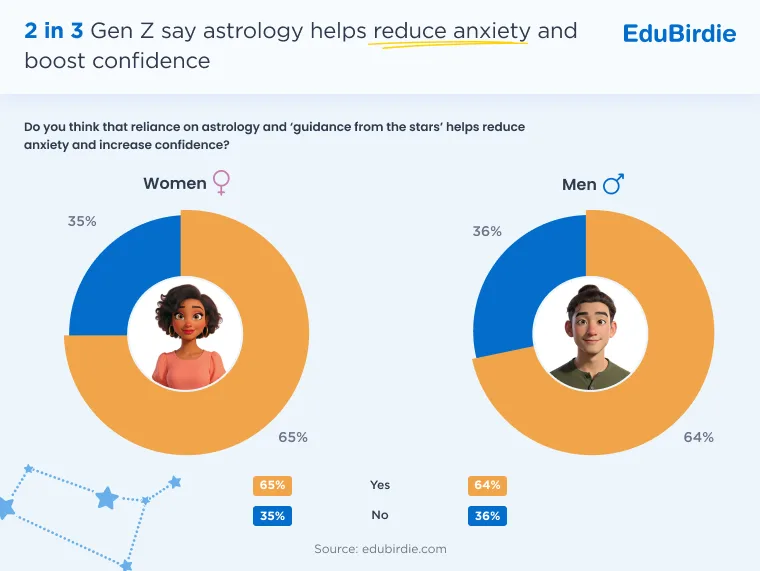
- While 17% of Gen Z men and 5% of Gen Z women say following astrology has caused them trouble, the vast majority find it beneficial, with 65% claiming following the stars has reduced their anxiety and boosted their confidence.
Astrology has been dismissed as make-believe for much of modern history, confined to niche magazines, hidden between the crosswords and classifieds.
But the stars are making a comeback. Rather than turning to friends, family, or TikTok for guidance, young people believe in zodiac signs instead. In a world full of uncertainty, astrology offers one of the many theories that make Gen Z click — simple frameworks that help them interpret their lives and choices. They’re putting their money in Mercury’s hands and leaving Jupiter in charge of their job search.
EduBirdie surveyed 2000 Gen Zers to understand how many young Americans believe in astrology. The results show that for a growing number of people, horoscopes aren’t just for entertainment, and planets aren’t just big rocks floating through space – they’re celestial forces steering everything from our love lives to our career choices.
A Shift in the Stars: Who Believes in Astrology?

Historically, belief in astrology has been labeled as a ‘girl thing’. But when has Gen Z ever followed the crowd, especially when it comes to long-outdated norms? Charting their own course, 75% of Gen Z men now say they believe in astrology, compared to 69% of Gen Z women.

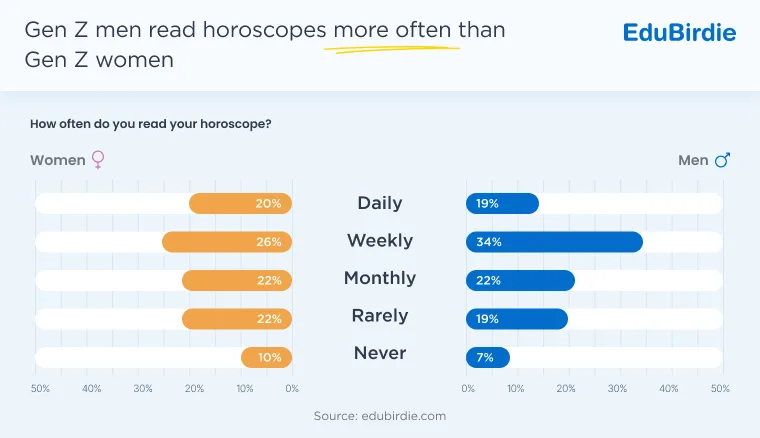
And we’re not talking about a casual belief in the universe’s signals. Among those respondents who embrace astrology, 53% of Gen Z men and 46% of Gen Z women check their horoscopes at least once a week, with 19% and 20% consulting the cosmos daily.

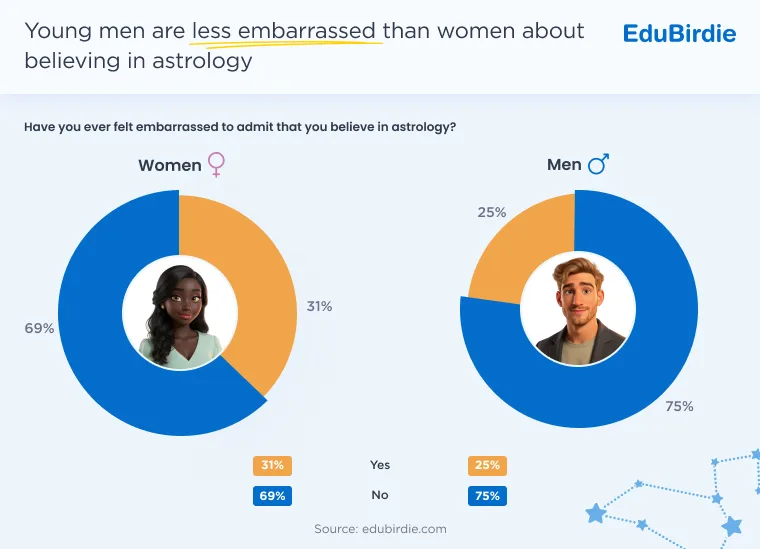
Skeptics have long dismissed astrology – ridiculed it, even – pushing believers to keep their beliefs close to their chest. But for Gen Z, astrology is realigning, with more young men embracing it and bringing cosmic confidence with them.
Just 25% of men admit they’ve felt embarrassed by their belief in astrology, compared to 31% of women.
Planetary Life Plans: The Major Decisions Gen Z is Leaving to Astrology

Gen Zers aren’t just using planetary movements to pick their outfits or make social plans. They’re letting the stars chart their life course – even the important parts.
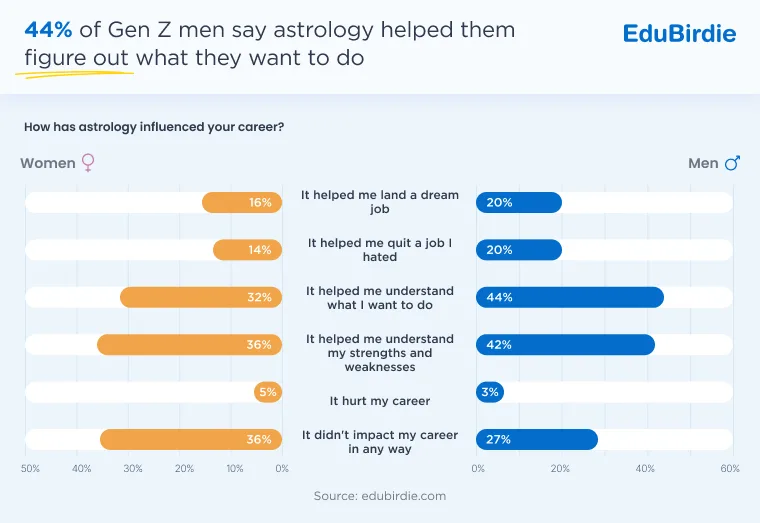
Some 27% of Gen Z men and 16% of Gen Z women say they let the universe choose their career path, while 22% of men and 15% of women admit they’ve left astrology in charge of major financial decisions.

Why do people believe in astrology? In many cases, letting the stars call the shots seems to work.
Some 44% of Gen Z men say astrology helped them figure out what they truly want to do in life, while 36% of women say it showed them their strengths and weaknesses.
Likewise, 20% of men and 16% of women credit the stars with landing them their dream job, while 20% and 14% say the cosmos gave them the push they needed to quit a role they hated.

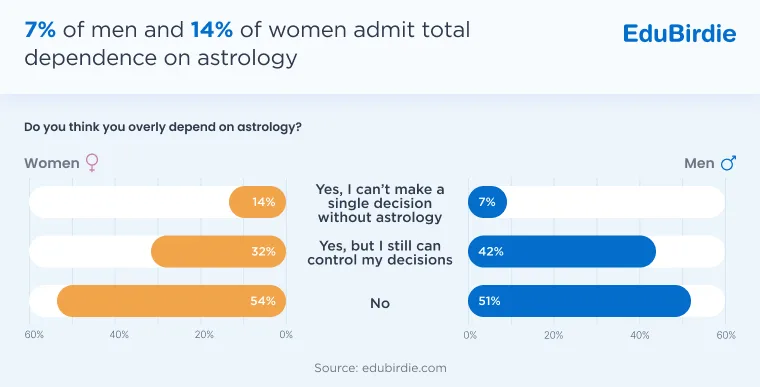
But sometimes the planets pull a little too hard: 49% of Gen Z men and 46% of Gen Z women admit they’re overly dependent on astrology, with 7% and 14% struggling to make a single decision without first consulting the universe.
Cosmic Chemistry: Is Gen Z Following the Stars to Find Love?

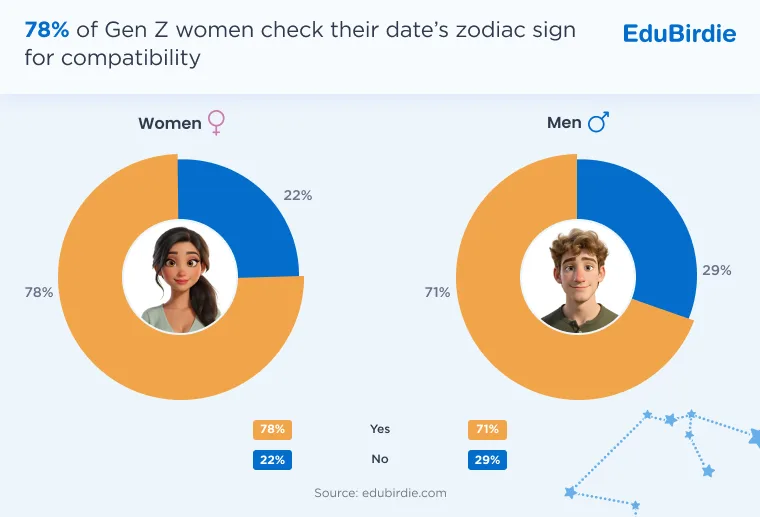
When it comes to Gen Z dating, good chemistry isn’t enough. For sparks to fly, the cosmos has to swipe right too – 78% of Gen Z women and 71% of men check their dates’ zodiac signs for compatibility.
Astrology’s verdict: If the elements align, you’re a perfect match. Geminis and Libras might make a power couple, but for Pisces and Leo? Heartbreak is written in the stars.

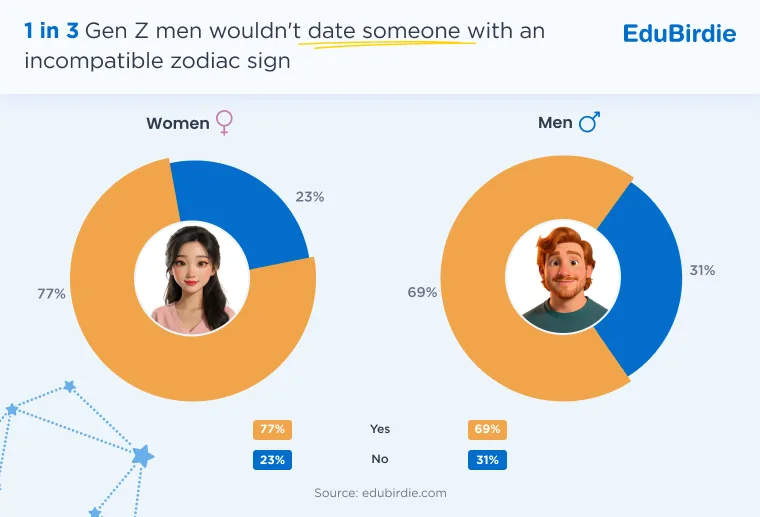
All other signals might scream “they’re the one”, but if astrology disapproves? Some 31% of Gen Z men and 23% of Gen Z women admit they won’t date someone if their zodiac signs don’t align.
No matter how strong the chemistry, celestial approval is always a dealbreaker.

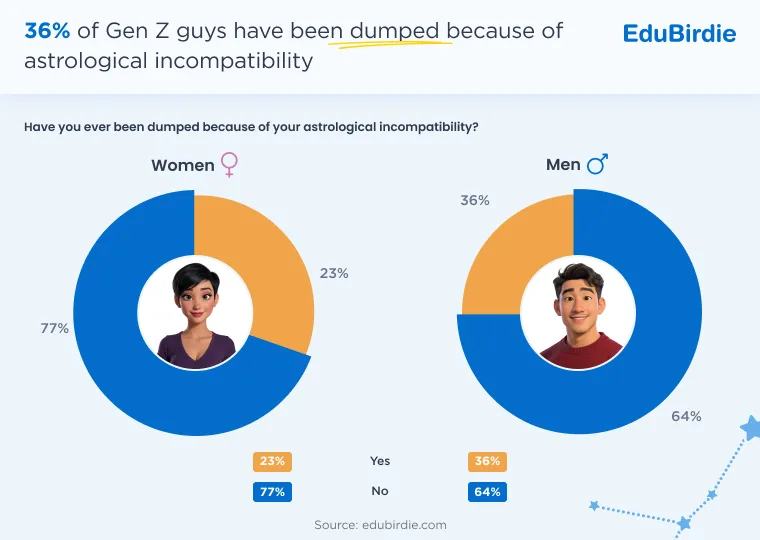
Some choose to ignore Venus’ advice and listen to their heart instead. However, there’s a high chance the planet of love will pull them apart eventually – 36% of Gen Z men and 23% of women say astrological incompatibility has ended a previous relationship.
Cosmic Wins and Celestial Woes: Does Astrology Help or Hinder Gen Z?

From Mercury retrograde to full moons, the planets aren’t always on our side. Some 17% of Gen Z men admit they’ve made bad choices by following astrology. Women, on the other hand, are far better at dodging cosmic curveballs, with just 5% stating that following the stars has caused them trouble.

Astrology may lack scientific evidence, but its mental health benefits are clear as day: 65% of Gen Zers say leaning on the stars has helped to reduce their anxiety and boost their confidence.
It makes perfect sense, really. If the universe has already decided your fate, there’s no reason to worry over what-ifs.

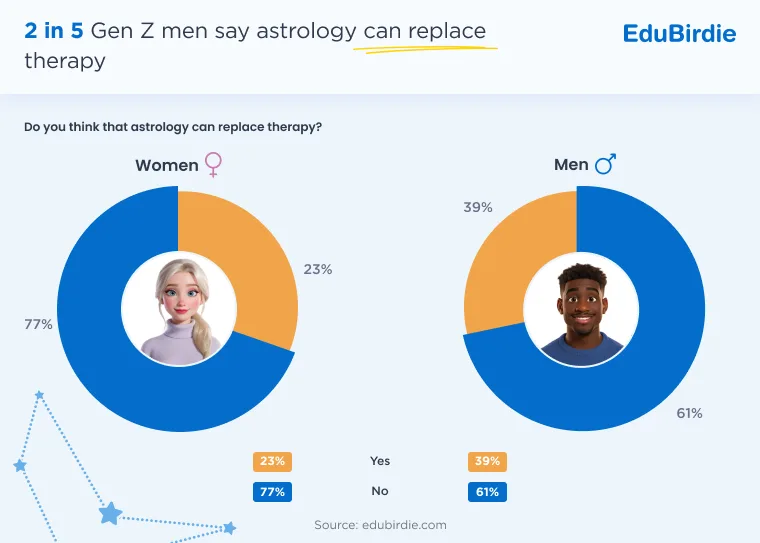
For 39% of Gen Z men and 23% of Gen Z women, the benefits are encouraging enough that they see astrology as an effective alternative to therapy. And that’s not as far-fetched as it sounds. Much like therapy, astrology encourages introspection, helping people make sense of their feelings, process their emotions, and address their issues.
Astrology is no longer just a quirky hobby best kept hidden. Seeking guidance, Gen Z – men and women – are looking up to the stars for support. Call it pseudoscience if you like, but for many young people, the planets genuinely help them to navigate life’s twists and turns.
Methodology: To create this study, researchers from EduBirdie surveyed 2,000 Gen Z from the US. Participants, who either fully embrace astrology or turn to it when it resonates, were selected to share their experiences in detail. The study did not focus on specific ethnicities or social backgrounds.