Key takeaways:
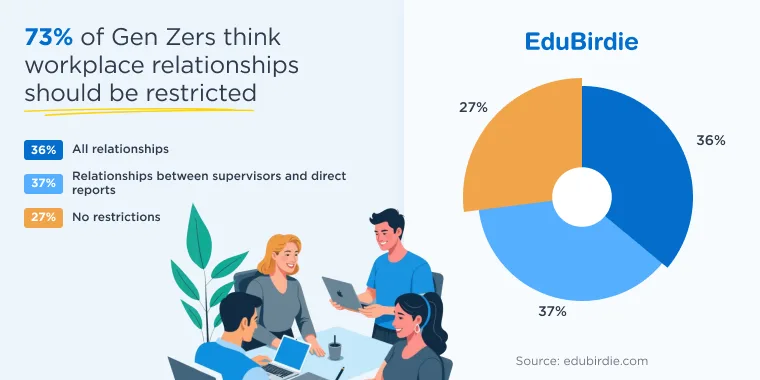
- Some 73% of Gen Zers believe workplace relationships should be restricted, with 37% adamant that romance between supervisors and their team members is inappropriate.
- Yet, 21% have applied for a job to meet someone special, with 50% stating that dating colleagues offers common ground, and 40% claiming it improves motivation and performance.
- Some 37% of Gen Zers have dated a colleague in the past, with 22% having hidden the romance to avoid office gossip.
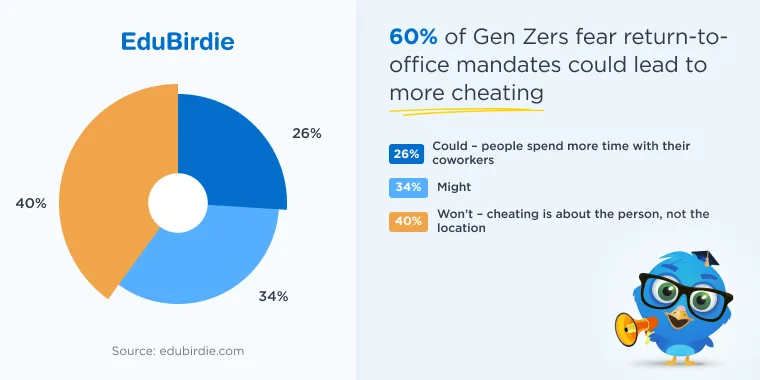
- While 70% of Gen Zers avoid office dating due to the risk of an awkward breakup, 60% fear that return-to-office mandates could lead to an increase in cheating.
Workplace romance has always been a headache for HR due to the risk of causing tension among teammates, fostering favoritism, and creating conflicts of interest. Historically, it’s been discouraged by employers, if not outright prohibited.
However, Gen Z isn’t exactly one for sticking to tradition. They’re all for casual communication, comfortable dress codes, and chill bosses. So, where do they stand on dating among colleagues?
EduBirdie surveyed 2,000 American Gen Zers on their stance on office flings, and whether office gossip and awkward breakups are enough to convince them to keep it strictly professional.
Mixing business with pleasure: Gen Z’s rules for workplace relationships

Gen Z is known for being laid back, but when it comes to office romance? Hard pass. While they’re all for a casual workplace, 36% say love has no business in business, and 37% say supervisor-report relationships cross the line.

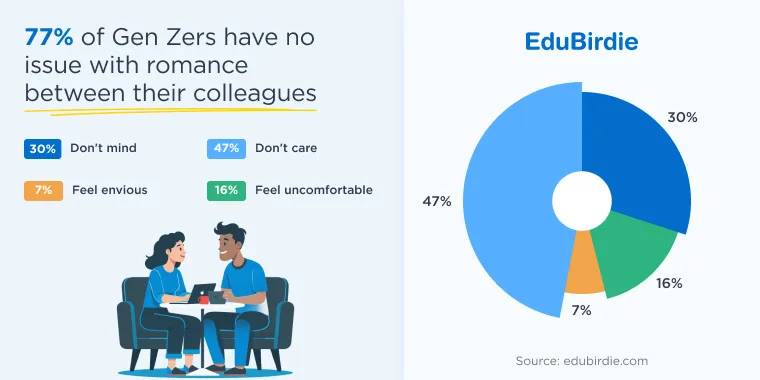
Yet, when it comes down to it, it seems most are too busy with their to-do lists to notice. While 16% say relationships between their colleagues make them feel uncomfortable and 7% admit to feeling jealous, 77% insist they don’t mind or don’t care.

Can employees date each other? Businesses don’t seem to know how they really feel…
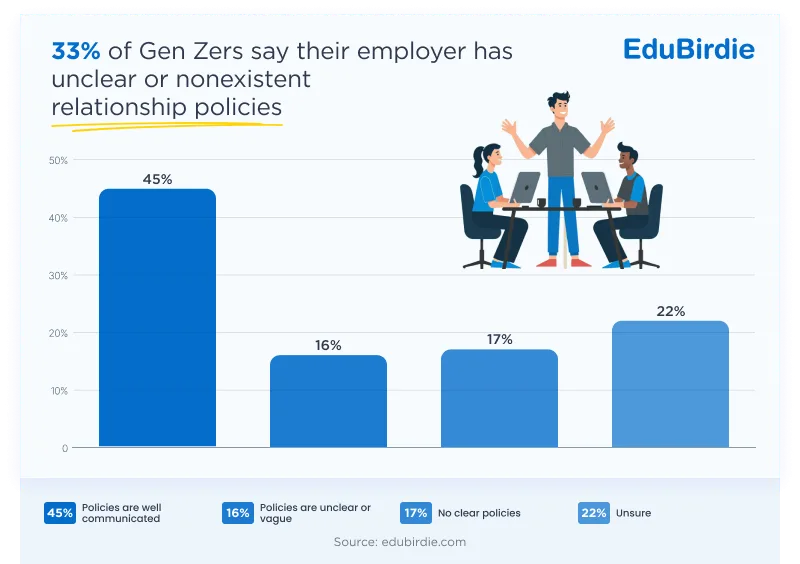
Some 45% of Gen Zers say their employer’s policies on workplace relationships are well communicated. However, for 55%, it’s complicated – often due to unclear or undefined rules, which leave young workers second-guessing where the boundaries lie.
Open to work love: Is the office the perfect place for Gen Z to find love?

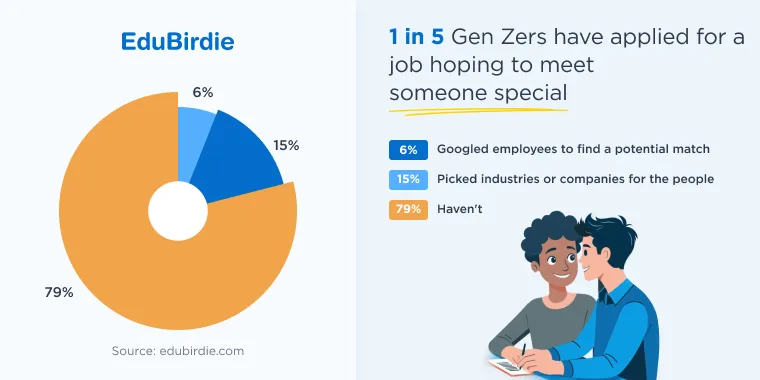
The head may say love and work don’t go together, but the heart often feels differently. For 21% of Gen Zers, work isn’t just about building a career and making money. It’s about finding the one, with 15% having picked an industry or company based on the type of people it attracts. Likewise, 6% admit they search Google and scour LinkedIn before applying for a role to see whether any future colleagues catch their eye. This highlights how Gen Z balances high career ambitions with personal fulfillment, seeking opportunities that offer both professional growth and meaningful connections.

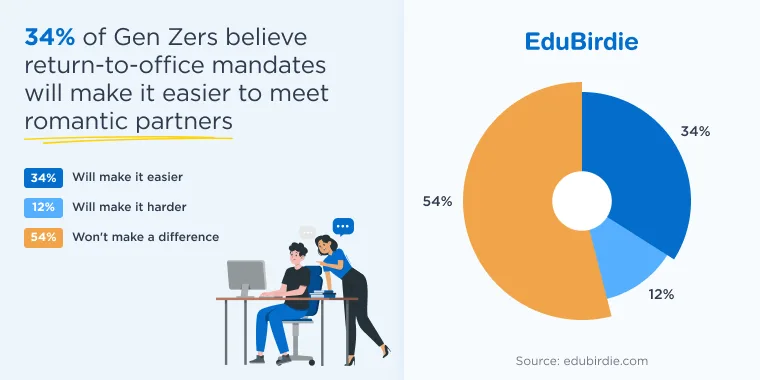
Gen Z’s best wingman when it comes to finding office romance? Employers. With many companies pushing for a return to the office, 34% of young people believe it could increase their chances of meeting someone special.

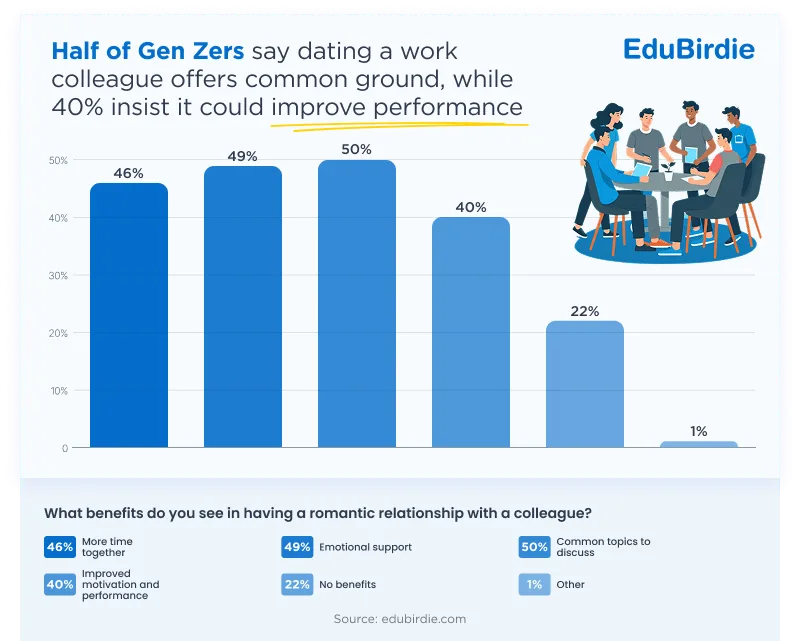
For Gen Zers, dating a colleague isn’t just convenient – with shared commutes providing more time together (46%) and common ground for conversations (50%). It might also be productive, with 40% claiming that having their partner in the office would boost their motivation and performance.
So, employers, if your policies aren’t supportive of love on the clock, maybe it’s time to update the employee handbook.
Breaking hearts (and company policy): Gen Z and workplace romances

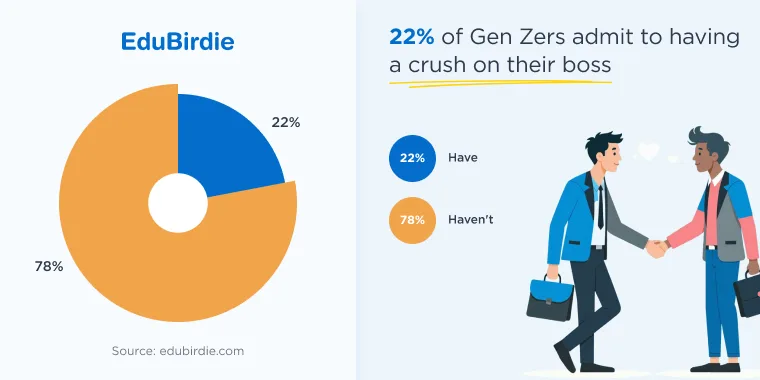
Maybe it’s the title, maybe it’s the authority, or maybe it’s just the proximity – but despite what HR insists is wrong or right, 22% of Gen Zers admit to catching feelings for their boss.

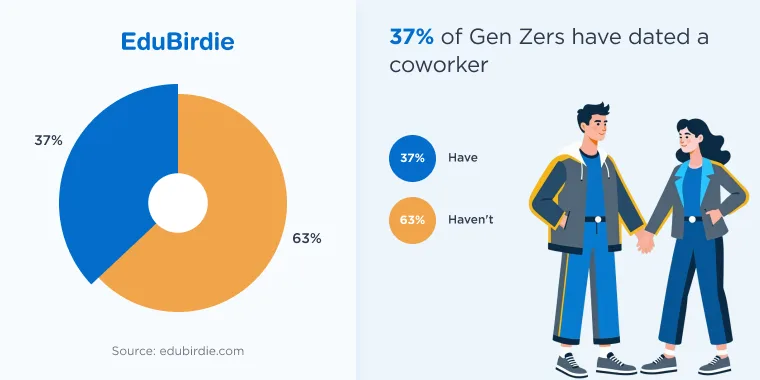
Do they act on their feelings? Absolutely. Conversations over the coffee machine lead to flirty Slack emojis – and before long, a first date. Colleagues by day and couples by night, 37% of Gen Zers admit to dating a coworker.

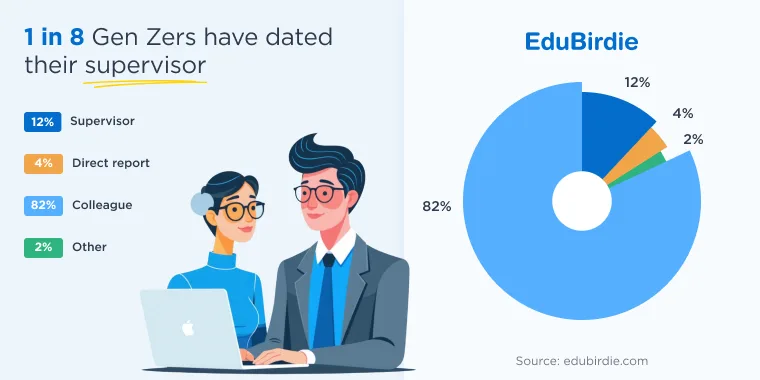
While the vast majority (82%) of those who date at work stick to colleagues in their salary band, 12% admit to getting cosy with those further up the chain of command. Call it mentorship with benefits – or foreplay before an uncomfortable meeting with HR.

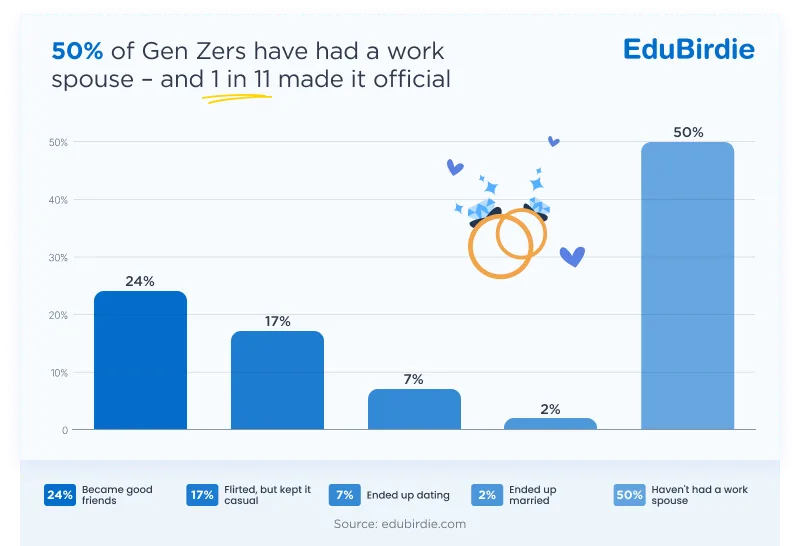
Having someone to share lunch, trade gossip, and criticize management with makes it that bit easier to get through the 9-to-5. It’s no wonder 50% of Gen Zers say they’ve had a work spouse. But that harmless banter and emotional support doesn’t always stay professional or platonic – 7% of office companionships lead to actual dates, and 2% end with wedding bells.
Swiping left at work: Why Gen Zers shy away from office relationships

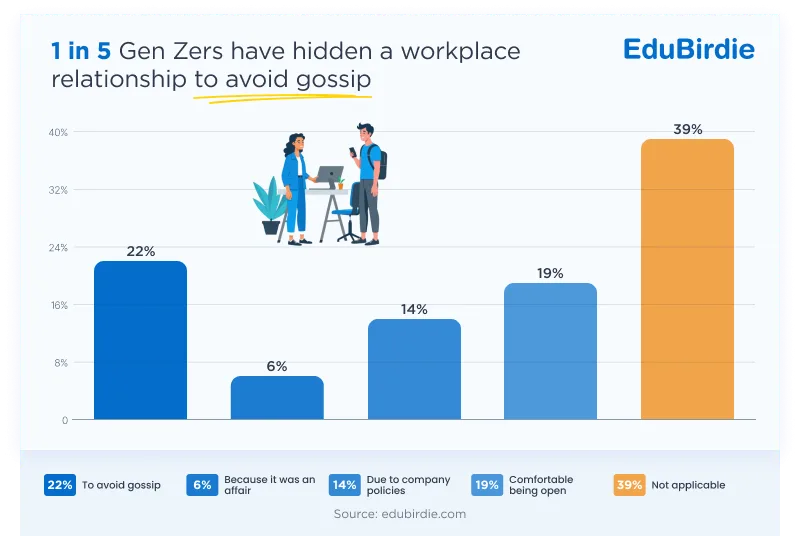
But for a generation that champions workplace transparency, just 19% of Gen Zers say they’re comfortable being open about dating a colleague. Rather, 22% admit to hiding their romance in the workplace to avoid becoming Slack’s next hot topic. Likewise, 14% keep it on the down low to avoid a dreaded email from HR.

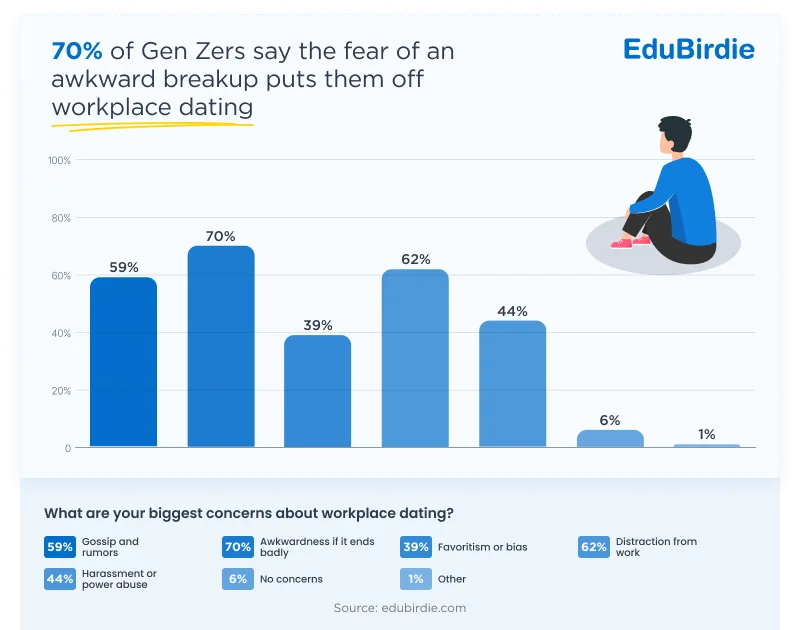
Daily lunch break dates may sound cute – until you’re stuck swapping awkward emails with your ex. For 70% of Gen Zers, the fear of sharing an office with an ex is enough to end any office romance before it escalates beyond water-cooler small talk.
Not safe for work: The darker side of office romances

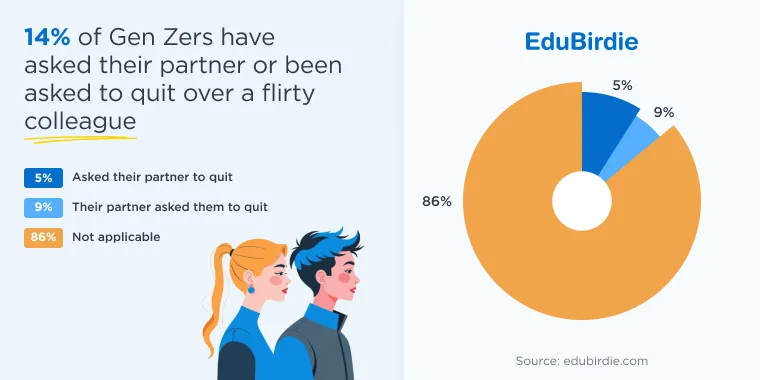
It’s not only reprimand from HR that you have to worry about if an office relationship goes that bit too far. Some 14% of Gen Zers admit they have asked their partner or their partner has asked them to quit over a flirty teammate.

As return-to-office mandates rise, so do the trust issues. Some 60% of Gen Zers fear that a more corporate setting won’t just breed collaboration, but cheating.

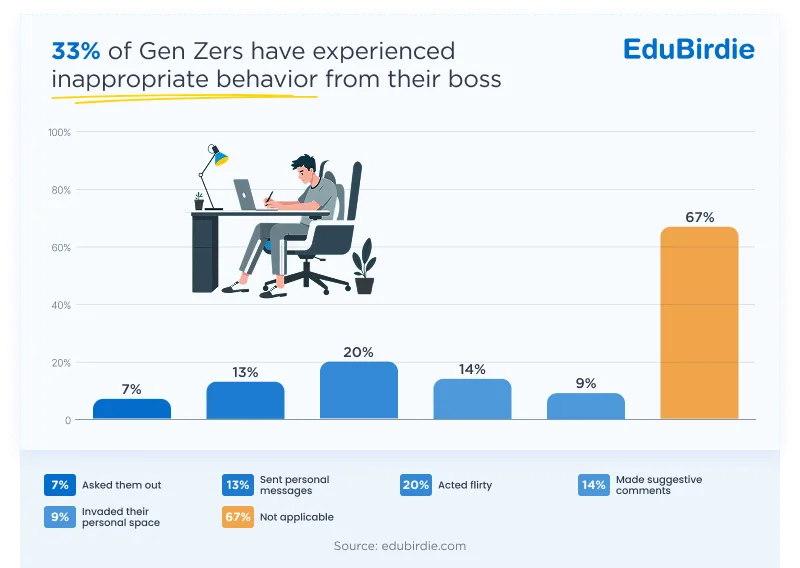
However, inappropriate workplace practices aren’t always a team effort. While most just want to clock in and get on with their job, 33% say they’ve faced unwanted attention from their boss, from flirty remarks (20%) to suggestive comments (14%), and invasions of their personal space (9%).
There’s no denying that close-knit teams and constant collaboration can foster real chemistry. But if a shared workplace isn’t an instant turn-off for you, just be prepared to face the awkward team meetings – or have your resignation letter ready.