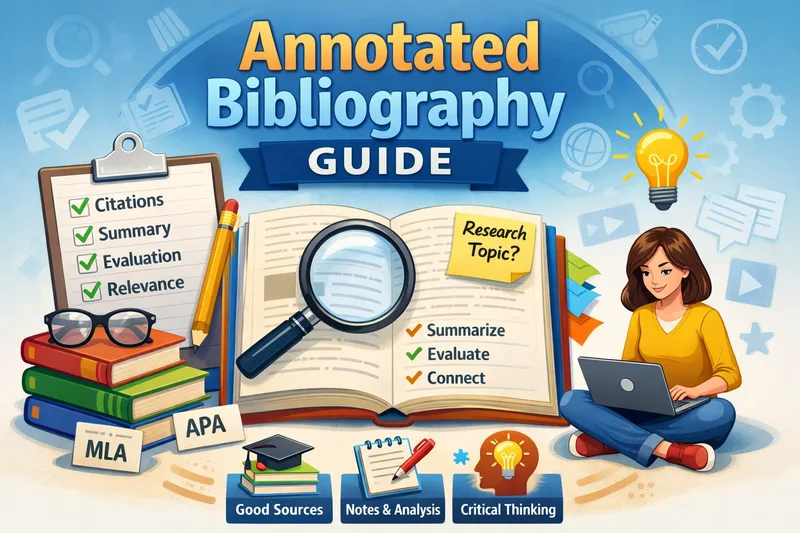
Annotated bibliography topics allow you to focus your study and organize your sources. A strong topic makes it easier to find credible sources, write useful notes, and create research projects.
Key takeaways:
- An annotated bibliography includes citations with summaries, evaluations, and relevance.
- A good topic is researchable, narrow, arguable, and aligned with your assignment.
- Most annotations are 100-200 words in a clear academic tone
Discover 100+ annotated bibliography topics from our guide at EduBirdie. Learn how to choose the best option and complete effective annotations!

What is an Annotated Bibliography?
This is a list of sources, each with a short summary and evaluation. Each entry explains what the source says and why it matters. Students use it in academic projects to show critical analysis skills. It also helps them understand journal articles and prepare for a research paper. For students working on different writing assignments, such as finding an autobiography introduction example, understanding structure and purpose is equally important.
Annotated Bibliography vs. Reference list vs. Literature Review
Students often confuse these terms. They look similar, but they serve different purposes.
- A reference list only includes full citations. It shows where your information came from. There is no summary or comment.
- An annotated bibliography includes citations and short explanatory paragraphs. The annotated bibliography format helps organize each entry correctly. Every annotation gives a summary and a brief evaluation.
- A literature review is longer. It compares and connects sources. It builds an argument and often appears inside a research paper.
To summarize:
- Reference list = citations only
- Annotated bibliography = citations + notes
- Literature review = detailed discussion and comparison
Key Elements of an Effective Annotation: Summary, Evaluation & Relevance
A good annotated bibliography entry has three parts.
| Parts |
Explanation |
| Summary |
What is the main idea? What did the author study? What were the results? |
| Evaluation |
Is the source reliable? Is the method strong? Are there ethical considerations? |
| Relevance |
How does this source support your topic? Why is it useful for your research project? |
What are Good Topics for an Annotated Bibliography?
Picking the right themes can save you hours. If you are looking for easy topics for annotated bibliography, start with subjects that are clear, focused, and supported by available research.
Let’s look at a simple framework for finding a good annotated bibliography topic quickly.
The 5 Quality Checks
When you think about what subject to choose, ask these five questions.
1. Researchable:
Can you easily find enough journal articles and academic studies on your subject? If you cannot find at least 5-8 credible sources, choose another topic.
2. Narrow:
“Healthcare services” is too broad. “Preventive healthcare measures for rural communities in Texas” is better.
3. Arguable or analytical:
Your topic should allow critical thinking. For example, exploring process analysis topics like “nurse staffing levels and patient outcomes” naturally invites discussion and deeper evaluation.
4. Measurable:
Can you study data or evidence? Topics such as “income inequality and educational practices” can be measured using statistics.
5. Aligned with assignment:
Check your professor’s instructions. If they want critical annotated bibliography topics, your topic must support deeper evaluation.
If your theme passes all five checks, you likely have a good annotated bibliography topic.
Topic → Angle → Research Question
Whatever field of study your exploration concerns, especially when choosing the best annotated bibliography topics, consider this formula:
Broad topic → specific angle → clear research question
This structure helps you narrow a general idea into a focused, researchable question that guides your analysis.
Example 1:
Climate change → coastal communities → “How does rising sea level impact long-term housing stability in coastal cities?”
Example 2:
Nursing practice → nurse staffing levels → “What is the influence of nurse staffing levels on patient outcomes in hospitals?”
Example 3:
Artificial intelligence → hiring bias → “What ethical issues arise when artificial intelligence is used in hiring?”
How to Narrow a Topic for your Annotation?
Use this quick formula:
Time + place + population + variable + lens
Let’s clarify it.
Time: Last five years? Post-2020?
Place: United States? Europe? Rural areas?
Population: College students? Elderly patients? Nurses?
Variable: Anxiety levels? Cognitive function? Pain management?
Lens: Policy, ethics, economics, or culture?
Example: Social media → academic performance → “Social media use among U.S. high school students after 2020: cultural influences on study habits.”
How to Write an Annotated Bibliography in APA & MLA
Choosing interesting annotated bibliography topics and writing your bibliography is easy when you follow simple steps.
Step-by-Step Guidelines
Step 1: Find the appropriate sources.
Use academic databases. Look for peer-reviewed academic articles. Avoid random websites.
Step 2: Analyze the usefulness of each source.
Learn the author’s background. Look at the date. Review the research method. Make sure the source supports evidence-based practice or strong academic research.
Step 3: Craft annotations.
Sum up the key idea. Add evaluation and explain relevance. Remember to cite your sources properly in APA or MLA format.
Annotation Length & Tone
Most annotations are 100-200 words. The tone should be formal. Avoid slang. Keep it simple and straightforward, write as if you were explaining the source to a friend in class.
Common Mistakes
Many students make the same errors:
- Summary only, no evaluation.
- No explanation of relevance.
- Weak or missing critical analysis.
- Using non-credible sources.
- Missing proper citations.
Good Topics for Annotated Bibliography and Examples of Annotations
APA Example Annotation
Wilson, J. (2023). The impact of nurse staffing levels on patient outcomes. Journal of Healthcare Management, 45(2), 120–135.
This study examines how nurse staffing affects patient safety in large hospitals, using data from 2018-2022. Higher staffing reduces errors, though it focuses only on urban hospitals. Useful for exploring healthcare management and nursing leadership.
MLA Example Annotation
Brown, Lisa. “Social Media and Mental Health Awareness Among Teens.” Youth Psychology Review, vol. 12, no. 3, 2022, pp. 45–60.
Brown examines how social media affects teen mental health awareness, including its positive effects and the stigma it can create. Based on surveys of 500 students, the study lacks a regional comparison. This source supports research on mental health stigma and coping strategies.
Evaluation Sentence Starters
Discover some evaluation sentence starters that allow you to explain a source’s value and relevance. They are helpful when working with proposal and annotated bibliography topics. These phrases keep your evaluation concise and easy to follow.
- “The author argues that…”
- “The study focuses on…”
- “A limitation is…”
- “The findings suggest…”
- “This source is useful because…”
- “The research highlights ethical implications…”
- “The article contributes to a comprehensive analysis of…”
100+ Ideas for Annotated Bibliography (By Subject)
Psychology
Focusing on mental processes, behavior, and emotional health, psychology topics are appropriate for explorations combining theory, case studies, and applied analysis.
- Memory formation and recall
- Group dynamics and conformity
- Fear conditioning and behavior
- Attachment theory in parenting
- Mood regulation techniques
- Workplace stress psychology
- Addiction recovery programs
- Anger management strategies
- Human behavior and decision-making
- Habit formation psychology
Nursing & Healthcare
These topics for an annotated bibliography examine how patient care, healthcare systems, and nursing practice function in real settings. They rely on clinical research, policy review, and evidence-based standards to guide analysis.
- Patient advocacy in healthcare settings
- Nursing communication skills
- Chronic pain management models
- Nursing documentation accuracy
- Patient satisfaction measurement
- Medication safety procedures
- Fall prevention in elderly patients
- Nursing leadership styles
- Mental health nursing care models
- Patient safety initiatives
Education
Education projects are usually related to teaching methods, student outcomes, and learning environments. They often combine policy analysis with classroom-focused study. They can also include fun annotated bibliography topics, making academic work more engaging.
- Standardized testing effects
- Teacher burnout and its prevention
- Inclusion in classrooms
- Edtech tools in learning
- Online learning after COVID-19
- Teacher collaboration models
- Educational innovation programs
- Student attendance improvement
- Assessment fairness
- Student learning styles debate
Social Work
Social systems, community support, and the needs of vulnerable populations are the focus of these examples of annotated bibliography topics. They often involve evaluating policies and applying practical strategies to real-world problems.
- Homelessness policy solutions
- Foster care system challenges
- Income inequality effects
- Domestic violence services
- Youth mentoring programs
- Refugee support programs
- Disability services
- Child protection policies
- Trauma recovery services
- Community mental health clinics
Business & Marketing
When choosing these topics, you’ll deal with consumer behavior, organizational strategy, and ethics. Marketing academic projects commonly use case studies, market analysis, and applied theory.
- Business research methods
- Green marketing
- E-commerce growth
- Ethical implications of data tracking
- Customer retention models
- Ethical advertising practices
- Startup growth challenges
- Digital consumer behavior
- Market research analytics
- Customer experience design
Criminal Justice
Based on policy research, statistics, and social impact analysis, studying criminal justice annotated bibliography topics is related to law enforcement, legal systems, and reform debates.
- Policing reforms
- Recidivism reduction programs
- Rehabilitation vs punishment
- Domestic violence laws
- Forensic science accuracy
- Law enforcement training
- Police training standards
- Crime data analytics
- Restorative justice in schools
- Prison education programs
Political Science & Public Policy
These topics focus on analyzing governance, laws, and public decision-making. If you are interested in how policies affect society, social outcomes, and political trends, these themes will attract you.
- Voting access laws
- Healthcare policy reform
- Immigration impacts
- Misinformation policy
- Climate change legislation
- Public opinion and media
- Education funding policy
- Tax reform
- Environmental regulation
- Foreign policy strategies
Technology & AI
Want to deal with innovation, ethics, and social impact? Consider these technology annotated bibliography example topics.
- AI bias in decision systems
- Privacy in digital platforms
- AI in healthcare diagnostics
- Education AI tools
- Virtual reality in training
- Data protection laws
- Automation and jobs
- AI and creativity
- Smart cities
- Biometric data use
Environment & Sustainability
If climate, conservation, and resource management are your fields of interest, choose the following subjects.
- Water security
- Environmental justice
- Ocean conservation
- Urban green spaces
- Waste management policies
- Carbon tax impact
- Wildlife protection
- Plastic reduction programs
- Green technology
- Green infrastructure development
Sociology & Culture
Sociology annotated bibliography topics examine social structures, inequality, and cultural change. They consider the patterns that shape communities and everyday life.
- Income inequality in modern society
- Gender roles
- Race and education
- Family dynamics change
- Media effects on youth
- Migration patterns
- Social identity
- Aging population
- Youth culture
- Community development
Communication & Media
Topics in this field explore how information spreads, how media shapes opinions, and how the public perceives events.
- News trust decline
- Advertising influence
- Media and shaping public opinion
- Podcast growth
- Digital journalism ethics
- Influencer culture
- Online communities
- Media literacy education
- Crisis reporting
- Branding communication
Topics by Academic Level
Middle School
Middle school topics for annotated bibliography are simple, broad, and easy to explore. They use accessible sources and allow students to practice summarizing and evaluating information without complex analysis.
- Best healthy eating habits
- Key aspects of renewable energy
- Role of social media in friendships
High School
This type of theme requires deeper thinking. It involves analyzing sources, exploring cause-and-effect relationships, and completing critical annotations that go beyond mere summaries.
- Mental health awareness of learners in schools
- Role of income inequality in education
- Artificial intelligence at school
- Corporate social responsibility impact
College
College topics are advanced and research-ready. They challenge students to analyze sources critically, evaluate their credibility, and write annotations that directly tie to specific research questions.
- Virtual reality in medical training
- Education AI tools and learning outcomes
- School mental health programs effectiveness
Topics by Paper Type & Purpose
Argumentative Annotated Bibliography Topics
These themes require you to present your viewpoint and support it with arguments. Annotations should focus on evaluating sources rather than strengthening your position.
- Is it important to ban animal testing in cosmetics?
- Should public opinion shape environmental legislation?
- What is more effective: teacher-led learning or peer learning strategies?
Analytical/Explanatory Topics
When writing about analytical topics, it’s better to focus on causes, effects, and connections. The goal of annotations, in this case, is to summarize key findings and explain how sources help understand the subject in depth.
- The role of teacher training in student success
- The effects of sleep deprivation on college students’ cognition
- AI in healthcare diagnostics
Compare-and-Contrast Topics
These themes show similarities and differences between two or more ideas. Annotations reflect how each source contributes to understanding these comparisons.
- Public vs private healthcare services
- Virtual reality vs in-person medical training
- Social media activism vs traditional activism effectiveness
Final Thoughts
So, why is selecting the right topic for your literature annotation crucial? It influences your entire research process. A precise theme helps you find reliable sources, craft meaningful annotations, and show real critical analysis.
✅To succeed, use our guidelines, apply the five quality checks, and narrow your idea with time, place, population, and lens. With the right topic, your annotated bibliography becomes more than a list. It becomes an effective guide to your research process.
If you struggle to find good annotated bibliography topics or write annotations, EduBirdie is the best assistant to help you complete these tasks efficiently!