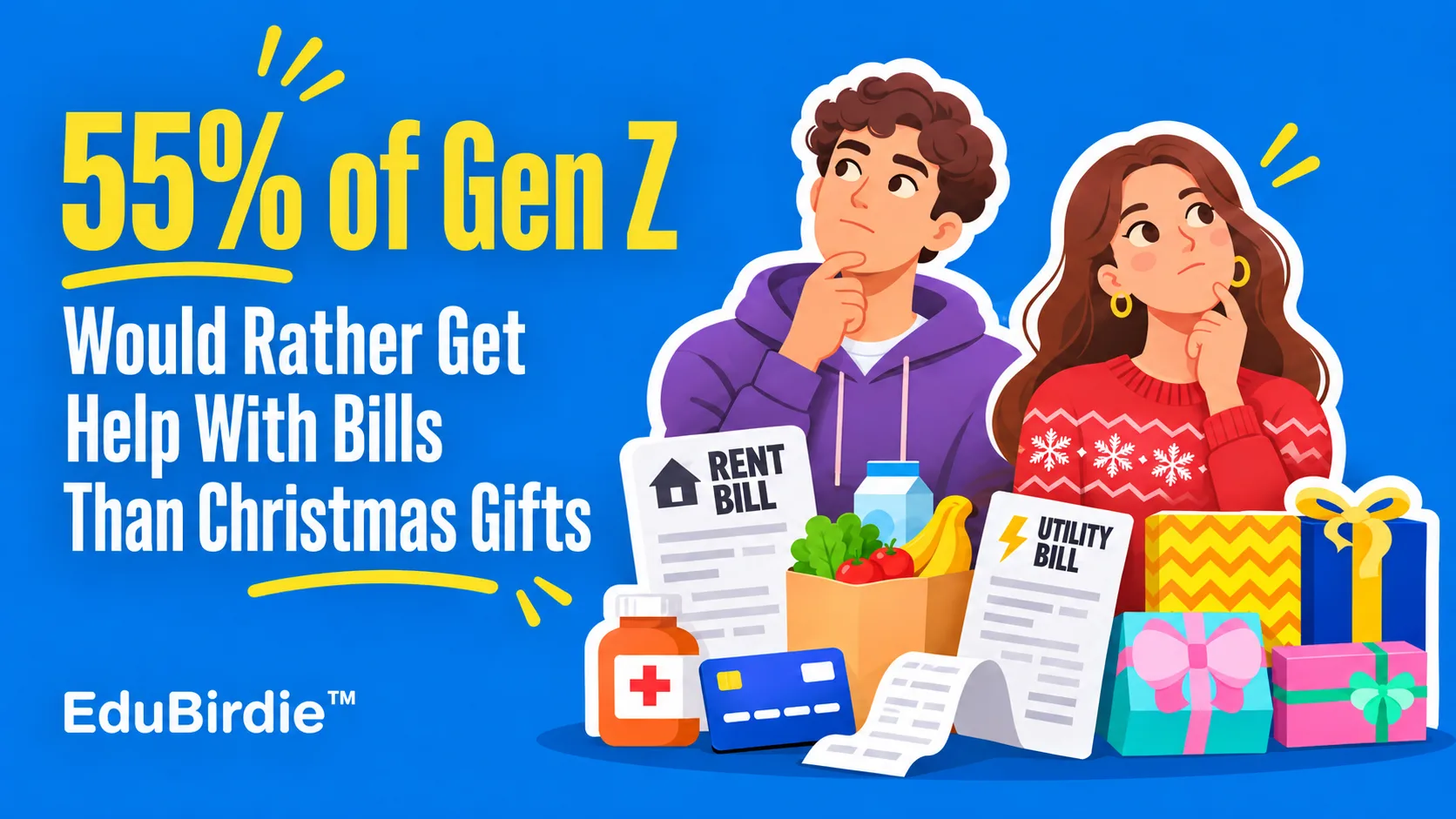
EduBirdie’s survey found that 87% of Gen Z Black Friday shoppers were happy with their purchases last year, even though more than 1 in 4 used credit or borrowed money. At least 14% fell into both groups. Now, with the holiday season approaching, financial pressure remains a concern. While many Gen Z shoppers plan to spend hundreds on Christmas gifts, 55% say they’d rather receive help with everyday expenses than traditional presents.
Key Takeways
- 87% of Gen Z Black Friday shoppers were happy with their purchases last year, even though more than 1 in 4 used credit or borrowed money.
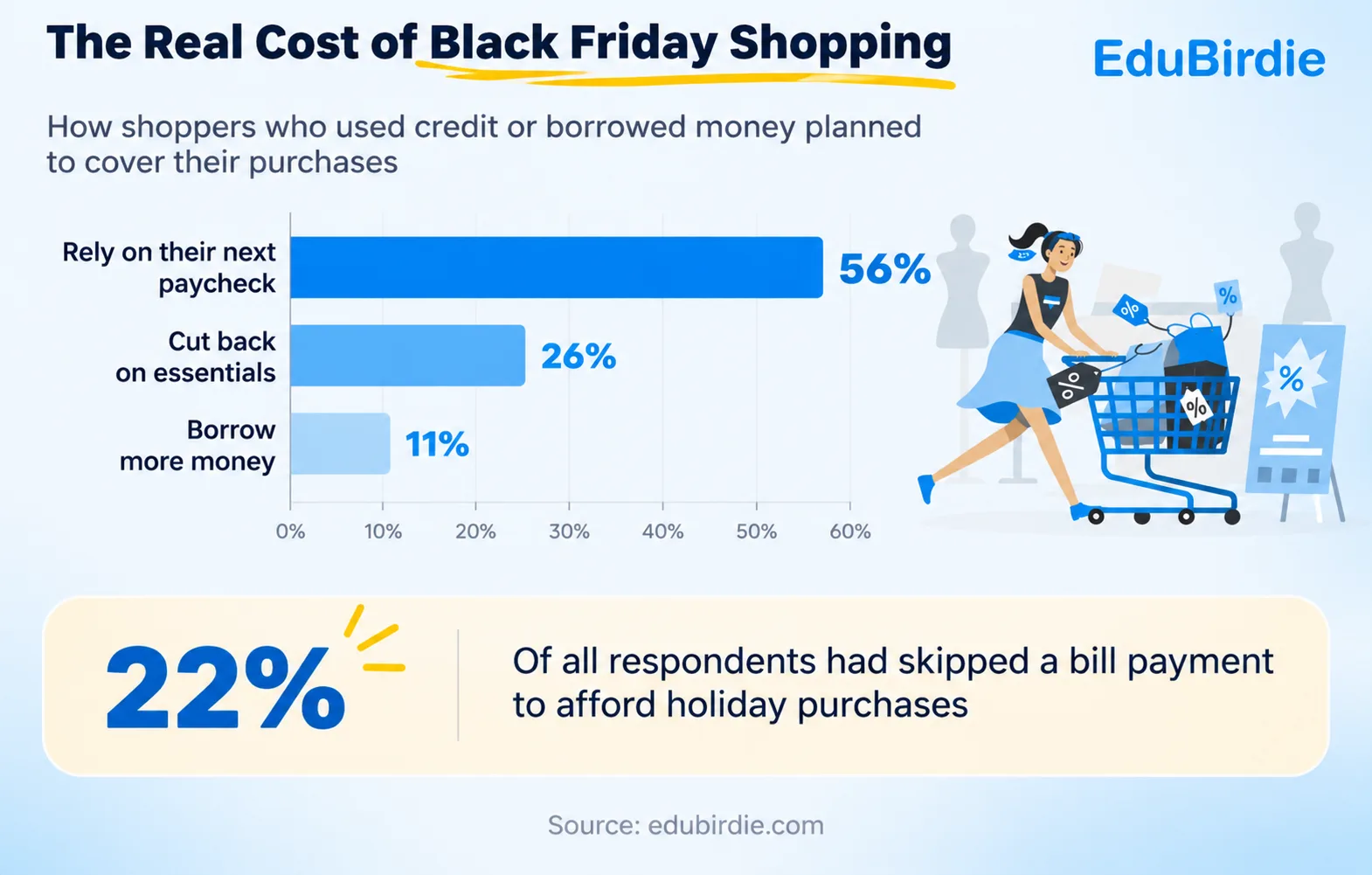
- More than half of Gen Z Black Friday shoppers who used credit or borrowed money planned to rely on their next paycheck for repayment. Another 26% expected to cut back on essentials, while 11% considered borrowing again
- 1 in 3 Gen Z planned to spend over $300 on holiday presents, while 23% expected to use credit or borrowed money. The financial pressure extends beyond Black Friday and into the Christmas season.
- 35% of Gen Z would skip holiday gatherings because they couldn't afford gifts. 1 in 3 Gen Z admitted they'd spent so much on a gift to impress someone that they ended up broke.
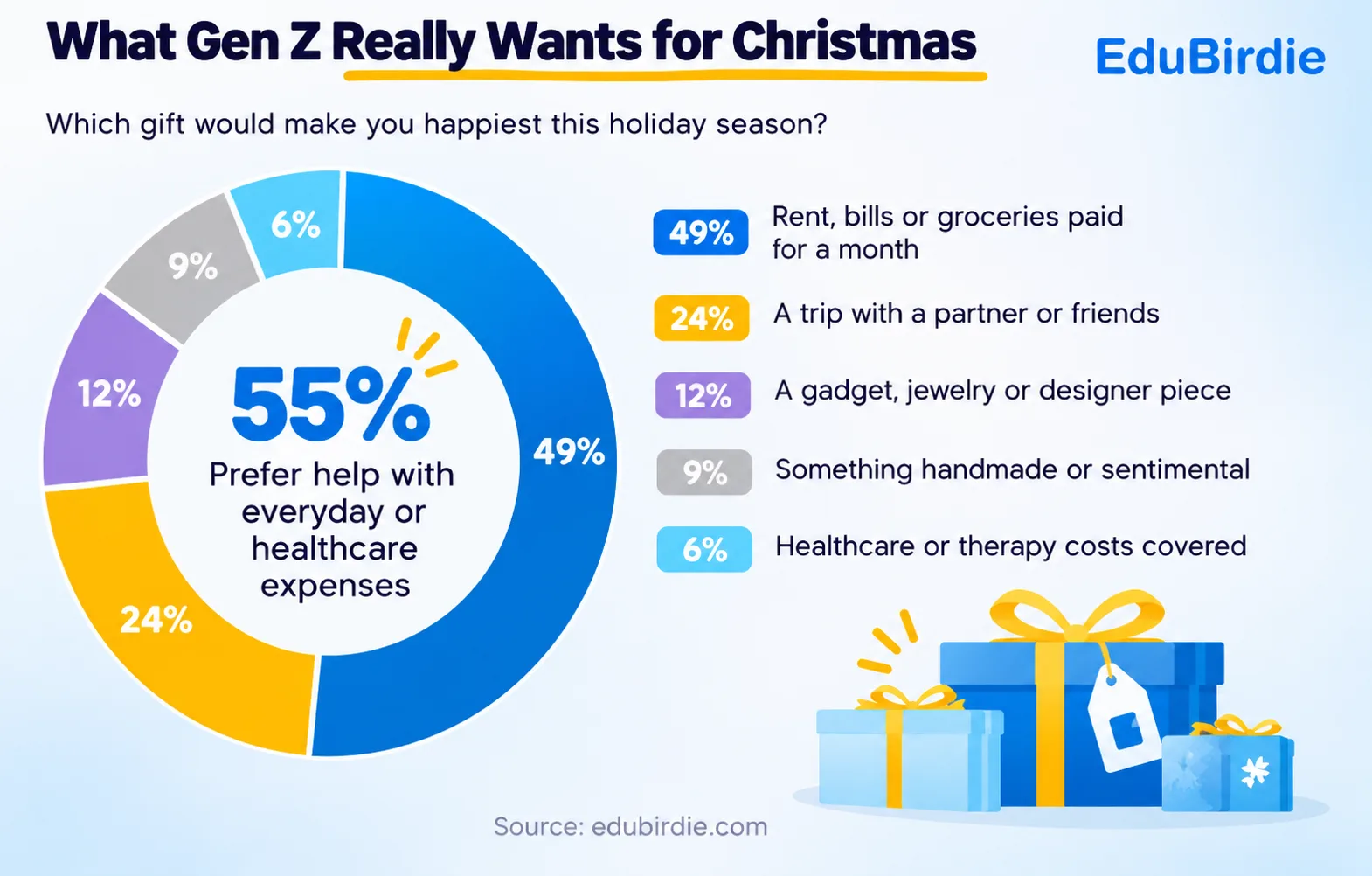
- 49% of Gen Z would prefer help with rent, bills, or groceries as a Christmas gift. Another 6% wanted help with healthcare or therapy costs rather than traditional presents.
Black Friday is just around the corner, and the Christmas shopping season is almost here. The deals haven’t even started, but for some Gen Z shoppers, the financial pressure is already building.
In the case of Gen Z, it is difficult to resist a good deal, particularly when it is close to the holiday season. A new device, a Christmas present, that one thing you’ve wanted at half price — why not?
Well, December’s bank balance might have a few things to say about that.
Survey covered 2,000 Gen Z Americans aged 18–29. This survey looked at Black Friday shopping, budgets for holiday gifts, payment methods used, and financial pressure.
The Art of Not Spending. Black Friday Budget Tricks
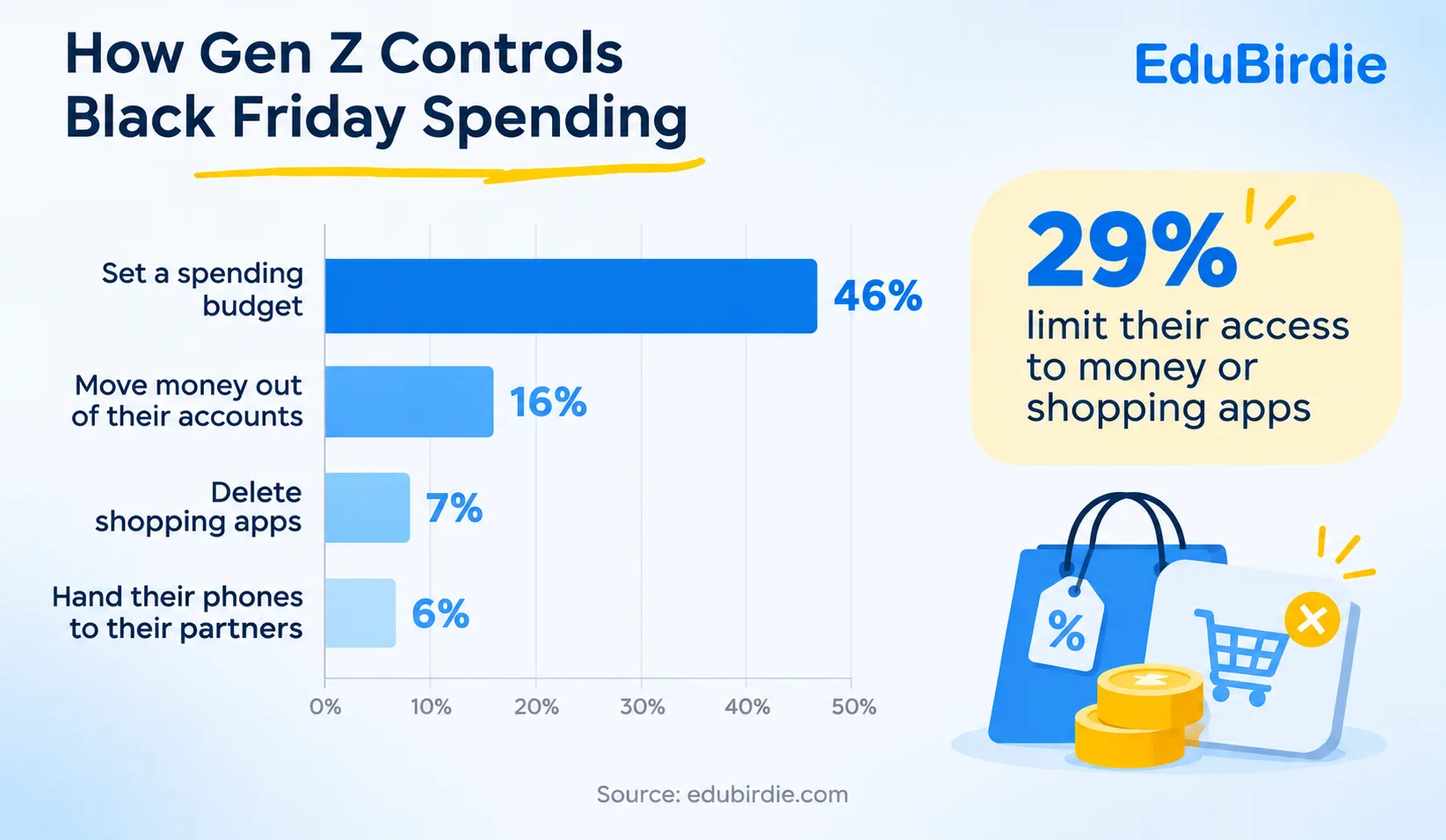
EduBirdie’s survey found that 46% of participants allocate a budget for themselves on Black Friday. Other people think outside the box.
In fact, 29% of surveyed Gen Z shoppers chose one of three ways to limit their access to money or shopping apps.

It sounds extreme, but when every app is one click away from a flash sale, extreme measures start to make sense.
As per the survey, there seems to be a generation of people who are aware of the allure of Black Friday deals. Instead of depending on their self-control, they try to create some kind of barrier between themselves and their next purchase.
There are also people who do not want to resist the urge to indulge. It’s possible that for them, a good deal at Black Friday might still feel worth it despite not being entirely theirs.
Buy Now, Feel Fine? Gen Z Black Friday Shoppers Don’t Regret Their Debt
Who said debt had to come with buyer’s remorse?
Despite the financial pressure of Black Friday, most Gen Z shoppers were surprisingly pleased with their purchases.
Our survey found that 87% of Gen Z shoppers were happy with how much they’d spent on Black Friday. Respondents felt they’d managed to score some great deals.
But there’s a catch.
The same survey found that more than 1 in 4 of Gen Z shoppers had used credit cards, taken out loans, or borrowed money to cover their purchases.
And here’s where things get interesting.
At least 14% of surveyed Gen Z Black Friday shoppers must have both used credit or borrowed money and felt happy with their spending.
The figure represents the minimum possible overlap between the two groups, based on the survey’s satisfaction and payment-method results. It isn’t a separately measured response.
In other words, a good discount can still feel like a win, even when the bill comes later.
There’s a certain logic to it. Why pay full price next month when you can get what you want for less today?
The trouble is that saving money on a purchase doesn’t always mean you can afford it. And while paying by credit card doesn’t necessarily mean carrying debt, a purchase can still leave a payment due after the excitement fades.
We also found that 9% of Gen Z Black Friday shoppers regretted overspending. Another 4% worried about how they’d make it through December after their purchases.
For many Gen Z consumers, Black Friday felt like a financial win. But with Christmas expenses still ahead, the real test would come with their next paycheck.
When Black Friday Eats Your Next Paycheck
Black Friday may be a one-day event, but Cyber Monday follows just days later, giving shoppers even more reasons to spend. And while the sales end quickly, the financial consequences can last much longer.
More than half of Gen Z shoppers who paid with their credit cards or borrowed money had plans to use the money which was not yet in their pockets.
The survey revealed how these shoppers planned to cover their purchases:
- 56% of Gen Z shoppers who used credit or borrowed money planned to rely on their next paycheck.
- 1 in 4 of Gen Z shoppers in the same group expected to cut back on essentials, including groceries or healthcare.
- 11% of Gen Z shoppers who used credit or borrowed money were considering another loan or borrowing more money.
A new TV or pair of shoes may be a real bargain but spending money on them when you don’t buy food? Not such a bargain anymore.
And for some Gen Z, shopping has already come at the expense of their monthly bills.
EduBirdie’s survey found that 22% of respondents had skipped a bill payment to splurge on either Black Friday deals or Christmas presents.

Specifically, 11% of respondents reported having missed a bill payment to spend on Black Friday deals. Another 11% selected Christmas gifts as the reason.
It’s one thing to stretch a budget for something special. It’s another when the electricity bill has to compete with a present under the tree.
The findings don’t establish whether shoppers experienced long-term debt. However, they show that holiday spending can compete directly with essential expenses.
Santa’s Got a Budget. How Much Will Gen Z Spend on Gifts?
Christmas is the season of giving. Unfortunately, nobody told the bank accounts.
Even with living costs taking a bite out of disposable income, many Gen Z are prepared to spend hundreds of dollars on gifts.
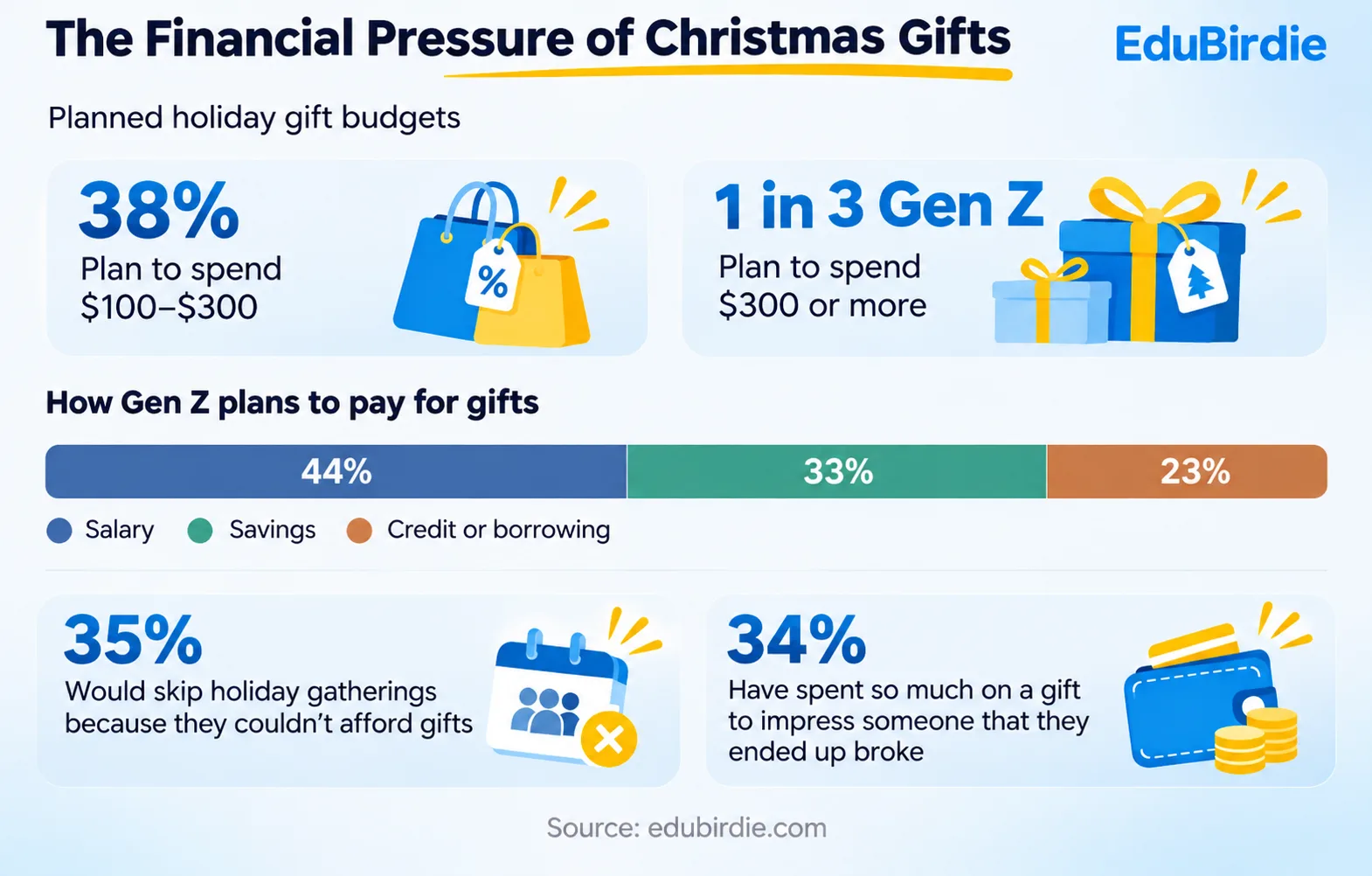
38% of Gen Z planned to spend between $100 and $300 on gifts. That was the most common holiday gift budget among surveyed Gen Z shoppers. On the other hand, 1 in 3 Gen Z shoppers planned to spend $300 or more on holiday presents.
So, where’s all that money coming from?
Our survey found that 44% of respondents planned to pay for gifts with part of their salary. Another 33% expected to dip into their savings.
Meanwhile, nearly 1 in 4 surveyed Gen Z shoppers planned to use credit cards, buy-now-pay-later services, or borrow money from someone.
Apparently, the season of giving is also the season of borrowing. And the pressure goes beyond what’s left in the bank.

EduBirdie’s survey found that 35% of respondents planned to skip social gatherings because they couldn’t afford gifts. Instead of showing up empty-handed, they’d rather not show up at all.
The pressure to impress others can also come at a high price.
Another 34% of Gen Z admitted they’d previously spent so much money on a gift to impress someone that they ended up broke.
It’s a strange holiday contradiction. Gen Z wants to celebrate with the people they love, but the cost of buying gifts can actually keep them apart.
The findings suggest that holiday gift-giving isn’t just about generosity. For some Gen Z, the pressure to buy presents can influence both their financial decisions and their social lives.
And while everyone wants to be the person who gives the perfect present, there’s another question worth asking.
What does Gen Z actually want to receive?
All I Want for Christmas Is My Rent Paid
Forget designer handbags, expensive gadgets, and the latest tech. This year, Santa might be better off paying the electricity bill.
EduBirdie’s survey found that 55% of Gen Z respondents would be happiest with gifts that covered everyday or healthcare expenses.

Clearly not what you might expect from a typical wish list in a Christmas movie.
A vacation sounds lovely, of course. But only 24% of Gen Z would prefer going on a trip with their partner or friends. However, for nearly half of respondents, a month free from the worry about paying rent or buying groceries would be the true Christmas miracle.

From the research carried out by EduBirdie, it is possible to conclude that practical gifts seem to appeal to the generation of Gen Z quite a lot. The financial assistance seemed to be the top wish of many, while many were preparing to spend hundreds of dollars on giving presents.
And that brings us right back to Black Friday.
56% of Gen Z shoppers who used credit or borrowed money planned to rely on their next paycheck to cover their purchases. In contrast, 55% of the participants said they desired to receive gifts that could help them manage their daily or health costs.
The results reveal the significance of daily costs in decision-making processes during holidays and gift preference.
It is an interesting phenomenon because Gen Z is spending the money they don’t have on the stuff they want or gifts for people they care about, while expecting some assistance with their daily costs.
Perhaps the best offer in the upcoming holiday season will not be a 50% off or a buy-one-get-one deal. Perhaps, it will just be getting through till the next paycheck without another bill.
Methodology
The study was conducted by EduBirdie among 2,000 Gen Z adults aged 18–29 in the United States. Data were collected via online panels using Random Device Engagement (RDE) to ensure a representative sample. Percentages are rounded to the nearest whole number and reflect multiple-selection responses.